_1745226507162.webp)

How to Choose Anthocyanin Powder from Different Plant Sources?
To choose the best anthocyanin powder, you need to look at where the powder comes from botanically, how concentrated it is, how pure it is, and whether the seller has the right certifications for your formulation goals. Product developers and buyers should look for plant sources that have been shown to have bioactive properties, stable test profiles, and a lot of compliance paperwork, such as ISO, GMP, and HACCP certifications. Knowing the differences in phytochemicals between blueberry, elderberry, black rice, and other plant-based sources helps you make smart choices that improve product performance while still meeting regulatory needs in nutraceutical, medicinal, functional food, and cosmetic settings.
Understanding Anthocyanin Powder and Its Plant Sources
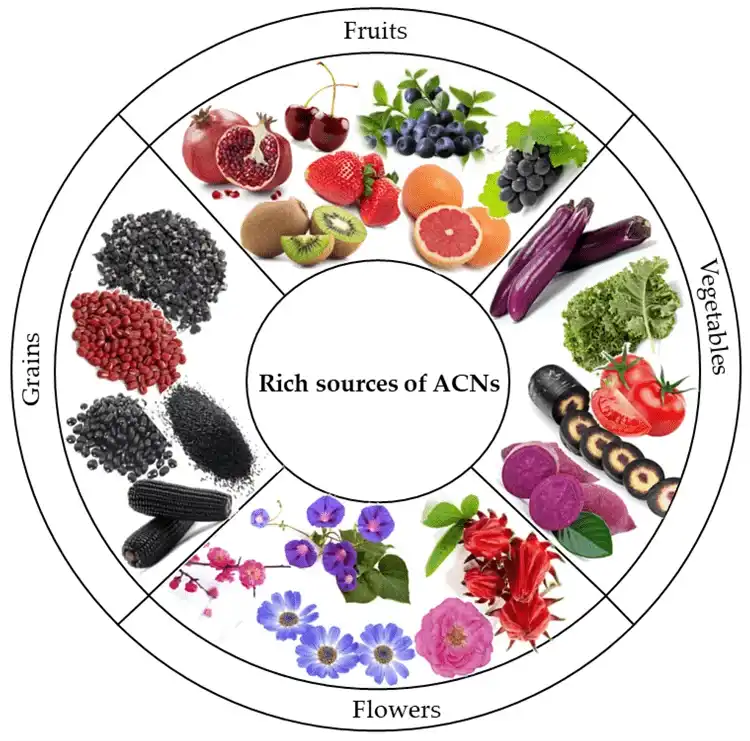
There is a group of water-soluble flavonoid pigments called anthocyanins that give plants their red, purple, and blue colors. These compounds have a lot of antioxidant power when they are extracted and concentrated, which can be seen in their ORAC values. This makes them useful functional ingredients in many businesses. Working with different formulation teams has taught me that knowing where the plant comes from has a direct effect on how stable the product is, how intense the color is, and how healthy it is.
Primary Botanical Sources and Their Unique Profiles
Anthocyanin levels from different plant species have different molecular structures and functions. Blueberry liquids usually have a lot of delphinidin and malvidin glycosides, which are strong antioxidants that are especially useful in eye health products. Elderberry sources contain cyanidin-based anthocyanins that are known to help the immune system. Black rice, on the other hand, contains peonidin and cyanidin compounds that are known to be good for the heart. Acai berry extracts have a complicated anthocyanin matrix that includes different glycoside forms. This makes synergistic effects that are valued in high-end supplement formulas.
Functional Mechanisms in End-Product Applications
Anthocyanins have bioactive qualities in nutraceutical formulations that go beyond their ability to act as antioxidants. Studies that have been studied by experts in the field show that these compounds help endothelial function, control inflammatory pathways, and shield cell structures from oxidative stress. Anthocyanins are used in cosmetics because they can neutralize free radicals in skin cells. This may help reduce the signs of aging while adding natural color. Functional beverage makers like how the color changes depending on the pH level of the formulation environment, but this feature needs to be carefully thought out during product development.
Core Criteria for Selecting Anthocyanin Powder from Plant Sources
Setting clear selection criteria before hiring suppliers speeds up the buying process and makes sure that the needs of the final product and the specifications for the raw materials are met. Through my work with quality control teams at drug and supplement companies, I've learned that systematic review stops the need for expensive reformulated drugs and regulatory problems.
Application-Specific Requirements and Volume Considerations
The main thing that determines material requirements is the planned use. For pharmaceutical uses, you need extracts that meet pharmacopeia standards and have stable data, a controlled particle size distribution, and testing methods that have been proven to work. Nutraceutical formulators need standardized amounts of total anthocyanins that are usually between 5% and 25%. Batch-to-batch consistency must be checked using HPLC analysis. For functional food and drink uses, it's important that the ingredients dissolve in water, don't change when heated, and work well with other ingredients. For cosmetic uses, you need materials that have been safely evaluated, have data on how well they work with preservatives, and have set use levels.
Quantity needs have a big effect on sourcing methods. Small businesses that are working on new formulations benefit from suppliers who offer technical consultation services and flexible minimum order numbers. Large producers who care about keeping supplies going and keeping costs low should look for suppliers with a track record of production, multiple sources of supply, and established logistics networks that can handle container-load shipments.
Quality Metrics and Essential Certifications
Quality review starts with using approved analytical methods to measure the amount of anthocyanin present. Suppliers you can trust will give you certificates of analysis that show the total amount of anthocyanin in the sample using the pH difference method or individual anthocyanin profiles obtained from HPLC-MS analysis. Destination market rules say that purity factors like heavy metal content, pesticide residues, microbial limits, and solvent residues must be met.
Different industries have different certification needs, but some of the most common ones are organic certification for natural product positioning, non-GMO verification for clean label compliance, and kosher or halal certification for certain market groups. Manufacturing certifications like ISO 9001 quality management, GMP compliance, and HACCP usage show that quality control is carried out in a planned way. Traceability paperwork linking finished extract batches to specific harvest lots provides important transparency that regulators and end consumers are asking for more and more.
Stability and Formulation Compatibility
Anthocyanin's stability changes a lot depending on where it comes from in plants, the pH level, the temperature, and the amount of light it gets. Acylated anthocyanin extract powders from purple carrot or red cabbage are more stable than non-acylated types from berries, but they may cost more. By looking at stability data in settings that are similar to your manufacturing process and where you store the finished product, you can avoid color loss or potency loss that you didn't expect.
Powder properties like particle size, moisture content, mass density, and flowability affect how well a product is made. Spray-dried powders usually have good reconstitution properties that make them good for use in drinks, while freeze-dried materials keep the delicate phytochemical profiles that are desired in high-end supplement formulations. Maltodextrin or other carrier matrices make it easier to work with powders, but they lower the concentration of anthocyanin, which means that formulation formulas need to be changed.
Comparison of Popular Anthocyanin Powder Plant Sources for Procurement
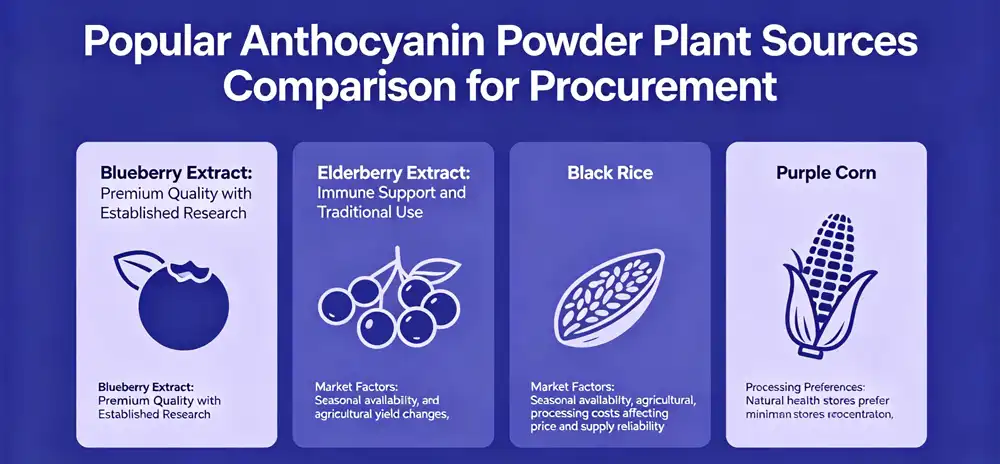
Knowing the actual differences between the main botanical sources helps people who buy materials match materials to specific formulation goals and spending limits. Both prices and the reliability of supplies are affected by changes in the market, such as seasonal availability, changes in agricultural yields, and processing costs.
Blueberry Extract: Premium Quality with Established Research
Anthocyanins from blueberries have a lot of clinical study backing them up to support different health claims, especially those about eye health and brain health. Because of this study base, blueberry extracts are a good choice for making evidence-based supplements for smart consumers. The deep blue-purple color and strong antioxidant properties come from anthocyanins that are high in delphinidin and malvidin.
Market availability stays pretty steady because blueberries are grown in large quantities in North America and Europe. However, prices are higher because blueberry ingredients are considered to be high-quality. Standardized extracts usually have anthocyanin concentrations between 15% and 25%. Ultra-concentrated forms can have concentrations of 36% or more. Good sellers give thorough polyphenol profiles that list not only anthocyanins but also flavonols, phenolic acids, and other chemicals that help the plant's bioactivity as a whole.
Elderberry Extract: Immune Support and Traditional Use
People are interested in immune-boosting plants, which has helped elderberry extracts gain a lot of market traction. Elderberry is different from other sources because it has a lot of cyanidin-based anthocyanins, which have been shown to be good for your lung health. This positioning makes for strong marketing stories for seasonal wellness goods and formulas that focus on the immune system.
Compared to other sources, the prices are usually in the middle, and standardized products usually have 10% to 25% anthocyanin content. European sources usually cost more because they have been used for a long time, but North American farming offers cheaper options. Seasonal harvest patterns and the fact that fresh elderberries go bad quickly are two things that affect supply. For year-round production needs, it is important for suppliers to be able to handle their inventory well.
Black Rice and Purple Corn: Cost-Effective Options with Unique Benefits
An inexpensive source of anthocyanins, black rice extract is great for useful food uses that can handle higher inclusion rates. New study shows that the peonidin and cyanidin content helps the heart. The mild taste profile works well with a lot of different types of food because it doesn't add strong berry notes that might not fit with the idea behind the product.
Another cheap option is purple corn, which is very popular in Latin American markets and is becoming more famous around the world. The anthocyanin profile is very stable in beverage uses that are acidic and gives vibrant color at low use levels. These agricultural sources are supported by stable large-scale supply chains because they come from farms with well-established infrastructure and production capacity.
Natural versus Standardized Extracts
Anthocyanins, fiber, carbs, and other phytochemicals from the plant source are all found in whole plant powders. These products are marketed as having clean labels, but they need higher inclusion rates to reach the goal anthocyanin doses. This could affect the cost of formulation and the way the product tastes. Standardized extracts focus blueberry anthocyanins while getting rid of bulky parts. This lets precise dosing be done in small forms like functional shots or capsules.
This choice is based on what your target market wants when it comes to how ingredients are processed. Natural health stores tend to sell products that have been processed as little as possible, while popular supplement stores usually sell products that are concentrated. In some places, regulations may favor certain ways of handling, so it's helpful for suppliers to know how to follow the rules in that area.
Procurement Best Practices for Anthocyanin Powder
Setting up effective procurement processes and relationships with suppliers is key to both short-term project success and long-term competitive advantage. From looking at partnerships that work well, I've noticed that there are some similar strategies that improve quality, cost, and supply reliability.
Supplier Identification and Vetting Channels
When it comes to economics and technology, working together with a maker directly is often the best option. Botanical extract makers that have been around for a while and have their own research and development departments can help with custom standardization requests, formulating problems, and stability testing. These partnerships work especially well for brands that need to meet the same technical and volume standards over and over again.
B2B platforms and trade shows are quick and easy ways to find suppliers, especially when looking for new botanical sources or backup sellers to reduce risk. Big events in the industry, like Supply Side West, Vitafoods Europe, and Fi Asia, bring together buyers and foreign suppliers. These events give buyers the chance to talk directly with suppliers and judge the quality of samples and their professionalism. You can compare specifications and prices on online sites, but you have to do more work to make sure the supplier is legitimate.
International Procurement Considerations
When you do business across borders, you have to pay extra attention to paperwork and operations. To make sure that customs clearance and duty calculations are done correctly, Harmonized System (HS) codes must truly reflect the botanical extract classification. Phytosanitary certificates may be needed based on the countries of origin and destination, especially for materials that are certified as organic. When you understand Incoterms, you can make sure that both the buyer and the seller are responsible for shipping costs, security, and the transfer of risk.
Quality checking when you get something saves you from not meeting specifications or damage from handling while in transit. Having a third-party lab check incoming raw materials against agreed upon standards gives objective proof before the materials are used in production. In purchase agreements, having clear acceptance standards and procedures for fixing problems stops arguments when materials don't meet expectations.
Building Strategic Supplier Relationships
While transactional procurement methods may get you competitive prices, they often cost you the technical help and supply prioritization that come with partnership-based relationships. Sharing estimates helps suppliers figure out how much to make and where to get the raw materials they need to meet your needs. Working together on quality projects like creating specifications, studying stability, and validating analysis methods makes everyone invested in the project's success.
Long-term contracts that promise a certain amount of goods can get you better prices and make sure you have enough supplies when the market is short or during certain times of the year. But these agreements need to have flexibility clauses that let the parties change the amount as needed based on market conditions. Regular audits of suppliers make sure that quality standards and best practices for manufacturing are still being followed. This is especially important for pharmaceutical and regulated uses.
Conclusion
When choosing anthocyanin powder, you have to think about a lot of things, like the characteristics of the botanical source, quality standards, the supplier's skills, and the total cost of ownership. Before they start working with suppliers, good procurement teams make sure that their clear material needs are in line with their formulation goals and regulatory obligations. Putting suppliers with thorough certifications, clear quality documentation, and proven technical knowledge at the top of the list lowers formulation risks and speeds up time-to-market.
Cost optimization includes more than just unit pricing. It also includes things like supplier reliability to avoid expensive production interruptions, processing compatibility to reduce the need for overage, and stability performance to affect overage requirements. Some common mistakes people make are choosing materials based only on price without doing enough stability testing, not independently verifying seller certifications, and not setting up backup suppliers to make sure the business stays open.
The botanical extract market is always changing because new sources are coming on the scene, extraction methods are getting better, and analytical tools are getting smarter. Keeping in touch with knowledgeable suppliers who are at the forefront of your industry gives you access to new ideas that can help your goods stand out in crowded markets.
FAQs
What anthocyanin concentration is typical for dietary supplement formulations?
Dietary supplements commonly utilize extracts standardized to 10-25% total anthocyanins, with specific concentrations determined by desired daily dose and delivery format. Capsule formulations typically aim for 50-100mg anthocyanins per serving based on published research dosing. Beverage applications may use lower concentration extracts at higher inclusion rates to balance bioactivity with sensory properties.
How can I verify the authenticity and quality of anthocyanin powder from suppliers?
Request comprehensive certificates of analysis including anthocyanin content via validated methods, heavy metal screening, pesticide residue testing, and microbial analysis. Independent third-party laboratory testing confirms specifications before full-scale purchasing. Site audits or third-party audit reports verify manufacturing practices and certification claims. Reputable suppliers provide complete traceability documentation connecting finished product to botanical source.
What factors affect the shelf life of anthocyanin powder?
Storage conditions dramatically influence anthocyanin stability, with cool temperatures, low humidity, and protection from light optimizing shelf life. Properly stored materials typically maintain potency for 24-36 months. Packaging in nitrogen-flushed containers or vacuum-sealed formats extends stability. The botanical source matters significantly—acylated anthocyanins demonstrate superior stability compared to non-acylated forms. Regular stability monitoring through periodic testing tracks degradation rates under actual storage conditions.
Partner with Bolin Biotechnology for Premium Anthocyanin Powder Supply
Shaanxi Bolin Biotechnology Co., Ltd. specializes in producing high-quality botanical extracts including standardized anthocyanin powder from multiple plant sources. Since our establishment in 2012, we have served nutraceutical manufacturers, pharmaceutical companies, and functional food brands throughout the United States with scientifically validated materials backed by complete certifications including ISO, GMP, and HACCP compliance. Our technical team provides formulation support, stability data, and customized standardization to meet your specific requirements.
Whether you need blueberry extract for cognitive health supplements, elderberry powder for immune formulations, or cost-effective black rice anthocyanins for functional beverages, we offer flexible minimum order quantities alongside bulk supply capabilities. As an experienced anthocyanin powder supplier, we maintain rigorous quality control throughout cultivation partnerships, extraction processes, and final product testing. Contact our team at sales1@bovlin.com to discuss your project requirements, request technical specifications, or arrange sample evaluation. We commit to supporting your product development success through reliable supply, consistent quality, and responsive technical service.
References
Wallace, T.C., Giusti, M.M. (2015). Anthocyanins in Health and Disease. CRC Press, Taylor & Francis Group.
Khoo, H.E., Azlan, A., Tang, S.T., Lim, S.M. (2017). Anthocyanidins and anthocyanins: colored pigments as food, pharmaceutical ingredients, and the potential health benefits. Food & Nutrition Research, 61(1).
Bendokas, V., Skemiene, K., Trumbeckaite, S., et al. (2020). Anthocyanins: From the Field to the Antioxidants in the Body. Antioxidants, 9(9).
Lila, M.A., Burton-Freeman, B., Grace, M., Kalt, W. (2016). Unraveling Anthocyanin Bioavailability for Human Health. Annual Review of Food Science and Technology, 7.
Mattioli, R., Francioso, A., Mosca, L., Silva, P. (2020). Anthocyanins: A Comprehensive Review of Their Chemical Properties and Health Effects on Cardiovascular and Neurodegenerative Diseases. Molecules, 25(17).
De Pascual-Teresa, S., Sanchez-Ballesta, M.T. (2008). Anthocyanins: from plant to health. Phytochemistry Reviews, 7(2).