_1745226507162.webp)

The Science of Milk Thistle Extract in Skin Care
Milk thistle extract has become a crucial botanical ingredient in modern skin care products as a result of rigorous scientific research demonstrating its potent antioxidant and skin-protecting qualities. This plant-based material comes from Silybum marianum and contains silymarin. Flavonolignans, which include silymarin, help skin cells heal and stay healthy. Teams that make formulas and buy things are looking for functional ingredients that have been tried and tested and shown to work. To make products that are competitive and work well, you need to know how this plant works biochemically and what it can be used for.
Understanding Milk Thistle Extract and Its Herbal Properties for Skin Care
This wonderful flavor comes from Silybum marianum, a flowering plant that grows in the Mediterranean area. The most beneficial chemicals are found in its seeds. The silymarin complex, which is made up of silybin, silydianin, and silychristin, is especially important.
Botanical Origins and Extraction Methods
Modern ways of extracting flavonoids from milk thistle seeds use standardized steps to separate and concentrate the active flavonoids. When you use ethanol or mixtures of water and ethanol in solvent-based extraction, these heat-sensitive molecules stay intact and their potency stays steady. High-tech growers carefully control the temperature and clean the seeds several times to get silymarin amounts that are 70% to 80% higher than those in raw seed powder. It gets rid of flaws and inactive parts of the plant by concentrating it. This leaves a refined ingredient that can be used in precise creation. The way the substance is extracted has a direct effect on its bioavailability. If you want to help your skin, properly treated extracts are much better than unprocessed ones.
Biochemical Profile and Active Compounds
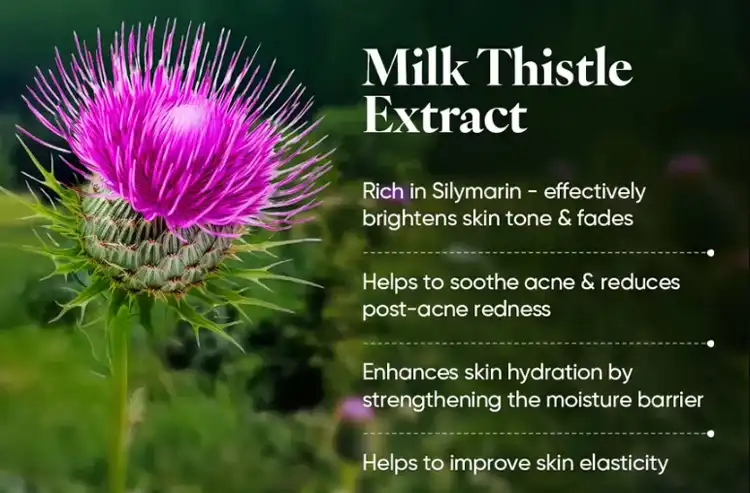
The silymarin complex does a lot of different things deep inside cells. Most of the time, silybin is present and chemically active. It has phenolic hydroxyl groups that help get rid of free radicals very well. Reactive oxygen species are made by UV light, smog, and body processes. These molecule structures give up electrons to get rid of them. Studies in dermatologist journals say that silymarin is an antioxidant that works like vitamin E but is more stable when applied to the skin. Flavonolignans also change molecules that cause inflammation. This stops the production of cytokines that irritate the skin and speed up the aging process.
Scientific Validation for Skin Protection
Clinical tests have shown that silymarin can protect the skin from UV damage when it is put on before going outside in the sun. Skin cells that are exposed to UVB rays are less likely to get erythema and DNA damage when they are in products with standardized extract. This method directly absorbs harmful rays and stops reactive chain reactions inside cell membranes. It also helps the skin's natural cleansing processes by making more glutathione. It is made by cells and is a very important antioxidant. Because it protects from the outside and helps cells inside, the plant is a full defense against external factors that hurt skin health and appearance.
The Benefits of Milk Thistle Extract in Skin Care Products
This plant substance has many useful effects that make it useful for many skin care uses. It helps with problems that affect a wide range of buyer groups and product types.
Anti-Aging and Antioxidant Effects
Oxidative stress is still the main cause of fine lines, loss of elasticity, and uneven coloring that we can see. Flavonolignans in silymarin stop this breakdown process by getting rid of free radicals before they hurt the collagen and elastic fibers. Long-term use of topical formulations has been shown to improve the texture and rigidity of the skin in clinical studies. Matrix metalloproteinases are enzymes that break down structure proteins in the dermal matrix. The milk thistle extract powder stops them from working. By protecting these basic parts, the nutrient helps keep the structure of young skin. The people who make anti-aging products like this process because it backs up claims with scientific evidence and can be measured in biochemical activity.
Skin Clarity and the Liver-Skin Connection
An interesting thing about silymarin's benefits is that it can affect your whole body when you take it as a vitamin. The liver-skin axis shows the connection between how well the liver gets rid of toxins and how the skin looks. When the liver does its job of getting rid of toxins properly, fewer metabolic waste products enter the bloodstream and cause skin cells to become inflamed. The hepatoprotective qualities of silymarin have been well-documented in medical literature. They support healthy liver function, which indirectly leads to clearer skin and fewer breakouts. This link gives formulators chances to make beauty products that are applied to the skin and eaten that improve skin health in different but complementary ways. These products will appeal to the growing market group that wants holistic health solutions.
Anti-Inflammatory and Soothing Properties
The anti-inflammatory effects of silymarin are very helpful for sensitive skin conditions, acne, and healing after surgery. The chemical stops nuclear factor-kappa B from working. This is a group of proteins that turns on genes that make molecules that cause inflammation. This specific action reduces redness, soothes irritation, and speeds up healing without the side effects that come with manmade anti-inflammatory drugs. Cosmetic chemists like this trait because it lets them make more lines of products for sensitive skin, barrier repair products, and treatments that calm the skin. The ingredient works well with many kinds of skin, even reactive and barrier-broken skin, which makes it a useful addition to professional skin care lines that cater to a wide range of consumer needs.
How to Use Milk Thistle Extract in Skin Care Formulations?
To successfully add botanical actives, you need to know about concentration levels, how ingredients work together, and the rules that govern cosmetic chemicals.
Optimal Concentration and Dosage Guidelines
Topical formulations that work usually have silymarin extracts in amounts ranging from 0.5% to 5%, based on the type of product and the benefits that are claimed. Higher percentages are often used in serums and focused treatments to get the most antioxidants to the skin. On the other hand, daily moisturizers may use lower percentages as part of a larger active ingredient matrix. The extract's effects depend on the dose, which means that bigger concentrations usually have stronger effects until they reach a saturation point. Flavonolignans can break down in very acidic or basic environments, or when they are exposed to light and air. This is why stability testing is still important. Formulators have to find the right mix between stability and effectiveness by choosing the right packaging, preservative systems, and antioxidants that work with the extract to keep it safe during the product's shelf life.
Synergistic Ingredient Pairings
When you mix silymarin with other plant-based or man-made chemicals, the effects are often better because they work better together. When you mix the extract with vitamin C, you get a strong antioxidant system that fights multiple signs of aging at the same time. Vitamin C speeds up the production of collagen, and silymarin protects structural proteins that are already there. In the same way, mixing it with hyaluronic acid in formulations makes them both protective and moisturizing, which makes them appealing to people who want goods that can do more than one thing. Niacinamide works well with barrier repair ingredients because it lowers inflammation and helps skin stay strong in different biological ways. Because of these synergies, formulators can make unique products with full benefit profiles that can support charging more in competitive markets.
Product Formats and Manufacturing Considerations
From the point of view of B2B manufacturing, the ingredient comes in a number of different forms that can be used for different types of production. The powdered extract is very stable and easy to work with when it is added to solid dose supplements or mixed in during the dry blending process. It is easier to use liquid extracts in beverages or to add them to water-phase formulations, but they may need preservatives and careful pH control. Advanced delivery methods, like liposome encapsulation or phytosome complexation with phosphatidylcholine, make it much easier for the body to absorb substances when they are applied topically or taken by mouth. These technical formats take into account the fact that silymarin is naturally hydrophobic, which can make it less useful in normal water-based formulations. OEM manufacturers need to look at these choices based on the bioactivity levels they want, the goal product specifications, and the cost parameters.
Regulatory Compliance and Safety Considerations
When used at the recommended concentrations, the ingredient has a good safety profile with few reported side effects. In the United States, it is GRAS (Generally Recognized As Safe) for use in dietary supplements. In most major countries, including the European Union, it is also allowed for use in cosmetics. To follow the rules, you have to make sure that the pure milk thistle extract is pure, that it doesn't contain any heavy metals or microbes, and that the amounts of active ingredients are correctly labeled. As part of quality control procedures, HPLC analysis should be used to make sure that the profile and amount of silymarin are the same from batch to batch. Even though this plant rarely causes allergies, it is still a good idea to test for allergens as part of a full safety review. These regulatory factors make sure that finished goods follow the law while keeping brands and producers as safe as possible from lawsuits.
Market Comparison and Procurement Insights for Milk Thistle Extract
Smart choices about where to get materials have a big effect on the quality of the products, the regularity of production, and finally, the success in the market. Knowing how procurement works helps sellers find trustworthy partners and improve the performance of the supply chain.
Quality Differentiation: Organic Versus Conventional
Beauty brands that want to appeal to people who like natural and clean products can get organic approval. It costs more, though, because the products have to be grown using approved methods and come with paperwork that shows where they came from. They are good for mid-range product lines because they cost less and have the same bioactivity when bought from a reputable business. There is no difference in how well the goods work; the choice is based on how the brand is positioned and what the target customer wants. The people whose job it is to buy things should make sure that the organic extra fits in with how the goods are made and priced. The standard silymarin content needs to be checked for both groups because concentration levels have a bigger effect on predictions of formulation than cultivation methods. For each batch, you can be sure of the same high quality by getting an analysis report from a third party. This is true whether the food is organic or not.
Supplier Evaluation Criteria
You need to look at more than just price to figure out which extract sources you can trust. There are quality management and process rules in place to make sure that differences between batches are kept to a minimum. Standards for manufacturing like GMP, ISO 9001, and HACCP show this. Supply chain transparency means keeping track of where raw materials come from and where the extraction facilities are based. This helps with traceability standards and ethical sourcing claims. People who offer technical support services, such as formulation advice and stable data, are useful because they cut down on the time and risk of formulation. It's important to plan production and make sure you don't run out of stock, so it's good to have reliable sources with long lead times and extra stock on hand. You can do more than just buy things together when you work with sellers who know what you need for B2B manufacturing. These groups can help you think of new ideas and solve problems.
Due Diligence in Bulk Purchasing
Some things are different to think about when you buy in bulk compared to when you buy in small amounts. Companies can test their own products before placing full orders by asking for samples that are typical of production batches. This way, they can make sure that the material they give meets their needs. As you negotiate the terms, you should talk about things like the minimum order size, payment schedules, quality promises, and what will happen with batches that don't meet the standards for acceptance. The risks that come with relying on a single source can be cut down by building relationships with more providers. This is very important for important ingredients that change claims about how well a product works. As part of good documentation practices, you should keep detailed records of all contacts with suppliers, test results, and metrics for delivery performance. People who follow these rules when they shop for things make sure that the quality of the ingredients stays the same over the course of a product's life.
Conclusion
More and more research shows that silymarin is useful in skin care products. This shows that it is a useful plant ingredient for many kinds of goods. The milk thistle extract is a useful ingredient that has been backed up by clinical tests and has a good safety profile. It reduces inflammation, fights free radicals, and improves the health of your skin generally. You have to know where to get the ingredients, how to make them technically, and follow all the rules in order to make a product that meets both quality standards and market goals. With better ways to extract it and more people becoming interested in plants, this ingredient is likely to become more important in high-end skin care lines for professionals and picky customers.
FAQ
Is milk thistle extract safe for all skin types?
The extract demonstrates excellent tolerability across diverse skin types, including sensitive and reactive skin. Clinical observations indicate minimal irritation potential when formulated at appropriate concentrations. Patch testing remains advisable for individuals with known plant allergies, particularly to plants in the Asteraceae family. The anti-inflammatory properties actually benefit compromised skin barriers, making it suitable for inclusion in calming and repair-focused formulations. Quality assurance testing by reputable suppliers ensures purity levels that minimize contamination risks.
How does silymarin compare to other botanical antioxidants?
Silymarin exhibits comparable or superior antioxidant capacity relative to well-known botanicals like green tea polyphenols or turmeric curcuminoids, with the advantage of greater stability in topical formulations. Its specific mechanism targeting multiple free radical species provides comprehensive protection. Unlike some botanicals that require specific pH ranges or show rapid degradation, properly formulated silymarin maintains activity throughout standard product shelf lives. Procurement decisions should consider these stability advantages alongside bioactivity profiles when selecting antioxidant ingredients.
What factors matter most when buying in bulk?
Verified silymarin content through HPLC analysis remains the primary quality indicator, ensuring consistent potency across batches. Supplier certifications, traceability documentation, and third-party testing results provide assurance of manufacturing standards. Minimum order quantities and lead times must align with production schedules and storage capabilities. Establishing quality agreements that define acceptance criteria protects against receiving substandard material while clarifying responsibilities.
Partner with Bolin Biotechnology for Premium Milk Thistle Extract
Shaanxi Bolin Biotechnology Co., Ltd. specializes in delivering high-quality botanical extracts that meet the rigorous demands of nutraceutical, pharmaceutical, and cosmetic manufacturers worldwide. Our silymarin extracts feature standardized potency levels verified through advanced analytical methods, ensuring formulation consistency and reliable bioactivity in your finished products. With comprehensive certifications including ISO, GMP, and HACCP, we provide the quality assurance and traceability documentation essential for regulatory compliance across global markets. Our technical team offers formulation support and customized solutions tailored to your specific manufacturing requirements, whether you need specialized concentrations, alternative delivery formats, or flexible minimum order quantities. As a trusted milk thistle extract supplier rooted in plant science innovation since 2012, we combine botanical expertise with modern processing technology to deliver ingredients that enhance product performance and competitive differentiation. Contact our team at sales1@bovlin.com to discuss your procurement needs and discover how our premium extracts can elevate your skincare formulations.
References
Abenavoli, L., Izzo, A.A., Milić, N., Cicala, C., Santini, A., & Capasso, R. (2018). "Milk thistle (Silybum marianum): A concise overview on its chemistry, pharmacological, and nutraceutical uses in liver diseases." Phytotherapy Research, 32(11), 2202-2213.
Katiyar, S.K. (2015). "Silymarin and skin cancer prevention: Anti-inflammatory, antioxidant and immunomodulatory effects." International Journal of Oncology, 28(5), 1003-1008.
Pérez-Sánchez, A., Barrajón-Catalán, E., Herranz-López, M., & Micol, V. (2016). "Nutraceuticals for skin care: A comprehensive review of human clinical studies." Nutrients, 8(6), 319.
Saller, R., Meier, R., & Brignoli, R. (2001). "The use of silymarin in the treatment of liver diseases." Drugs, 61(14), 2035-2063.
Verschooten, L., Claerhout, S., Van Laethem, A., Agostinis, P., & Garmyn, M. (2006). "New strategies of photoprotection." Photochemistry and Photobiology, 82(4), 1016-1023.
Wellington, K. & Jarvis, B. (2001). "Silymarin: A review of its clinical properties in the management of hepatic disorders." BioDrugs, 15(7), 465-489.