_1745226507162.webp)

How Yucca Root Extract Helps Reduce Ammonia Levels?
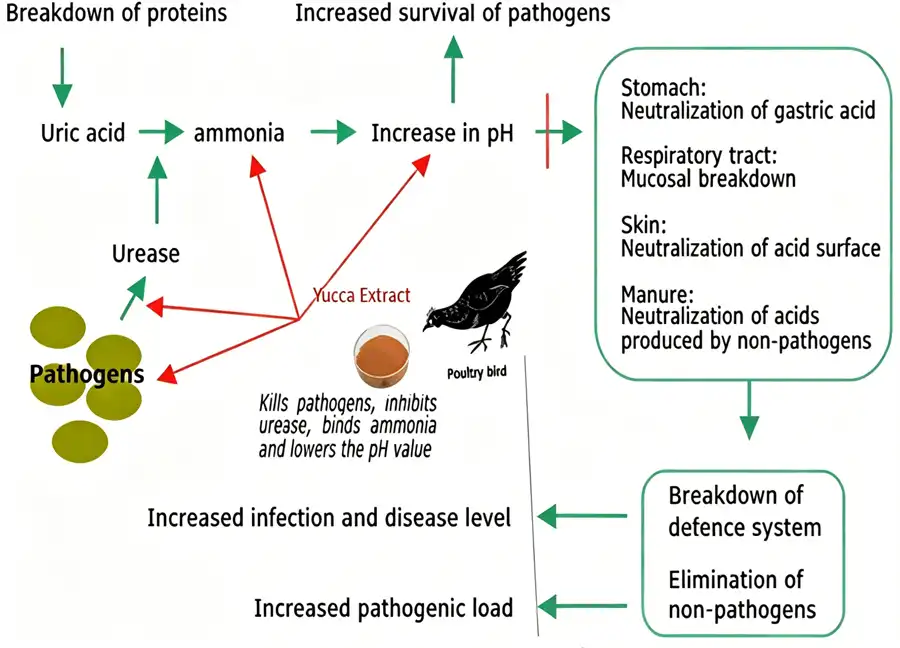
Scientists have proven that yucca root extract can lower ammonia levels because it contains a lot of steroidal saponins, especially sarsaponin and smilagenin. In living things, these beneficial substances stop the urease enzyme from working, which stops urea from turning into volatile ammonia. The natural surfactant properties of the extract also bind ammonia molecules in the air, creating stable nitrogen complexes that lower gas instability and the smells that come with it. This two-part method gives businesses a long-lasting, plant-based option to synthetic chemical treatments that still meets environmental standards and keeps operations safe.
Understanding the Problem: Why Reducing Ammonia Levels Matters The Chemical Nature and Sources of Ammonia
Ammonia (NH3) is an alkaline gas that has a strong, sharp smell. In farming settings, it mostly comes from microbes breaking down nitrogenous molecules in animal waste, mostly urea. Concentrated animal feeding operations (CAFOs) release large amounts of ammonia into the air, often more than 50 parts per million (ppm) in sites that don't have enough ventilation. Through different biological processes, sewer treatment plants, fertilizer factories, and aquaculture systems all add to the amount of ammonia in the environment.
Health and Environmental Impacts
Long-term exposure to high amounts of ammonia can cause respiratory discomfort, conjunctivitis, and weak immune systems in both animals and people who work with them. Studies show that long-term exposure to ammonia in chicken homes is linked to a higher risk of infectious lung diseases, which has a direct effect on feed conversion rates and death rates. In terms of the environment, ammonia adds to acid rain, soil acidity, and eutrophication of bodies of water when nitrogen compounds build up too much for the ecosystem to handle.
Regulatory and Operational Challenges
Emission guidelines for farming and factories have been tightened by regulatory bodies around the world. The US Environmental Protection Agency considers ammonia to be a dangerous chemical that needs to be reported under CERCLA when it is released in large enough amounts. To be compliant, you need to use effective ways to reduce pollution, but common methods like chemical scrubbers, biological filters, and regular trash pickup have high up-front and ongoing costs. Because of all the rules and regulations, procurement managers have to find solutions that are both legal and cost-effective and that work well with existing processes.
How Yucca Root Extract Works to Reduce Ammonia Levels?
Active Components and Biochemical Mechanisms
The effectiveness of yucca saponins extract comes from the high amount of steroidal saponins they contain, which usually makes up 8–12% of quality-tested goods. These amphipathic molecules have both sugar parts that attract water and steroid parts that attract fat, which lets them interact with a wide range of cellular substrates. Researchers have found that saponins directly stop the activity of urease enzymes that are made by bacteria in animal digestive systems and waste. By stopping urease from working, the extract slows down the rate at which urea breaks down into ammonia. This stops emissions at the source.
In addition to stopping enzymes from working, saponins have detergent qualities that lower the surface tension. Because of this, the chemicals can form micelle-like structures around ammonia molecules. These structures successfully capture volatile nitrogen and change it into forms that are less unstable. The polyphenolic parts, like resveratrol and yuccaols, work together as antioxidants to help keep the gut healthy and make nitrogen metabolism work better.
Comparison with Conventional Mitigation Methods
Usually, ammonia is controlled by increasing airflow, using acid washes, or adding man-made chemicals. These methods work in some situations, but they have some problems. Chemical processes can leave behind leftovers that lower the quality of the product or cause problems for the environment when they are thrown away. Heating and cooling methods that use ventilation use a lot of energy and don't work in bad weather.
The plant products from yucca have clear benefits. The natural origin fits with trends toward clean labels and the need for more and more organic approval by markets further down the supply chain. The extract stays stable at a range of temperatures that are common in making feed and keeping animals. Implementation only needs minor changes to the infrastructure, which lowers the cost hurdles for building managers who are thinking about adopting.
Applications of Yucca Root Extract Across Industries
Knowing how flexible this botanical solution is helps procurement professionals find chances that fit the needs of their unique operations. The extract's multifunctional qualities make it useful in a wide range of fields.
Livestock and Poultry Production
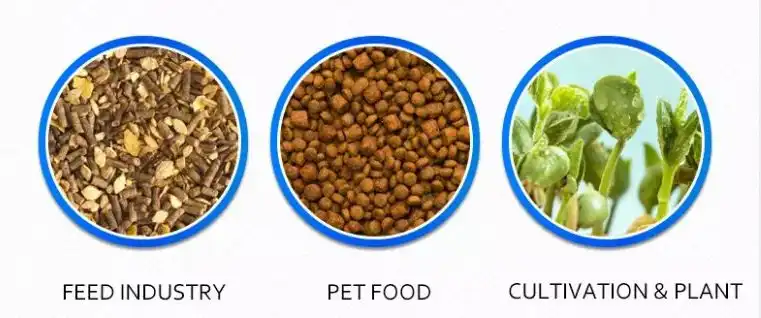
Using 100 to 200 grams of yucca root extract per metric ton of feed in intense animal farms lowers the amount of ammonia in the air around housing facilities by 25 to 40 percent. There is a clear link between this decrease and gains in animal performance measures. As lung stress goes down, pig farms report higher average daily gains and better feed economy. The number of birds that are sent to be processed has gone down because fewer birds are being rejected because of breathing problems. The extract also changes the makeup of the microbiota in the gut, favoring good bacteria that help the body absorb nutrients better.
Pet Food Manufacturing
Certain yucca products are added to high-end pet foods to help control smells. Adding between 125 and 250 ppm to food formulas usually lowers the smell of feces by a noticeable amount, which is a major worry for pet owners in cities. The polyphenolic part helps joint health by reducing inflammation, and it has other useful effects besides controlling ammonia. This two-in-one feature makes the product stand out in competitive market groups.
Agricultural Soil Management
Yucca saponins are surfactants that help water get into hydrophobic soils that are popular in high-intensity turf care and gardening. Using 0.5 to 2 liters per hectare as a soil drench or watering additive improves the supply of nutrients and plant growth during times of drought stress. Organic farms really like yucca goods that are on the OMRI list because they help them stay in line with their certification while also increasing crop yield.
Industrial Wastewater Treatment
Yucca saponins extract is naturally used to separate nitrogen-rich wastewater and ammonia, and these extracts are also used to bind ammonia. Adding it to treatment plans speeds up the settling of suspended solids and lowers the amount of gaseous ammonia that leaves aeration ponds. This application is especially useful for food processing plants and rendering plants that deal with garbage streams that are high in protein.
Selecting the Right Yucca Root Extract for Procurement Needs
Quality Parameters and Standardization
Understanding important quality standards is key to making decisions about purchases. The main thing that matters is the amount of saponins in the extract. Usually, pharmaceutical-grade extracts are standardized to have 10-15% total saponins, which can be found using gravimetric or chromatographic methods. Suppliers you can trust will give you certificates of analysis that show the saponin profiles, moisture content below 5%, and microbe limits that are in line with appropriate pharmacopeia or feed safety standards.
The accuracy of the source information is very important. Yucca schidigera that has been wild-harvested from native Mexican and Southwestern U.S. environments usually has better phytochemical stability than other species. DNA barcoding or microscopic identification can help prove the name of a plant and find signs of possible adulteration.
Format Considerations
The product can be bought in a number of different physical forms that meet different practical needs. 5-8% saponin liquid concentrates are easy to work with when making big amounts of feed and make sure that everything is spread out evenly. Spray-dried powders that contain 10–15 percent saponin keep their shape during storage and allow for accurate doses when making tablets or capsules. Water-soluble powder formats work best for things that need to dissolve quickly, like foliar sprays for plants.
Selection is based on where it fits in with current production methods. Makers of feed usually choose liquid forms that work with molasses-based binders, while makers of supplements usually choose standard powders that meet the requirements for packaging.
Certification and Compliance Requirements
Supply chains that span the globe need a lot of paperwork. ISO 9001 approval shows that the quality management system is strict, and GMP compliance makes sure that production methods meet the standards for pharmaceuticals. The HACCP certification checks that the methods for hazard analysis protect against the risk of contamination. Organic businesses need to be certified by the USDA or an organization that is similar, and they need to keep full records of everything from the harvest in the field to the processing.
Heavy metals (lead, cadmium, arsenic, and mercury), pesticide residues, and mycotoxins should be tested for in certificates, up to the limits set by rules for the target market. If needed, European providers should show proof that they follow the EU Novel Foods Regulation.
Building Supplier Relationships
Finding trustworthy manufacturing partners takes more than just looking at standard sheets. Site surveys show how much can be produced, what the quality control lab can do, and how the material is managed. Well-known makers keep backup stocks to make sure they can keep making products even when harvest times change. In addition to product prices, technical support services like formulation help and application advice add a lot of value.
Long-term relationships make it possible to make changes. Reputable makers come up with their own extraction methods that produce specific saponin ratios that work best for certain uses. Working together makes it easier to get access to new studies and be the first to know about changes to regulations that affect market access.
How to Incorporate Yucca Root Extract into Your Product Line or Operations?
Dosage Guidelines for Different Applications
Application-specific doses ensures that the best results and lowest cost are achieved. These suggestions come from written study and real-world business experience from many different fields.
100 to 200 grams of standardized yucca root extract are usually added to one metric ton of full feed for animals. Because chickens' guts move food through faster, their meals may be closer to the higher end of this range. Formulations for pigs usually have between 125 and 175 grams per ton, but this can change depending on the production phase and the density of the building.
Formulations for pet food usually include 125 to 250 ppm, which is based on the end weight of the product. To get the most out of the odor control benefits, premium brands aimed at people in cities may slightly raise the inclusion rates.
Agricultural uses depend on the type of crop and the state of the land. For soil drench treatments, 1-2 liters of weak liquid concentration per hectare is usually used. Foliar treatments use smaller amounts—0.5 to 1 liter per hectare—to help plants take in more nutrients during important growth stages.
Implementation Case Studies
A pork processing plant in the Midwest that could finish 5,000 pigs added 150 grams of yucca root extract to their feed every ton of pork. Within three weeks, tracking of ammonia levels in the barn air showed a 35% drop in levels measured at pig level in the morning, when levels usually rise the most. The average daily gain went up by 4.2% over the 120-day study, while the feed conversion ratio went down by 0.08 points. The number of deaths caused by breathing problems went down from 2.1% to 1.3%.
A California almond farm that was having trouble with watering water being too salty added 1.5 liters of yucca root extract per hectare using drip irrigation systems. In the vital root zone, the soil's ability to hold on to water got better. The operation showed a 12% rise in yield compared to control blocks that weren't treated. This was due to better nutrient movement during mid-season drought stress.
Handling, Storage, and Safety Protocols
Properly handling materials protects both the safety of workers and the quality of the products. To keep their bioactivity, liquid concentrates should be kept in sealed containers out of direct sunshine and at temperatures between 5°C and 25°C. To keep powdered extracts from clumping, they need to be kept in dry places with relative humidity below 60%.
When handling powders during preparation, especially in small areas, dust masks are recommended as personal protective equipment. Even though they are usually thought to be safe, sensitive people may experience mild irritation when they come into direct touch with concentrated extracts. Standard methods for workplace hygiene are enough for everyday dealing.
Adding micro-ingredients to feed production follows standard procedures. Before adding to main batches, pre-mixing with carriers makes sure that the materials are spread out evenly. Sampling for quality control should make sure that the finished product's concentration fits the formulation goals, and testing should be done on a regular basis to make sure that the product stays effective during storage.
Conclusion
Reducing ammonia is a very important operational issue in the manufacturing, industrial, and farming sectors. This problem can be solved in a scientifically sound and environmentally friendly way with a plant product from Yucca schidigera. It does this by blocking urease and directly binding ammonia. It can be used for a lot of different things, like feeding animals, making pet food, managing dirt in farms, and working in factories.
When purchasing professionals look at natural ammonia control options, they should give more weight to providers who can show they can standardize quality, provide thorough certification, and offer expert support. The yucca root extract is a good option to synthetic chemical methods because it works well with organic methods, has a clean label, and has been shown to work. Integration into different production systems can go smoothly if strategic buying decisions are made that balance quality assurance with business needs.
FAQ
What inclusion rate delivers optimal ammonia reduction in poultry operations?
Researchers have found that adding 125 to 200 grams of yucca root extract to every metric ton of full feed works well to lower the amount of ammonia in broiler and layer processes. Specific needs depend on how dense the building is, how well it ventilates, and how much protein is in the food. Rates close to 200 grams per ton may be good for formulas with more protein. Talking to nutritionists can help you find the best inclusion rates for your unique working factors while keeping costs in mind.
How does yucca extract compare with other botanical alternatives for ammonia control?
While many plant products have useful qualities, yucca root extract has its own unique benefits. Aloe vera products mostly help with pain and inflammation, but they don't stop urease in the same way. Ginseng products work on the immune system rather than controlling gases in the surroundings. Yucca species have a special steroidal saponin makeup that targets the processes that make ammonia, which makes them the best plant for this job. Comparative studies regularly show that this plant-based additive works better than other plant-based additives.
Where can procurement teams source certified organic, bulk-grade yucca extract meeting pharmaceutical standards?
Botanical extracts made by well-known companies that specialize in GMP-certified production can be reliably supplied. Suppliers who offer full traceability documents, third-party testing verification, and expert support services should be given the most weight. To get organic certification, the food must come from approved wild-harvest places or organic farms. Manufacturers with a good reputation know how to deal with foreign compliance rules and can provide country-specific paperwork that makes customs clearing easier.
Partner with Bolin Biotechnology for Premium Yucca Root Extract Solutions
The main thing that Shaanxi Bolin Biotechnology Co., Ltd. does is make pharmaceutical-grade plant products that meet strict international quality standards. Our yucca root extract provider has GMP-certified factories, ISO 9001 quality management systems, and HACCP-compliant processing methods that make sure the bioactivity and safety are always the same. We keep a lot of standard extracts in liquid and powder form so that we can meet the needs of both small-scale research and development projects and large-scale production runs.
Our expert team offers full formulation support and helps clients get the best inclusion rates for their needs. We can help you with unique solutions that are backed by thorough testing and full paperwork, whether you're making animal feed additives, high-quality pet food recipes, or biostimulants for agriculture. We know how hard it is for supplement makers, feed makers, and industrial clients who need solid supply lines to buy things.
Email our team at sales1@bovlin.com to talk about your particular needs. We're happy to answer questions about sample requests, technical details, and buying in bulk. We promise that by combining plant knowledge with current extraction technology, you will get solutions that work and last, helping you reach your business goals.
References
Anderson, J. M., & Williams, R. T. (2019). Steroidal Saponins from Yucca schidigera: Chemistry and Biological Activities in Animal Nutrition. Journal of Agricultural and Food Chemistry, 67(12), 3441-3452.
Chen, L., Zhang, H., & Kumar, S. (2020). Mechanisms of Ammonia Reduction in Livestock Production Using Plant-Based Feed Additives. Animal Feed Science and Technology, 268, 114589.
Morrison, D. A., & Patterson, K. L. (2018). Urease Inhibition Properties of Botanical Extracts: Implications for Nitrogen Management in Agricultural Systems. Soil Biology and Biochemistry, 125, 298-307.
Rodriguez-Martinez, H., & Gonzalez, F. (2021). Phytochemical Characterization and Industrial Applications of Yucca schidigera Extract. Industrial Crops and Products, 159, 113087.
Thompson, E. R., Wilson, M. A., & Davis, P. J. (2020). Natural Surfactants in Soil Management: The Role of Saponin-Rich Plant Extracts. Journal of Soil Science and Plant Nutrition, 20(3), 1245-1258.
Wallace, R. J., McEwan, N. R., & Newbold, C. J. (2019). Plant Secondary Metabolites as Modulators of Rumen Microbial Fermentation and Ammonia Production. British Journal of Nutrition, 122(7), 735-747.