_1745226507162.webp)

What is Ube Powder?
You can also call it purple yam or water yam, but this is what it's made of. Purple ube powder is a food that has been ground up very small. These bright plants come from Southeast Asia. They have a unique deep violet color and a sweet and salty taste. Purple ube powder doesn't have any extra tastes or colors added to it. Instead, it stays true to the phytochemicals that make it up naturally. It's useful, so many businesses are interested in it, such as those that make food, skin care products, and nutraceuticals. It's easy to mix, stays fresh longer, and the quality is the same from line to line because it comes in powder form. This makes it a good raw material for B2B buying workers who need to find plant-based products they can trust.
Understanding Purple Ube Powder: Origins and Characteristics
Botanical Background and Cultivation Regions
The Philippines, Southeast Asia, and some Pacific Islands are warm places where purple yams do well. As it grows underground, the root stores anthocyanins and other good chemicals. These are what make the meat a deep purple color. Most of the time, the ground needs to be warm (25°C to 30°C) and have good drainage. It must also stay wet. Between harvests, farmers carefully watch the tubers grow for 6 to 9 months to make sure they reach the right level of growth and nutrient density.
Production Process and Quality Control
Plans must be made for several steps in order to make purple ube powder that is safe to eat and keeps its nutritional value. To get rid of dirt and the top layers of skin, fresh potatoes are washed and peeled very well. The yam meat is washed and then cut into even pieces so that it dries more evenly. Things can be dried in a controlled way with tools that keep the temperature below 60°C. This keeps anthocyanins and antioxidants from breaking down, which is easy for them to do when they get hot. Fine-milling is the process of cutting dry materials below 5% moisture level into pieces that are all the same size. This makes it easier for the final product to mix and dissolve.
At every stage of the production process, rules are in place to make sure the quality is met. Manufacturers you can trust use tests to keep an eye on the amount of heavy metals, bacteria, and pesticide leftovers. There are international rules for food safety that a business must follow if it has ISO 22000, GMP, or HACCP standards. The buying teams think the supply line is honest because of this.
Distinguishing Ube from Similar Powders
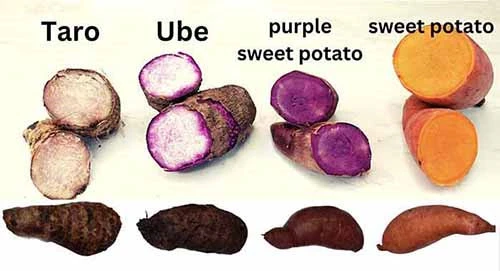
Some people can't tell the difference between ube powder, purple sweet potato powder, and purple taro powder. They are all purple, but they come from different plants and are made up of different chemicals. The taro root of this plant is brown on the outside and white to pale pink on the inside. Many store-bought taro items are bright purple because they've been colored with chemicals, but real ube is full of strong violet dyes all over its structure.
One more thing that people often get wrong is that the purple sweet potato comes from the plant Ipomoea batatas. Anthocyanins are found in both ube and purple sweet potatoes. However, because ube is a real yam, it tastes more earthy and rich, while purple sweet potatoes are sweeter. When procurement experts know about these changes between plants, they can pick the right raw materials for packing. They won't have to cost a lot of money and mess up replacements that could make the product less useful or make customers dislike it.
Nutritional and Health Benefits of Purple Ube Powder
Macronutrient and Micronutrient Composition
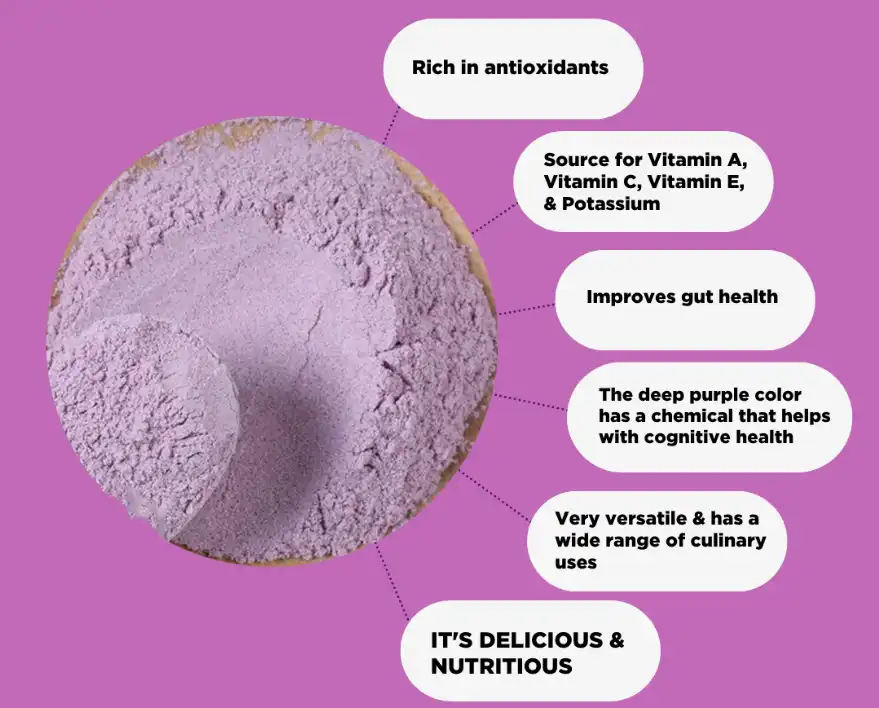
You can use purple ube powder to make foods that are good for you because it is full of healthy nutrients. In the powder, complex carbohydrates give you energy that lasts for a long time. The fiber in the powder is good for your gut health. Potassium and vitamin C are chemicals that help the body keep the right amount of water in the body and fight free radicals. Ube powder is low in fat, so it fits with the trend toward labels that are easier to read. It also gives manufacturers an ingredient that meets customer wants for parts that are natural and have been lightly treated.
Antioxidant Properties and Phytochemical Content
The best things about purple ube powder for your health are the anthocyanins, which are vitamins and polyphenols. There are powerful antioxidants in these colors that mix with water. They get rid of free radicals that cause oxidative stress and damage cells. Foods that are high in anthocyanins may be good for your brain, heart, and body. But different states have different rules about what kinds of health claims can be made.
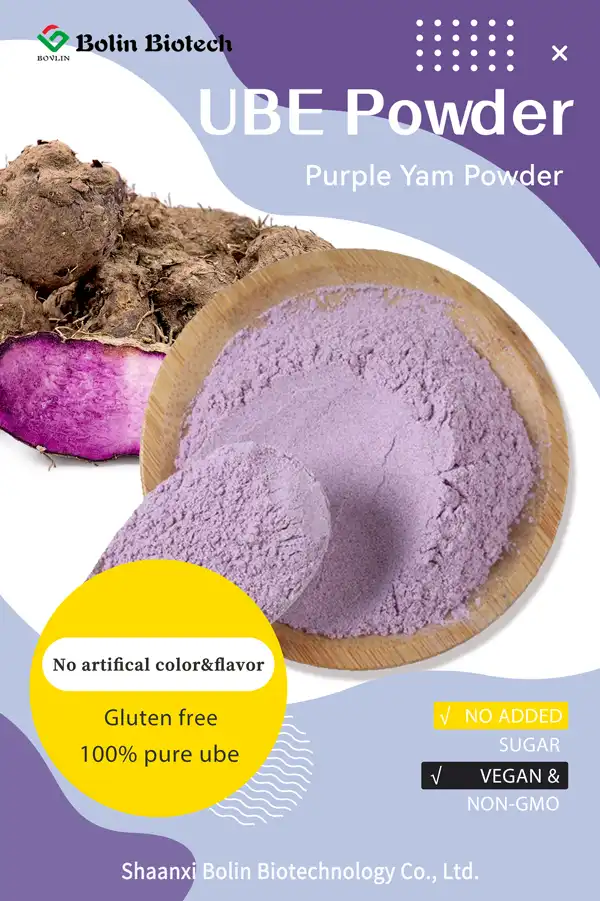
Purple ube powder does not have gluten in it as it is. This means it can be used in more types of products where allergens are a concern. This gene lets companies make different kinds of foods for people with celiac disease or gluten sensitivity without changing how healthy they are or how they taste.
Storage Considerations for Bulk Procurement
To keep its health and taste benefits, purple ube powder needs to be kept in the right way. The thing should stay somewhere cool, dry, and less than 60% humidity so it doesn't soak up water and germs. Anthocyanin breaks down more quickly in direct sunlight, which makes the color fade and the power to protect lessen. Purple ube powder will stay stable for 12 to 24 months if it is stored in the right way, in a jar with a lid. Making this change helps companies keep track of their stock and lose less things.
Powder can go bad when the temperature changes because it causes condensation to form inside the containers. This makes the powder stick together and spoils it. This worry can be eased by storing things in buildings that are climate-controlled and have good air systems. This makes sure that the goods always work the same way along the supply line.
Practical Applications and Recipe Ideas for Purple Ube Powder
Food Manufacturing Applications
A lot of different foods use purple ube powder because it is bright purple and not too sweet. By adding the powder to bread, cakes, muffins, and cookies, bakeries can make pretty treats without using dyes. Most of the time, use rates are between 2% and 5% of the flour's weight. They depend on how much color and taste you want to add.
Smoothies, milkshakes, and other drinks have purple ube powder added to them because it looks good and is good for you. The powder can be mixed well with both water and milk if the right binders and emulsifiers are used. Butter, ice cream, yogurt, and cheese all use bugs. They make it look and taste a little different by adding a purple color.
Confectionery manufacturers find particular value in purple ube powder for gummies, chocolates, and candy coatings. The ingredient provides clean-label coloration that resonates with consumers seeking transparent ingredient declarations, supporting premium positioning strategies in competitive markets.
Formulation Guidelines and Dosage Recommendations
To get the most out of purple ube powder, pay close attention to a few things. How stable anthocyanin is can change based on the pH level. When the pH is low, the purple tones don't change. But when the pH is high, they change to blue-gray tones. The people who make medicines should try different buffering systems on a bench to find the best ones that keep the product looking good for as long as possible.
It's important to think about the temperatures that are used because heat breaks down anthocyanins over time, which weakens colors. Purple ube powder stays useful longer when added later in the process or after the food has been cooked. For the powder not to stick and for the end grid to be properly spread out, give it enough time to spread out before it gets wet.
Sometimes, adding more than one thing to a powder can change how well it works. Anthocyanins may join with some chemicals and proteins, which can change their color and how well they work in the body. Formulators can change how they make things and get the same results every time if they know about these ties.
Emerging Trends and Innovation Opportunities
The growing consumer interest in ethnic flavors and functional ingredients creates opportunities for innovative product development featuring purple ube powder. Nutritional bar manufacturers are exploring ube-flavored variants that combine familiar formats with novel taste experiences. Supplement companies recognize the powder's potential as a natural coloring agent in capsules and tablets, replacing synthetic alternatives while potentially contributing antioxidant benefits.
Powder versus extract forms present distinct advantages depending on application requirements. Extracts offer concentrated anthocyanin levels suitable for nutraceutical dosing, while powders provide broader nutritional profiles with fiber and carbohydrate content. OEM clients benefit from evaluating both options to determine optimal cost-effectiveness and functional performance for their specific product concepts.
How to Choose and Source the Best Purple Ube Powder for Your Business?
Certification and Compliance Requirements
The first thing you should do to find a good purple yam powder seller is to look at their certificates. Organic approval means that farms don't use chemicals and fertilizers made by humans, which is good for people who like natural products. Check out ISO 9001 if you want to set up a quality control system. Check out ISO 22000 for information on how to handle food safety. When a place is given GMP approval, it means that it meets standards for making medicines. When it comes to health uses, this is very important because pollution needs to be kept very low.
Traceability systems allow buyers to track raw materials from farm to finished powder, supporting supply chain transparency and risk management. It is important to write down where the crops were grown, when they were picked, how they were treated, and the results of any tests that were done. To do government checks and answer customer questions, this information is very helpful. Also, it makes the company look more trustworthy when times are tough.
Evaluating Supplier Credibility and Communication
You should look at a service provider's past work, how much money they can make, and how much they know about their job. People are more likely to trust a business that has been around for a while and has a past than a business that is brand new. Factory sites with new tools and quality control rooms show that money was spent on getting the right tools to make sure the quality of the work is always good.
Talking and responding is an important part of the review process. It is easier to buy things from suppliers who answer technical questions quickly, give thorough product specs, and offer help with creation. This also helps new goods get made. You need to be able to speak more than one language if you want to do business. Procurers, on the other hand, keep ethnic teams together so that they can easily share information with clients from all over the world.
Another way to find out if a dealer is skilled is to read reviews from other customers or get an audit report from a third party. Buyers who do their research before going to another country are less likely to be scammed because they can rely on inspection papers from a third party to back up claims about skills and working conditions.
Logistical Considerations and Contract Terms
You need to know how shipping and taxes work if you want to buy purple ube powder from another country. Goods that are sent abroad need to have certain paperwork, like phytosanitary permits, certificates of analysis, and business bills. People who have worked with us before know what to bring. Choosing partners who know the rules of the country where the packages are going can help keep them on time and keep you from having to pay extra fees for not following the rules.
The type of packing a product is in affects how well and quickly it can be shipped. When sending a lot of items, people often use food-grade drums or multi-layer paper bags with plastic lids. You can send small things in boxes that are sealed. You should choose a container based on both how much it costs and how safe you need it to be. It's also important to think about how long the trip is and how the space is used during travel.
Important parts of a contract that need to be talked over are the payment terms and the minimum order amounts. If both sides agree on things like costs, wait times, and quality claims, they can do business with each other for a long time and feel safe. People can save money when they buy a lot of something, but they need to think about how much it costs to store and how much space they have.
Conclusion
Purple ube powder is a plant-based ingredient that can be used in many tasks to add natural color, improve taste, and help with health. Professionals who buy things should know where the material comes from botanically, what makes it unique, and how it is different from other materials that are similar. And this helps them pick a good place to get it. There are many anthocyanins in the powder, which helps market the product as healthy. The clean label design can be changed to suit different customer tastes. You need to think about the formulation factors, the storage conditions, and the selection criteria for a seller to make sure everything works well. As market demand for natural ingredients continues expanding, purple ube powder presents compelling opportunities for manufacturers seeking differentiation through innovative, scientifically validated raw materials.
FAQ
Is purple ube powder the same as taro powder?
Even though they look a lot alike, purple ube powder and taro powder are not at all the same. It is the esculenta plant that grows taro roots. The meat inside them is usually light pink to white. But many store-bought taro items use dyes to bring out the purple tones more. Dioscorea alata is the plant that makes purple ube powder. Everything about it is a strong violet color. The tastes are also different. Ube tastes a little less forceful than taro because it has stronger, nuttier notes. If you want the end result to taste good, make sure you list the ingredients properly. Adding different plants changes how well it works.
How does purple ube powder compare to purple sweet potato powder?
Both materials are purple because they contain anthocyanins, but they come from different plant families and have different chemical profiles. For more sugar, the purple sweet potato tastes better. It comes from the Ipomoea batatas plant. Ube is a real yam, but it tastes and feels more like an earthy yam. Also, the starch properties are a little different, which changes how the structure forms in baked items and other places. For manufacturers to choose the best ingredient, they should weigh the pros and cons of each one based on their own production goals. What they should think about is how the food will taste, how they like it made, and their health goals.
What is the typical shelf life of purple ube powder under proper storage conditions?
If you keep purple ube powder in a cool, dry place with a humidity level below 60%, it will last for 12 to 24 months. When plants are kept out of direct sunshine, the anthocyanins don't change color. Food stays fresh longer if it is kept in containers that are gas-tight and safe for food. These containers keep out germs and water. People who buy things can keep them regular and reduce waste by using climate-controlled storage and moving them in the right way. This helps keep prices low and gets things done quickly.
Can purple ube powder be used in large-scale food manufacturing?
Some companies that sell purple ube powder have strict ways of making sure the quality of their products. This powder can be used to make a lot of different kinds of food at the same time. When the powder is in powder form, it is easier to use automatic measure tools and spread it out evenly while mixing. A small test run should be done first to find the best processing settings before the full-scale test. The tests should find out how much water the substance needs, how sensitive it is to temperature, and how well it mixes with the other ingredients in the recipe. Cross-contamination can be avoided, and rules must be followed at all steps of production, by handling and cleaning tools in the right way.
Partner with Bolin Biotechnology for Premium Purple Ube Powder Supply
Bolin Biotechnology is the only company that buying teams need to find a purple ube powder maker they can trust. Our company keeps its ISO, GMP, and HACCP licenses up to date so that they are in line with international law. We can make a lot of different things and have tight rules for making sure the quality is good. What kind of makeup, useful foods, or dietary supplements are you making? You can pick from different grades and box patterns to suit your needs. Our skilled workers help you find the best recipes for purple ube powder and test them to make sure they work well with other things you sell. You can get full specs, talk about how to price large orders, and find out how our plant knowledge can help you reach your innovation goals by emailing sales1@bovlin.com.
References
Elevitch, C.R., and Manner, H.I. "Dioscorea alata: Purple Yam." Species Profiles for Pacific Island Agroforestry, Permanent Agriculture Resources, 2011.
Philpott, M., Gould, K.S., Lim, C., and Ferguson, L.R. "In situ and in vitro antioxidant activity of sweetpotato anthocyanins." Journal of Agricultural and Food Chemistry, 2004.
Teow, C.C., Truong, V.D., McFeeters, R.F., Thompson, R.L., Pecota, K.V., and Yencho, G.C. "Antioxidant activities, phenolic and beta-carotene contents of sweet potato genotypes with varying flesh colours." Food Chemistry, 2007.
Yoshimoto, M., Okuno, S., Yoshinaga, M., Yamakawa, O., Yamaguchi, M., and Yamada, J. "Antimutagenicity of sweetpotato roots." Bioscience, Biotechnology, and Biochemistry, 1999.
Padmaja, G. "Cyanogenic glycosides in Dioscorea: Distribution and variability in Indian species." Tropical Agriculture, 1989.
Ahmed, M., Akter, M.S., and Eun, J.B. "Impact of processing on physicochemical and functional properties of purple sweet potato flour." Food Science and Biotechnology, 2011.


_1750302316866.webp)