_1745226507162.webp)

Nervonic Acid Powder vs. Phosphatidylserine: Comparing Brain-Health Ingredients
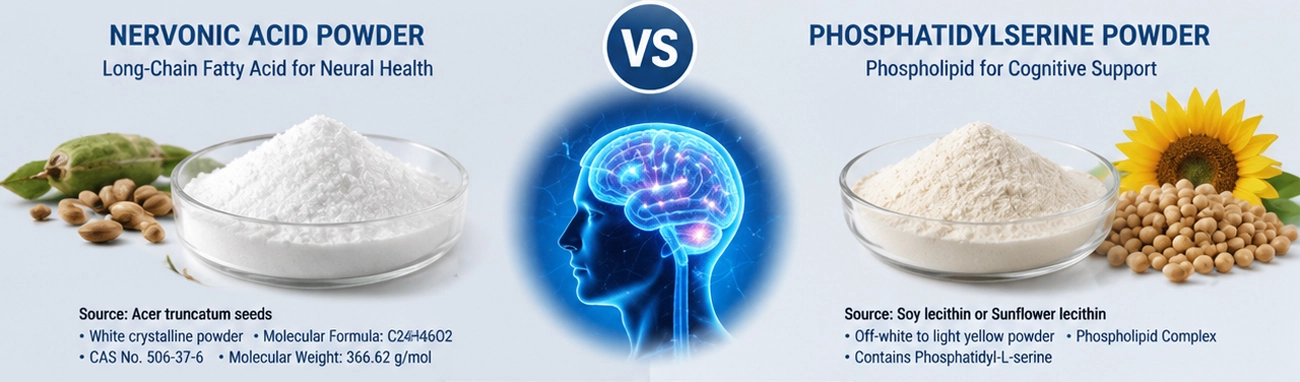
When choosing between nervonic acid powder and phosphatidylserine for cognitive health formulations, product developers face an important decision. Both ingredients offer scientifically validated brain-health benefits, yet they work through fundamentally different mechanisms. Nervonic acid, a C24:1 monounsaturated fatty acid extracted from Acer truncatum seeds, specializes in myelin sheath repair and nerve signal transmission. Phosphatidylserine, a phospholipid derived from soy or sunflower lecithin, primarily enhances memory formation and neuronal communication. Understanding these distinctions helps procurement teams select ingredients that align with their target market needs and formulation objectives in the rapidly expanding cognitive wellness sector.
Introduction
Over the past ten years, the global market for brain-healthy supplements has grown significantly. This is due to an aging population and more people being aware of how to stay healthy. Business-to-business buyers in the nutritional, medicinal, and functional food industries know that choosing the right ingredients has a direct effect on how well a product works, how well it meets regulations, and how competitive it is in the market.
Two brain-healthy ingredients have been studied in depth and found to have different biochemical patterns and medicinal uses. We give decision-makers evidence-based information about how they work, how they are made, and things to think about when buying them so that they can make effective cognitive wellness products. Our study looks at what product formulators, regulatory teams, and purchasing managers in European and American markets care about most when it comes to following ISO, GMP, and HACCP standards.

Understanding Nervonic Acid Powder and Phosphatidylserine
Chemical Structure and Natural Sources
Brain-health ingredients have very different chemical structures, which affect how they work biologically and in the recipe. Understanding these basic differences is the first step in choosing the right ingredients.
There are 24 carbons in nervonic acid (CAS No. 506-37-6) and it has a molecular weight of 366.62 g/mol. It is a monounsaturated fatty acid. This chemical naturally occurs in plants, and most of the time we get it from Acer truncatum seeds. Malania oleifera and some specialty rapeseed types are also becoming more popular sources. The white crystalline powder has a freezing point between 42 and 45°C and is very lipophilic, which means it dissolves easily in organic liquids but not in water.
As a glycerophospholipid, phosphatidylserine is a unique type of compound because it has both fatty acid chains and a phosphate group attached to serine. Soy lecithin or sunflower lecithin is mostly used as a raw material in modern production methods, which change it using enzymes. This phospholipid is found naturally in the body's cell membranes. It is especially common in nerve tissues, where it makes up about 15% of the brain's phospholipid pool.
Extraction and Processing Methods
The manufacturing method has a big effect on the purity, safety, and regulatory compliance of the ingredients. Producers can meet the pharmaceutical-grade standards that picky B2B customers demand thanks to new extraction technologies.
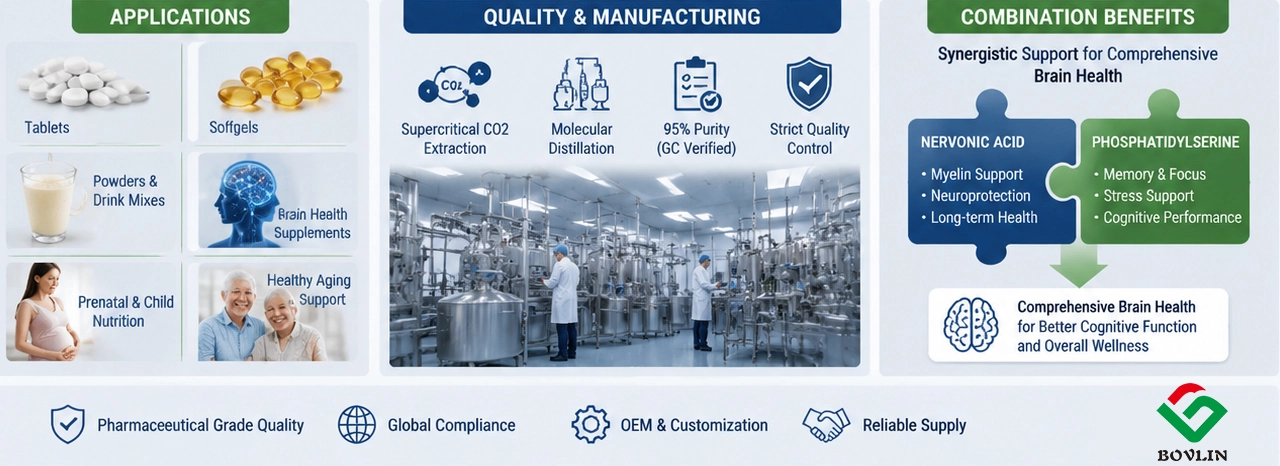
We use cutting-edge extraction methods like supercritical CO2 extraction and molecular distillation at Shaanxi Bolin Biotechnology to get pharmaceutical-grade nervonic acid powder from Acer truncatum seeds. Gas Chromatography research confirms that this multi-stage process yields 95% purity, with high-quality standards such as peroxide levels ≤5.0 meq/kg and acid levels ≤1.0 mg KOH/g. Our way of making things gets rid of erucic acid pollution, which is a major safety issue for long-term human consumption. The crystalline structure of nervonic acid powder makes it easy to incorporate into solid dosage forms like tablets, hard capsules, and softgels without affecting the stability of the active ingredient.
The process of making phosphatidylserine usually involves enzymes changing phosphatidylcholine from plant lecithin to phosphatidylserine through base exchange reactions. Standardized amounts of phosphatidylserine ranging from 20% to 50% are made using this method in different carrier materials. Manufacturers of good products use strict testing methods to make sure that each batch is the same and that there are no allergens. This is especially important when the materials come from soy.
Core Benefits and Mechanisms of Action
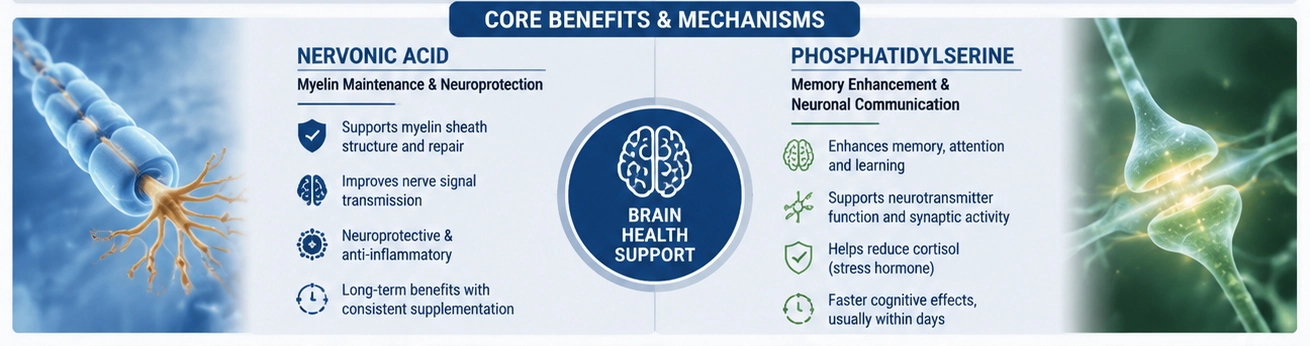
Nervonic Acid: Myelin Maintenance and Neuroprotection
Any nutrient good for brain health is only useful for treating certain conditions because of how it works in neural cells. Scientific research has uncovered different ways that these compounds help the brain work better.
Nervonic acid is an important building block of sphingomyelin, which is a major lipid in the myelin layer that covers nerve fibers. This specific fatty acid easily crosses the blood-brain barrier and joins directly with myelin structures, helping to fix and keep nerve protection in good shape. Clinical studies have shown that having the right amount of nervonic acid is linked to faster nerve signal transmission and faster brain thinking. The compound is especially useful for dealing with age-related myelin degradation and helping people recover from conditions that cause demyelination.
According to studies published in nutritional brain journals, taking 300–500 mg of high-purity nervonic acid every day can help older people think more clearly and remember things better. The compound's neuroprotective benefits go beyond supporting the structure of neurons; they also reduce inflammation in brain tissues. Its high oxidative stability compared to polyunsaturated fatty acids ensures that the bioactivity stays the same over the course of the product's shelf life, which is an important factor for formulators making high-quality brain vitamins.
Phosphatidylserine: Memory Enhancement and Neuronal Communication
Phosphatidylserine works in very different ways, with its main functions being to control neurotransmitters and the movement of cell membranes. This phospholipid keeps the membrane flexible, which is needed for receptors to work and for signals to be sent across synaptic synapses.
Phosphatidylserine has been shown in several human clinical trials to improve memory consolidation, attention span, and cognitive processing under stress. The molecule changes the release of cortisol, which may explain why it has been shown to help with stress-related memory loss. Typical supplementation plans use 100 to 300 mg every day, and studies show that cognitive test scores get better after 6 to 12 weeks of consistent use.
The ingredient helps make more acetylcholine and makes receptors more sensitive, which has a direct effect on how well you can learn and remember things. Because of these effects, phosphatidylserine is a great ingredient for products that are aimed at working adults, students, and older people who are experiencing mild cognitive decline. Product makers like that it has a well-established safety profile and a lot of clinical data to back up what the label says in controlled markets.
Comparative Analysis: Nervonic Acid Powder vs. Phosphatidylserine
Biochemical Differences and Absorption Profiles
Teams that buy things need to know how the molecular structure of ingredients affects how well they work in finished products. These technology issues have a direct effect on how well the product works and how happy customers are with it.
Because nervonic acid is lipophilic, it needs to be carefully formulated to be as bioavailable as possible. Our crystalline powder form is better than options made from crude oil because it doesn't have any smell and is easier to mix into solid dose forms. The compound's long carbon chain structure and single unsaturation point make it very stable against oxidation. This means that products can last longer without needing strong antioxidant systems that could damage other parts of the formula.
The amphiphilic structure of phosphatidylserine—it has both hydrophilic and lipophilic regions—allows it to be directly incorporated into cell membranes after it has been absorbed. This dual solubility property makes it possible for a variety of delivery formats, such as softgels, powders that need to be mixed with water, and direct compression tablets. Due to its hygroscopic nature, the ingredient needs to be carefully packaged to keep out moisture, and carefully chosen excipients must be used to maintain stability during production and storage.
The times needed for the absorption of nervonic acid powder are very different for these elements. Nervonic acid powder slowly builds up in tissues over the course of weeks of consistent supplementation. Its long-lasting effects are due to its structural integration into neural tissues. Phosphatidylserine has faster effects on cognitive factors, which can often be seen within days of supplementation. However, to keep the long-term benefits, the body needs to keep taking it to keep tissue levels high.
Formulation Compatibility and Product Applications
The ability of an ingredient to work with different dosage forms and product categories has a big impact on its economic success and how it is positioned in the market. Product developers can avoid formulation failures and regulatory setbacks by knowing the limits of compatibility.
Our nervonic acid powder works great for tasks that need accurate doses and long-term stability. The crystal structure makes it easy to mix with other ingredients that help the brain, like DHA, ARA, and plant nootropics. Our information is successfully used by product makers to make cognitive health tablets, prenatal vitamins that help the brain development of the fetus, and medical foods for neurological conditions. When mixed with the right emulsification technologies, the powder's microencapsulation-ready form can be made into drink applications and liquid supplement delivery systems.
Phosphatidylserine works especially well for softgel encapsulation because it is almost liquid at body temperature, which makes it easier to get the best release profiles. In complete brain-health formulas, the ingredient works well with omega-3 fatty acids, B-complex vitamins, and herbal adaptogens. Some makers have problems with the way powder flows during direct compression tableting, which might mean they need to use special ingredients or grinding methods to get the manufacturing process to work as efficiently as possible.
Safety Profiles and Regulatory Considerations
Manufacturers who are responsible and do business in international markets must put consumer safety and following the rules above all else. Both ingredients have a history of being safe, but there are some things that should be kept in mind when choosing which ingredients to use.
Nervonic acid is a naturally occurring fatty acid that can be found in small amounts in many foods. This makes it generally thought to be safe to take as a supplement. Our production method tightly controls the amount of erucic acid present, so there are no worries about using rapeseed oil that is high in erucic acid. To meet EU and FDA food safety rules, every production batch is thoroughly checked for heavy metals, pesticide residues, and microbial contaminants. The ingredient doesn't pose a major allergen risk, which makes it a good choice for clean-label products.
In many places, phosphatidylserine that comes from soy needs to have the right allergy labeling. Sunflower-derived options get around this problem. The ingredient is Generally Recognized as Safe in the US, which means that certain qualified health claims can be made about its effects on cognitive function in older people. In the same way, European regulations recognize its safety profile and set acceptable daily intake levels. Clinical studies show that there aren't many bad effects, mostly mild stomach pain at high doses that are higher than what is normally recommended for supplements.
| Feature | Nervonic Acid Powder | Phosphatidylserine Powder |
|---|---|---|
| Source Type | Long-chain fatty acid | Natural phospholipid |
| Core Benefit | Neural membrane support | Cognitive & memory support |
| Absorption | Slow tissue accumulation | Faster cognitive response |
| Best Applications | Brain health, prenatal nutrition, medical foods | Nootropic supplements, softgels, tablets |
| Formula Compatibility | DHA, ARA, plant nootropics | Omega-3, B vitamins, adaptogens |
| Key Advantage | Long-term neural structure support | Versatile delivery and cognitive benefits |
Procurement Considerations for B2B Clients
Supplier Evaluation and Quality Assurance
Choosing trustworthy ingredient sources is a big business decision that will affect the quality of your products and your brand's image for a long time. A thorough evaluation of the supplier guards against expensive quality problems and noncompliance.
When looking for producers of nervonic acid, purchasing teams should give more weight to companies whose supply chains are vertically integrated, meaning that they grow their own raw materials and make their own powder. With over 25,800 acres of certified Acer truncatum planting bases, Shaanxi Bolin Biotechnology makes sure that the quality of the plants is always high and that they are sourced in a way that doesn't harm the environment. Our dedicated team of more than 80 specialists uses six-stage quality testing methods at key control points throughout the production process. Each batch can be tracked all the way from when the seeds are harvested to when the powder is packaged.
Quality badges give concrete proof of a company's ability to make nervonic acid powder and follow the rules. We keep our ISO 9001 quality management certification, our GMP compliance for making pharmaceutical-grade nervonic acid powder ingredients, and our HACCP certification for managing food safety. These standards, which are known all over the world, show that we are dedicated to uniform quality and ongoing growth. By asking for Certificates of Analysis for sample production batches, buyers can make sure that the delivered nervonic acid powder materials meet the standards in a number of quality areas.
Supply Chain Reliability and Logistics
How well suppliers handle transportation and supplies has a big impact on how efficiently they buy things. Unexpected problems with supplies can throw off production schedules and make it harder to work with customers.
Setting up clear ways for people to talk about lead times, minimum order amounts, and packaging choices helps avoid confusion that could delay the start of a product. Our flexible packing options, such as bottles, drums, vacuum-sealed bags and foil pouches, can be used for a wide range of products, from high-volume market names to small batches of specialty goods. We keep strategic store stocks on hand to meet pressing orders, and our merger of agriculture ensures that we have enough supplies for the long run.
International companies that sell their goods in more than one market need to be able to distribute their goods all over the world. We have set up efficient export logistics that ensure on-time delivery to North America and Europe, along with the right paperwork for customs clearance and regulatory compliance. By talking about sample availability during the initial supplier evaluation, R&D teams can test for compatibility and stability before committing to buying on a large scale.
Making the Right Choice for Your Product Line
Market Positioning and Consumer Preferences
When choosing ingredients, you should think about what your target market is like and what makes them buy things. Knowing about regional tastes and population trends helps people make better decisions about product development.
People in North America and Europe are becoming more knowledgeable about brain-healthy ingredients. They are especially interested in chemicals that have been clinically proven to work based on peer-reviewed research. Nervonic acid-containing products are popular with health-conscious people who want more advanced, science-based ingredients than basic omega-3 products. The fact that the ingredient comes from plants fits in with clean-label trends and the growing importance of the environment in buying choices. Using nervonic acid as a unique nutrient to help myelin stands out among other goods in the brain health category.
Because it came out earlier on the market and has been heavily promoted by well-known supplement brands, phosphatidylserine is better known by people who already use supplements. This advantage of recognition makes it easier to educate consumers and can support high-priced strategies for goods that focus on brain performance in tough situations. Demographic targeting usually focuses on working adults, competitive college students, and active seniors who care about keeping their minds sharp.
Customization and OEM Manufacturing Opportunities
Differentiating products rests more and more on new formulations and custom ingredient ratios that are made to meet specific therapeutic goals. OEM partnerships let brands make their own formulas without having to spend a lot of money on production equipment.
Working with ingredient providers that offer help with recipe development speeds up the time it takes to get a product on the market. Our technical team at Bolin Biotechnology works with clients to find the best nervonic acid concentrations for a wide range of uses, from everyday cognitive support supplements to specialized nutrition products for kids. We help our customers avoid expensive re-formulation processes during product development by giving them stability testing data and formulation suggestions that deal with common compatibility issues.
Combination formulations that contain both nervonic acid and phosphatidylserine are a new way to achieve overall brain health support. These synergistic blends work on different parts of brain function by using different but complementary methods. They may be more valuable to customers than goods with only one ingredient. With custom production arrangements, brands can choose their own ingredient ratios, botanical mixes, and transport methods that set them apart from competitors in mature supplement markets.
Conclusion
When choosing between nervonic acid powder and phosphatidylserine, it's important to think about the preparation needs, treatment goals, and target population. Nervonic acid is very good at helping keep myelin healthy and protecting neurons over time. It is especially useful for kids' diet and helping them think more clearly as they get older. Phosphatidylserine has been shown to help improve memory and brain function during times of stress. Both ingredients have good safety ratings and are approved by regulators in most major countries. Creating a successful product often involves putting together strategies that use different processes that work together to help brain health in a complete way. Working with suppliers who care about quality gives you access to pharmaceutical-grade ingredients that meet strict standards. This helps your brand's reputation for safety and effectiveness in the competitive cognitive wellness market.
FAQ
What dosage levels are recommended for nervonic acid and phosphatidylserine?
Clinical studies support taking 300–500 mg of nervonic acid every day to help adults' brain function. Specialized versions for kids use lower amounts and are mixed into complete nutritional matrices. Phosphatidylserine works best when taken in doses of 100 to 300 mg per day, which are usually split up and taken with meals to help the body absorb it better. When formulating, decisions should be based on the traits of the target group. For example, bigger amounts are okay for therapeutic uses compared to general health goods. Always look at the appropriate regulatory guidelines for each market when it comes to label claims and dosage suggestions.
Can nervonic acid and phosphatidylserine be combined in single formulations?
These ingredients work well together in well-thought-out combinations, providing complementary effects that improve many areas of brain health. The myelin-supporting properties of nervonic acid work well with the membrane flexibility and signaling benefits of phosphatidylserine. To make combination goods that work, you need to pay attention to the total amount of lipids, use the right antioxidants, and keep moisture out while they are being made and stored. When making multi-ingredient cognitive formulations, we suggest doing accelerated stability testing to make sure that the formulations will keep working for as long as they are supposed to.
What quality certifications should I require from nervonic acid suppliers?
Suppliers with a good reputation keep their ISO 9001 quality management certification, GMP compliance, which shows they can make pharmaceutical-grade products, and HACCP certification, which shows they have food safety management systems in place. Ask for proof that the raw materials can be tracked, that heavy metals were tested, that pesticide residues were analyzed, and that microbes were screened for contamination. Gas chromatography should show that the certificates of analysis meet the purity requirements, and the peroxide and acid values should meet the stability standards. Suppliers with certified organic planting bases give you more peace of mind about sustainable sourcing and low risks of polluting the environment.
Partner with Bolin Biotechnology for Premium Nervonic Acid Supply
Shaanxi Bolin Biotechnology has been making nervonic acid powder for more than ten years and delivers pharmaceutical-grade ingredients that meet the strict requirements of nutraceutical, pharmaceutical, and functional food companies around the world. Our fully connected supply chain, which includes 25,800 acres of approved Acer truncatum farming and state-of-the-art extraction facilities, makes sure that every batch is 95% pure and reliable. We help you develop your product by giving you detailed technical documentation, formulation advice, and a range of OEM customization options. Email our team at sales1@bovlin.com to get samples, talk about your unique needs, and find out how our nervonic acid powder can help your brain-health products stand out in a crowded market.
References
1. Martínez, M., & Mougan, I. (1998). Fatty acid composition of human brain phospholipids during normal development. Journal of Neurochemistry, 71(6), 2528-2533.
2. Glade, M. J., & Smith, K. (2015). Phosphatidylserine and the human brain. Nutrition, 31(6), 781-786.
3. Tanaka, K., Hosozawa, M., Kudo, N., Yoshikawa, N., Hisata, K., Shoji, H., & Shinohara, K. (2013). The pilot study: Sphingomyelin-fortified milk has a positive association with the neurobehavioral development of very low birth weight infants. Brain and Development, 35(1), 45-52.
4. Cenacchi, T., Bertoldin, T., Farina, C., Fiori, M. G., & Crepaldi, G. (1993). Cognitive decline in the elderly: a double-blind, placebo-controlled multicenter study on the efficacy of phosphatidylserine administration. Aging Clinical and Experimental Research, 5(2), 123-133.
5. Wen, J., Jiang, H., & Zhang, Y. (2017). Nervonic acid: A comprehensive review of extraction, nutritional function, and pharmacological activity. Food Science and Technology, 37(2), 153-162.
6. Blokland, A., Honig, W., Browns, F., & Jolles, J. (1999). Cognition-enhancing properties of subchronic phosphatidylserine treatment in middle-aged rats. European Journal of Pharmacology, 374(2), 213-220.


_1780035065210.webp)