_1745226507162.webp)

PDRN powder Concentration Guide for Cosmetic Formulations
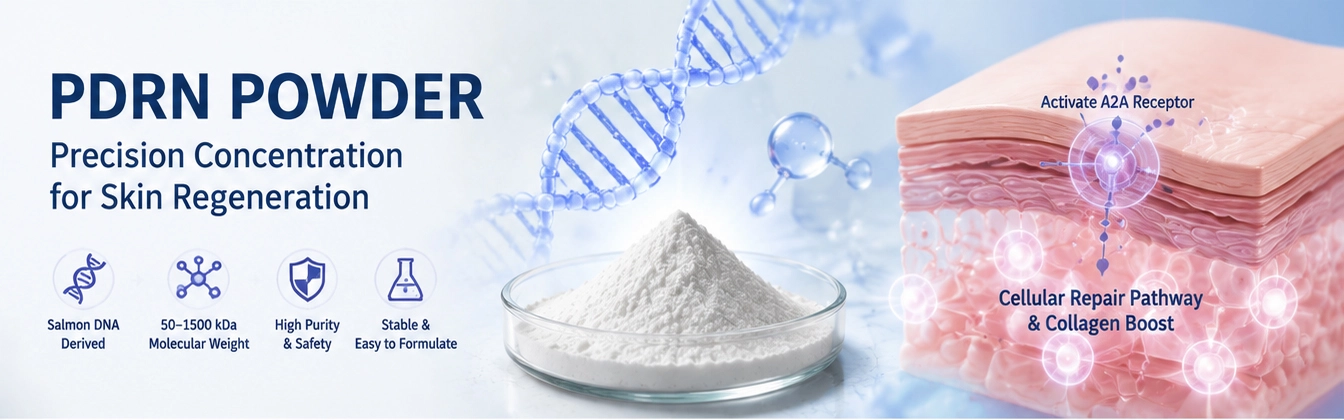
When formulating with PDRN powder, understanding optimal concentration ranges becomes essential for cosmetic manufacturers seeking to deliver measurable skin regeneration outcomes. Polydeoxyribonucleotide, sourced predominantly from salmon DNA, requires precise calibration between 0.5% and 5% depending on product format and intended clinical benefits. This biopolymer activates adenosine A2A receptors to trigger cellular repair pathways, making concentration precision critical for balancing therapeutic efficacy with formulation stability, regulatory compliance, and consumer safety across serums, creams, and injectable mesotherapy applications.
Understanding PDRN Powder and Its Role in Cosmetics
What Makes Polydeoxyribonucleotide Unique in Skincare?
Polydeoxyribonucleotide is a new and innovative active ingredient made from salmon sperm DNA. It is freeze-dried into a powder with molecular weights between 50 and 1,500 kDa. This particular spread of molecular weight allows for the best entry into the dermis while keeping biological activity. The material has a DNA sequence that is about 95% close to human DNA. This makes it much less likely that the body will respond negatively to it when it is applied topically or injected. Unlike manufactured options, nucleotide fragments from salmon work well with cells' repair systems because they are made through nucleotide salvage pathways.
Mechanisms Driving Skin Regeneration
This bioactive compound's ability to heal works in a number of well-established ways. When DNA fragments are put on skin tissue, they selectively bind to adenosine A2A receptors on the surfaces of cells. This causes cAMP levels to rise inside cells, which then activates protein kinase A pathways. This chain reaction lowers the activity of NF-κB, which causes inflammation, while at the same time increasing the growth of fibroblasts. Clinical studies show that collagen type I production goes up by 34–47% after 28 days of regular use. This gives formulators proof that their claims about anti-aging products that reduce wrinkles and make skin firmer are true.
Comparing PDRN with Conventional Cosmetic Actives
Hyaluronic acid and other common cosmetic ingredients work by hydrating and volumizing the skin. Peptides, on the other hand, work by telling cells how to do things. PDRN works with the other process by giving cells the nucleotide building blocks they need to fix themselves. Because of this main difference, Polydeoxyribonucleotide works especially well to treat photoaging, healing after surgery, and barrier failure. The compound is also more stable at high temperatures than peptide-based ingredients. It keeps its bioactivity even after the standard sterilization processes needed for injectable-grade formulations.
Key Considerations for PDRN Powder Concentration in Cosmetic Formulations
Establishing Effective Concentration Ranges
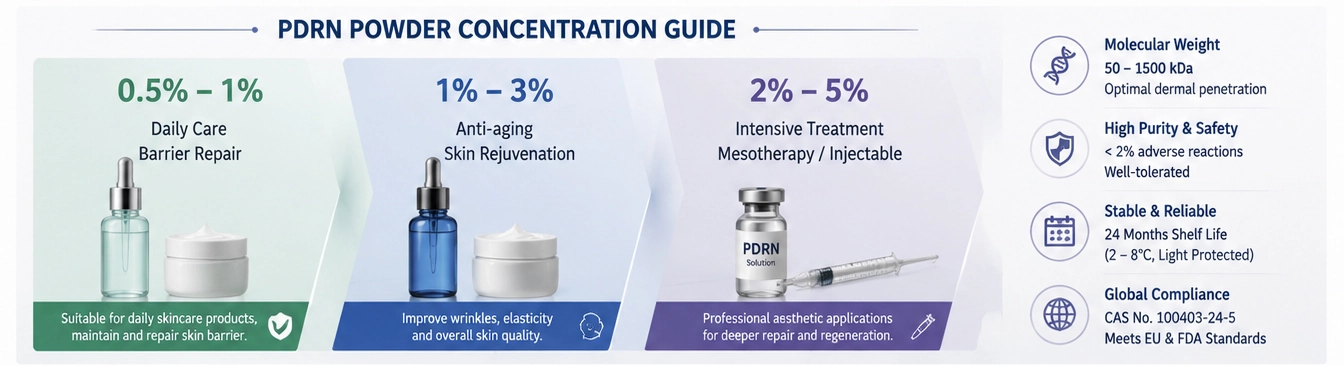
For serums and creams, industry standards for topical cosmeceutical uses are usually between 0.5% and 3%. Injectable mesotherapy formulas, on the other hand, use higher concentrations between 2% and 5%. The values shown here come from a lot of clinical tests that weighed therapeutic results against the ease of formulation. Lower concentrations, between 0.5 and 1%, work well for daily products that aim to avoid damage and fix barriers. Higher concentrations, above 2%, are better for intense treatments like scar healing, laser recovery, and deep wrinkle correction. Product designers need to be aware that concentration has a direct effect on both the costs of making the product and how well it works in the clinic.
Bioavailability and Formulation Stability Factors
The PDRN powder form has clear benefits for keeping solubility high throughout the product's shelf life. High-purity polydeoxyribonucleotide stays stable for 24 months or more before it needs to be reconstituted if it is kept properly at 2 to 8°C in containers that keep light out. This longer stability window solves a major problem in international business-to-business supply chains: liquid formulations of PDRN powder can break down during long shipping times. When amounts drop below 1%, formulators who work with topical uses should add penetration enhancers or liposomal delivery systems to make sure the skin can absorb the medicine properly. The molecular weight range of 50 to 1,500 kDa makes it possible for molecules to pass through damaged skin layers without the need for harsh chemical agents.
Safety Profiles and Regulatory Compliance
Safety data from many practical uses shows that all studied concentrations are well tolerated. According to studies that have been done, the rate of adverse reactions is still less than 2%. These reactions are mostly mild and temporary erythema at injection sites with higher concentrations. For cosmetic-grade products going to the U.S. market, makers should keep concentrations within known safety limits and keep track of clinical data to back them up. The CAS number 100403-24-5 makes it easier to file legal paperwork on global markets. The quality standards, which include a heavy metal content of less than 10 ppm and a microbial count of less than 100 CFU/g, are in line with EU beauty rules and FDA expectations for external active ingredients.
Comparative Analysis of PDRN Powder Concentrations with Other Skin Actives
Synergistic Combinations with Hyaluronic Acid
When Polydeoxyribonucleotide and non-crosslinked hyaluronic acid are mixed, they make products that can hydrate right away and help the skin heal over time. For injection uses, the suggested ratio keeps PDRN levels between 2% and 3% and hyaluronic acid levels between 0.5 and 1.5%. This mixture uses hyaluronic acid's ability to hold water to make the perfect setting for DNA fragment action. The combination works especially well in mesotherapy programs that target photoaged skin, where the instant plumping effects of HA work well with the collagen-stimulating effects of polydeoxyribonucleotide over the next few weeks.
Multi-Active Formulas with Growth Factors
More and more, advanced cosmetics scientists are looking into mixing Polydeoxyribonucleotide with epidermal growth factors (EGF) or stem cell products from plants. When making these complex blends, keeping PDRN levels between 1.5 and 2% and growth factor levels between 5 and 10 ppm keeps receptors from becoming saturated and keeps each active mechanism intact. Nucleotide fragments give cells the building blocks they need to repair themselves, and growth factors control the processes that lead to cells differentiating. This strategic pairing lets claims include both immediate barrier repair and long-lasting anti-aging benefits, which appeals to high-end skincare groups that want clinical proof of efficacy.
Concentration Adjustments for Retinol Combination Therapies
Because retinol can irritate the skin, it is important to carefully control the concentration of PDRN powder when it is mixed with retinoids. Successful products usually lower the amount of Polydeoxyribonucleotides to 0.5 to 1% while keeping the amount of retinol at normal beauty levels, which are between 0.2 and 0.5%. The DNA pieces' anti-inflammatory qualities help lessen the irritation caused by retinoids, making anti-aging products that are softer but still effective. This mix works on several ageing processes at the same time. Retinol speeds up the turnover of cells, and polydeoxyribonucleotide helps cells meet their higher metabolic needs by providing them with nucleotides.
Procurement and Supplier Considerations for PDRN Powder
Essential Supplier Qualifications and Certifications
When B2B procurement teams look at possible polydeoxyribonucleotide suppliers, they need to make sure that they have full-quality documentation that goes beyond basic specifications. Reputable makers keep their Good Manufacturing Practice (cGMP) certifications up to date and have audit trails that show consistency from batch to batch. ISO licenses, such as ISO 9001 for managing quality and ISO 22716 for making cosmetics, give you even more peace of mind. Suppliers should easily be able to give you Certificates of Analysis that show purity levels that have been checked using HPLC, proving that the product is at least 98% pure as claimed. Documentation of the molecular weight distribution is very important because changes outside the 50–1,500 kDa range make it harder for the drug to penetrate the skin.
Evaluating Source Material Authenticity
Both effectiveness and legislative positioning are greatly affected by the source information. Real salmon-derived polydeoxyribonucleotide from wild-caught Oncorhynchus keta is better at working with living things than man-made replacements or materials from unknown fish sources. Procurement managers should ask for detailed paperwork that shows where the raw materials came from, such as licenses for fisheries and heavy metal testing results for foods that come from the sea. Optical density ratios (OD260/OD280) between 1.8 and 2.0 show that the DNA is pure and that the extraction method is correct. These technical checks keep brands safe from supply chain scam and make sure that products work the same way throughout all production runs.
Navigating International Logistics and MOQ Requirements
The freeze-dried PDRN powder form makes foreign shipping easier than liquid forms because it doesn't need to be kept cold during transit. Standard packages stay stable at room temperature for short periods of time, but storing them at their destination between 2°C and 8°C keeps the bioactivity at its best. Different suppliers have very different minimum order quantities (MOQs). For example, Bolin Biotechnology, an established company, has MOQs that start as low as 5 grams for research and development purposes and go up to kilograms for commercial production. This gives formulators the freedom to do full compatibility tests before signing contracts for large amounts of goods. For stock items, lead times are usually between 2 and 4 weeks. For unique molecular weight requirements, production and quality checks take 6 to 8 weeks.
Practical Guide: Application and Formulation Tips for Optimal PDRN Concentration
Serum Formulations for Daily Skincare
In consumer cosmetics, lightweight serum bases are the most common way for Polydeoxyribonucleotide to be used. For daily-use serums, the best amounts are between 0.5% and 1.5%, dissolved in water-based mixtures that have humectants like propanediol or glycerin. For the reconstitution process, the PDRN powder has to be slowly added to clean water or buffer solutions while being stirred slowly so that foam doesn't form, which can damage DNA pieces. Keeping the pH between 6.5 and 7.5 keeps the bioactivity and keeps the product working with the skin's natural processes. Co-formulants should stay away from strong preservatives and high alcohol amounts that could make nucleotides less stable. Plant-based vitamins, niacinamide, or peptide combinations work well with Polydeoxyribonucleotide without getting in the way of its functions.
Injectable Mesotherapy Protocols
For intradermal injection protocols, higher concentrations of PDRN powder between 2% and 5% are used for medical aesthetic uses. For these formulations to work at their best, they need to be as pure as pharmaceutical-grade standards and be reconstituted in a sterile way right before they are given to a patient. When you mix PDRN powder with clean saline or non-crosslinked hyaluronic acid solutions, you get injectable mixtures that can be used to improve microneedling or give directly to the skin. During treatment, 30-32 gauge needles are used to inject 2-3 mL amounts into the papillary dermis at depths of 1-2 mm across treatment zones. The best effects have been seen when treatment sessions are spaced out three to four weeks apart, and then upkeep treatments are done every three months.
Cream and Mask Applications
Richer creams can handle smaller amounts of PDRN (0.5–1%) while still providing occlusive effects that keep the active ingredient in contact with skin tissue for longer. During the cool-down phase of production, the powder easily mixes into oil-in-water emulsions while keeping bioactivity that is sensitive to heat. A new type of mask called a sheet mask is being used more and more. Essence formulas that contain 1-2% polydeoxyribonucleotide give intense treatment effects for 15 to 20 minutes. Because sheet masks cover the skin, they make it easier for substances to get into the skin. This means that lower doses may be able to produce the same clinical effects as higher concentration serums.

Conclusion
Cosmetic companies can provide clinically significant skin regeneration benefits while keeping formulation stability and regulatory compliance if they can master Polydeoxyribonucleotide concentration optimisation. The concentration ranges from 0.5% for daily preventive care to 5% for intensive medical aesthetic applications. This gives the product a lot of versatility across many types. Formulations that work well take into account solubility, how ingredients work together, and the quality of the materials they come from (verified sellers). As delivery systems and combination treatments continue to improve, PDRN's uses in the cosmetics industry are expected to grow. This means that brands looking for new regenerative skin care solutions will value supplier partnerships and technical knowledge more and more.
FAQ
What concentration of PDRN powder delivers visible anti-aging results?
For noticeable changes in skin texture and fine lines, topical formulas with concentrations above 1% must be used regularly for 4 to 8 weeks. Clinical studies showing significant increases in collagen production used concentrations between 2% and 3%. However, each person's reaction is different depending on their skin type, age, and other skincare routines they are using at the same time.
Can high-concentration PDRN formulations cause safety concerns?
Polydeoxyribonucleotide has great safety profiles at all concentrations that have been tested. The rate of bad reactions to injectable mixtures up to 5% is less than 2%, and most of them are weak reactions at the injection site. Topical uses show even better tolerance, but patch testing is still recommended for amounts above 3% or when mixed with active ingredients that could be irritating, such as acids or retinoids.
How can procurement teams verify authentic salmon-sourced PDRN powder?
Multiple pieces of proof are needed to prove that the material is real: certificates of analysis showing that it is 98% pure using HPLC; molecular weight distribution documentation showing a range of 50–1,500 kDa; optical density ratios between 1.8 and 2.0; and source traceability documents naming Oncorhynchus keta as the raw material. Suppliers you can trust will give you full testing results that show the heavy metal content is less than 10 ppm and the microbial count is less than 100 CFU/g.
Partner with Bolin Biotechnology for Premium PDRN Powder Supply
Bolin Biotechnology has been making pharmaceutical-grade Polydeoxyribonucleotides since 2012. They work with cosmeceutical companies, medical beauty clinics, and OEM formulators in North America and around the world. Our PDRN powder comes from salmon and is 98% pure. Its molecular weight is precisely controlled and ranges from 50 to 1,500 kDa, which means that your formulations will have the best dermal penetration and bioactivity. The cGMP-certified factory makes sure that each batch is the same, which is important for business production. Also, our flexible minimum order amount of 5 grams helps with research and development. Whether you need polydeoxyribonucleotide that is cosmetic-grade, pharmaceutical-grade, or injectable-grade, our expert team can help you reach your product development goals by giving you formulation advice and regulatory documentation. Get in touch with our PDRN powder supplier team at sales1@bovlin.com to talk about your concentration needs, get technical specifications, and find competitive procurement solutions that fit your timeline for innovation.

References
1. Kim, S.H., et al. (2021). "Efficacy and Safety of Polydeoxyribonucleotide in Dermatological Applications: A Comprehensive Review." Journal of Cosmetic Dermatology, 20(8), 2445-2456.
2. Rubegni, P., et al. (2020). "Polydeoxyribonucleotide Promotes Collagen Synthesis and Wound Healing Through Adenosine A2A Receptor Activation." International Journal of Molecular Sciences, 21(15), 5474.
3. Squadrito, F., et al. (2019). "Pharmacological Activity and Clinical Use of PDRN in Tissue Regeneration." Frontiers in Pharmacology, 10, 745.
4. Lee, J.H., et al. (2022). "Optimization of PDRN Concentration in Anti-Aging Cosmeceuticals: A Clinical Efficacy Study." Dermatologic Therapy, 35(3), e15289.
5. Tonello, G., et al. (2018). "Mechanisms of Action of Polydeoxyribonucleotide in Skin Regeneration and Anti-Inflammatory Effects." European Review for Medical and Pharmacological Sciences, 22(22), 7937-7943.
6. Park, K.Y., et al. (2023). "Comparative Analysis of DNA Fragment Concentrations in Dermal Filler Combinations for Facial Rejuvenation." Aesthetic Plastic Surgery, 47(2), 612-619.