_1745226507162.webp)

Phosphatidylserine Powder Applications in Dietary Supplements and Functional Foods
Phosphatidylserine powder is rapidly becoming an essential ingredient across dietary supplements and functional foods, driven by its scientifically validated benefits for cognitive health and stress management. This specialized phospholipid serves as a cornerstone for formulators developing nootropics, sports nutrition products, and age-related wellness solutions. Understanding the practical applications, sourcing considerations, and formulation strategies enables B2B stakeholders—from nutraceutical manufacturers to OEM partners—to deliver innovative products that address the growing consumer demand for brain health and mental performance enhancement in both North American and global markets.
Understanding Phosphatidylserine Powder and Its Role in Functional Foods
What Makes Phosphatidylserine a Critical Functional Ingredient?
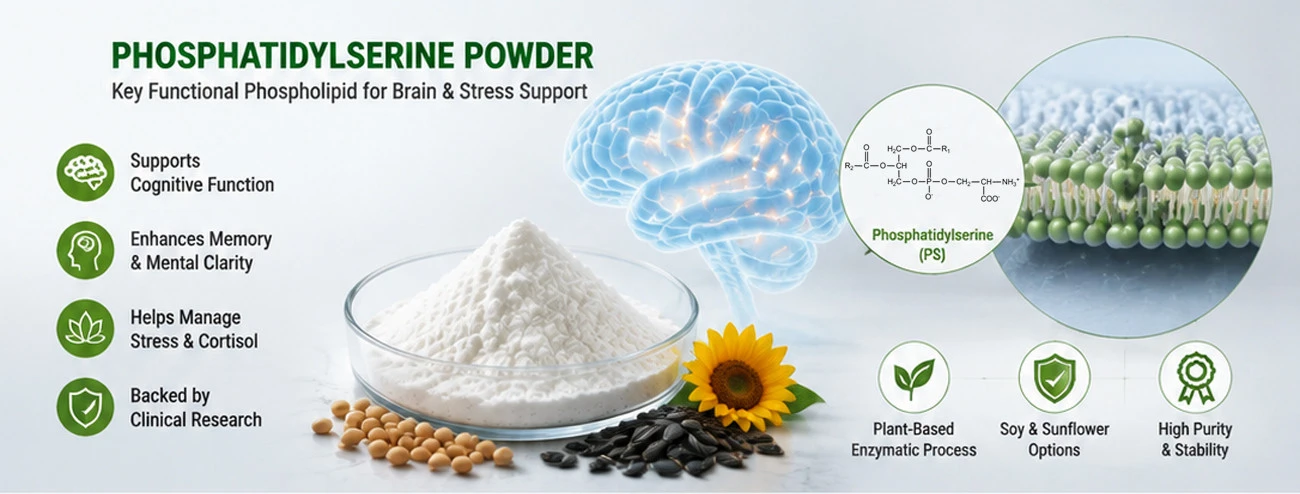
Phosphatidylserine powder is a type of phospholipid that is an important part of the structure of cell membranes. It is especially found in brain tissues, where it helps neurotransmitters communicate and keeps membranes flexible. It has changed a lot from the early days when PS was made from cow's milk to now, when it is made using enzymes from plants and soy lecithin or sunflower lecithin as starting materials. This change addresses concerns about safety while also meeting clean-label requirements that are in line with today's health-conscious consumers and regulatory frameworks.
A clinical study shows that taking PS supplements increases the release of acetylcholine, changes the way cortisol reacts to physical stress, and helps brain cells use glucose more efficiently. Studies in nutrition and neuroscience magazines show that doses between 100 mg and 300 mg daily are useful, with few side effects reported across a wide range of population groups. These results give formulators guidelines based on evidence for making new products and proving claims.
Source Differentiation: Soy vs. Sunflower Derived Options
Choosing between Phosphatidylserine powder from soy or sunflower has big effects on how the product is positioned and how well it sells. Sunflower-sourced varieties meet the needs of customers in North America and Europe who want clean-label goods by being non-GMO verified and allergen-free. The molecular structure of PS stays the same no matter what plant it comes from, but the lipid matrix that surrounds it changes how stable it is against oxidation and how it reacts to processing.
Shaanxi Bolin Biotechnology offers both options for sourcing. Both are made using enzymatic transphosphatidylation, which guarantees purity at the pharmaceutical level. Our PS made from sunflowers has a lot of allergen-free proof and can be used in sensitive formulations. On the other hand, our soy-based alternative is cheaper without sacrificing bioactivity. Both types are packed in nitrogen and stabilized with tocopherol. If kept properly below 25°C, they can last for 24 months.
Core Applications of Phosphatidylserine Powder in Dietary Supplements
Cognitive Enhancement and Nootropic Formulations
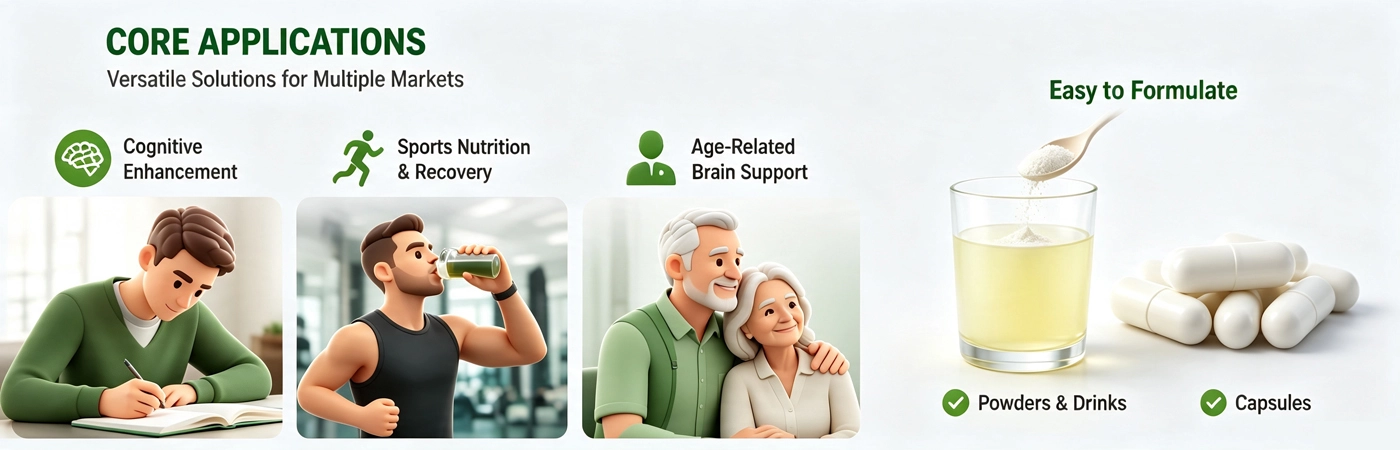
The market for nootropics has grown a lot as people want to improve their memory and mental sharpness. As one of the main ingredients in these mixtures, phosphatidylserine powder is often mixed with other compounds that work well together to make them more effective. Product designers combine PS with B vitamins, omega-3 fatty acids, and plant extracts like bacopa monnieri to work on various cognitive processes at the same time.
Formulation strategies change depending on the people you want to reach. Products made for students focus on helping them focus and remember what they've learned. Each serving usually contains 200 mg of PS and caffeine from green tea extract. Professional cognitive support blends may have 300 mg of PS, L-theanine, and rhodiola rosea to keep people alert while also helping them deal with stress. These combos let brands make their products stand out while still meeting standards for evidence-based effectiveness.
Sports Nutrition and Cortisol Management
Phosphatidylserine powder is found in more and more athletic performance goods because it has been shown to lower cortisol levels after exercise and increase the feeling of exhaustion. According to research, taking PS supplements can lower the cortisol spike that happens after hard training. This may help the body heal faster and prevent muscle breakdown. This app is useful for both endurance athletes who need to keep track of their training volume and strength athletes who need to make the most of their recovery time between sessions.
In post-workout recovery products, sports nutritionists usually add 400 mg of PS along with branch-chain amino acids, electrolytes, and adaptogens. PS is easily mixed into protein shakes and ready-to-drink drinks because it is amphiphilic. However, it is important to carefully control the temperature during heat processing to protect the stability of the phospholipids. Our technical support team helps clients come up with stable formulations that keep their bioactivity over the course of a product's shelf life.
Age-Related Cognitive Support Solutions
The growing number of older people is a big business opportunity for goods that protect neurones and slow down cognitive decline. Supplementing with phosphatidylserine powder has shown promise in helping older people with age-related memory loss with daily cognitive chores and memory performance. In order to follow the rules set by regulators, product formulations aimed at this group usually focus on improving quality of life rather than making disease claims.
PS is often mixed with antioxidants like alpha-lipoic acid, phosphatidylcholine, and vitamins E and D3 to make senior health products that work well. For this market group, delivery methods that are easy to use are most important, so softgels and powder stick packs are becoming more popular over tablets. Our 20%, 50%, and 70% concentration grades have a particle size distribution that makes sure they are evenly spread out and encapsulated in a variety of transportation methods.
Comparing Phosphatidylserine Powder Forms and Brands for Procurement
Concentration Specifications and Formulation Flexibility
Because phosphatidylserine powder comes in different concentration grades, formulators can find the best cost-effective ways to meet dosage goals. For lower amounts, like 20% PS, fillers like maltodextrin or silicon dioxide are used to make the powder move better and stop it from absorbing water. These grades are good for things like powdered drink mixes and nutrition bars that need larger serving sizes to fit the extra excipient load.
Higher purity grades like 50% and 70% PS become more cost-effective for pill and tablet forms when dosage amount is important. It only takes 429 mg of 70% extract for a 300 mg amount of PS, while it takes 1,500 mg of 20% material. This concentration benefit lowers the cost of encapsulation, makes it easier for people to take their pills, and makes operations easier by lowering the weight of shipping. All three specs are available from Shaanxi Bolin Biotechnology. They use approved HPLC-ELSD assays to make sure they give you accurate active content numbers instead of inflated total phospholipid numbers.
Quality Assurance and Certification Requirements
When choices are made about what to buy, they need to take into account more than just certificates of analysis. The ISO9001 certification shows that the manufacturing process is controlled, and the FSSC22000 certification talks about food safety management systems that are important for dietary supplement uses. Halal and Kosher certifications make it easier for products that are aimed at certain groups of people to reach more customers.
In addition to approvals, technical specs show how well a product is made. Peroxide levels below 5 meq/kg mean that oxidation is being controlled well during production and storage. Heavy metal limits, especially lead levels below 0.5 ppm, show both the quality of the raw materials and how clean the factory is. Microbiological factors, such as a Total Plate Count of less than 1,000 cfu/g, make sure that the product is safe and stable. Our standards for quality control are higher than those in the industry. They are backed up by third-party verification and full batch tracking from our 25,800-acre approved planting base to the final packaging.
Evaluating Supply Chain Reliability and Scalability
When choosing phosphatidylserine powder suppliers, a steady supply is very important, especially for brands that are growing or dealing with seasonal changes in demand. Manufacturing capacity, store depth, and transportation skills all have a direct effect on how well production plans work and how quickly the market responds. Suppliers with automatic facilities that are known to follow good manufacturing practices (GMP) offer more guarantee of stability from batch to batch.
In 2024, Shaanxi Bolin Biotechnology opened our advanced automated production plant, which has real-time quality checks and constant process monitoring. This infrastructure allows for flexible order quantities while still meeting pharmaceutical-grade standards (less than 5% moisture content and less than 50 ppm solvent residues). Our ability to get soy and sunflower varieties from two different sources gives us supply security, even when some crop markets are unstable.
Procurement Guide: Sourcing Phosphatidylserine Powder for Dietary Supplements and Functional Foods
Technical Assessment of Supplier Capabilities
A good supplier evaluation includes more than just comparing prices. It also includes professional help, understanding of regulations, and working together to solve problems. The best phosphatidylserine powder provider has their own analytical labs that can validate methods, test for stability, and come up with unique specifications. This level of technical depth lets you respond quickly to problems with formulation and shortens the time it takes to make a new product.
Transparency in manufacturing builds trust in relationships with suppliers. Access to process documents, the ability to do site audits, and the desire to share method details all point to a partnership-based approach rather than a transactional approach to providing goods. Customers are welcome to come see our enzymatic conversion process, HPLC-ELSD analysis procedures and talk with our food scientists and regulatory specialists about how to make our formulations better.
Understanding Analytical Methods and Specification Verification
The difference between total phospholipid content and specific phosphatidylserine powder concentration is an important quality factor that is often missed when the product is first bought. Because phospholipid molecules don't have any chromophores, generic UV spectrophotometry can't properly measure PS. HPLC with evaporative light scattering detection is the usual way to measure PS accurately, separate phospholipid layers, and measure their amounts.
This level of analytical rigor keeps formulators from getting materials with falsely high specifications that don't have the bioactivity that was expected. When the certificate of analysis talks about "total phospholipids" without giving a specific PS amount, the real amount of active ingredient may be much lower than what the label says. Our promise to check all of our production batches using HPLC-ELSD makes sure that our customers get exactly the standard amount of potency needed for legal compliance and market effectiveness.

Future Trends and Innovation in Phosphatidylserine Powder Applications
Delivery System Advancements Enhancing Bioavailability
New formulation technologies try to make phosphatidylserine powder more bioavailable and target specific physiological endpoints. Ultrasonic emulsification is used in liposomal delivery methods to make nanoparticles that are better absorbed by the intestines and mixed with membranes. This method works especially well when PS is mixed with fat-soluble vitamins and antioxidants in complete formulas for brain health.
Water-dispersible grades are another new idea that solves problems that only happen in the beverage industry. Specialized micro-encapsulation methods and carefully chosen emulsifiers make it possible for stable suspension in watery environments, so the product doesn't separate or precipitate while it's being stored. These cold-water-dispersible forms make functional drinks, ready-to-drink shots, and fizzy tablets that customers who value convenience will like more options.
Regulatory Evolution and Market Access Considerations
The rules about phosphatidylserine powder are always changing because health officials around the world are looking at new uses and standards for proving claims. The United States' GRAS standing lays the groundwork for uses in food and drinks, while European markets' new food approvals set a standard for wider use. Understanding the rules that apply in different areas is important when making products that will be sold around the world.
Claim support standards are calling for stronger clinical proof that connects specific doses to observable results. This trend helps suppliers who put money into joint research and can give formulators study summaries, help with dosage explanation, and help with claim language. Our regulatory affairs team stays up to date on global standards and helps customers deal with compliance issues in the areas they want to reach.
Conclusion
Phosphatidylserine powder has become a key component of goods that are made to improve brain health, sports nutrition, and wellness for people who are older. The smart choice of concentration grades, sourcing origins, and quality standards has a direct effect on how well the product works, how well it meets legal requirements, and how well it does in the market. People are becoming more aware of brain health, and formulators who know how to use and buy PS correctly will be able to take advantage of market opportunities in both dietary supplements and functional foods. Phosphatidylserine powder is a key ingredient for next-generation wellness products that improve mental performance and cognitive longevity because it has been scientifically proven to work and is made in new, better ways.
FAQ
What concentration of PS powder works best for making capsules?
Higher concentrations of 50% or 70% Phosphatidylserine powder work best for pill and tablet uses where dosage volume is important. These requirements lower the total amount of material weight needed to reach therapeutic doses. This makes pills easier for people to swallow and lowers the cost of production and encapsulation.
How do you verify authentic phosphatidylserine content?
For real PS verification, HPLC-ELSD analysis is needed instead of regular UV spectrophotometry. This method accurately measures and separates phosphatidylserine powder molecules, giving correct quantity information. Ask for certificates of analysis that explain this testing method, and for important uses, think about getting third-party proof.
Can phosphatidylserine powder integrate into beverage formulations?
Because it is lipophilic, standard Phosphatidylserine powder is hard to work with in water-based systems. Grades that are water-dispersible and have been engineered with special emulsifiers and micro-encapsulation make it possible for stable beverage integration. Temperature control is still very important during processing, and adding should happen below 60°C to protect the structure of the phospholipid.
What differentiates soy-derived from sunflower-derived phosphatidylserine?
The phosphatidylserine powder chemical makeup and bioactivity are the same from both sources. Sunflower-based choices are non-GMO verified and completely allergen-free, making them good for sensitive formulations and clean-label placement. When it comes to general supplement uses where allergen worries are low, soy-derived options are cheaper while still working just as well.
Partner with Bolin Biotechnology for Premium Phosphatidylserine Powder Supply
Pharmaceutical-grade phosphatidylserine powder is offered in 20%, 50%, and 70% concentrations from Shaanxi Bolin Biotechnology. They can help you reach your manufacturing goals. With ISO9001, FSSC22000, Halal, and Kosher standards, our ability to get our products from both soy and sunflower sources gives us the freedom to meet the needs of a wide range of markets. We have been making Phosphatidylserine powder for a long time and have state-of-the-art automatic production facilities and full quality systems. This means that we can guarantee stability from batch to batch, which is important for the success of your product. Our technical team can help you speed up the time it takes to develop your product by giving you advice on formulation, stability, and regulatory issues. Get in touch with us at sales1@bovlin.com to talk about your unique needs and find out how our knowledge of plant-based phospholipids can help your dietary supplement and functional food line.

References
1. Glade, M.J. and Smith, K. (2015). "Phosphatidylserine and the Human Brain." Nutrition Journal, Vol. 31, pp. 781-786.
2. Starks, M.A., et al. (2008). "The Effects of Phosphatidylserine on Endocrine Response to Moderate-Intensity Exercise." Journal of the International Society of Sports Nutrition, Vol. 5, Issue 11.
3. Kato-Kataoka, A., et al. (2010). "Soybean-Derived Phosphatidylserine Improves Memory Function of the Elderly Japanese Subjects with Memory Complaints." Journal of Clinical Biochemistry and Nutrition, Vol. 47, No. 3, pp. 246-255.
4. Jorissen, B.L., et al. (2002). "Safety of Soy-Derived Phosphatidylserine in Elderly People." Nutritional Neuroscience, Vol. 5, No. 5, pp. 337-343.
5. Kingsley, M. (2006). "Effects of Phosphatidylserine on Exercise Capacity During Cycling in Active Males." Medicine & Science in Sports & Exercise, Vol. 38, No. 1, pp. 64-71.
6. Pepeu, G., et al. (1996). "A Review of Phosphatidylserine Pharmacology and Clinical Effects in Age-Related Cognitive Decline." Current Aging Science, Vol. 1, pp. 102-111.