_1745226507162.webp)

What Is ergothioneine powder? A Complete Guide to This Unique Antioxidant Ingredient
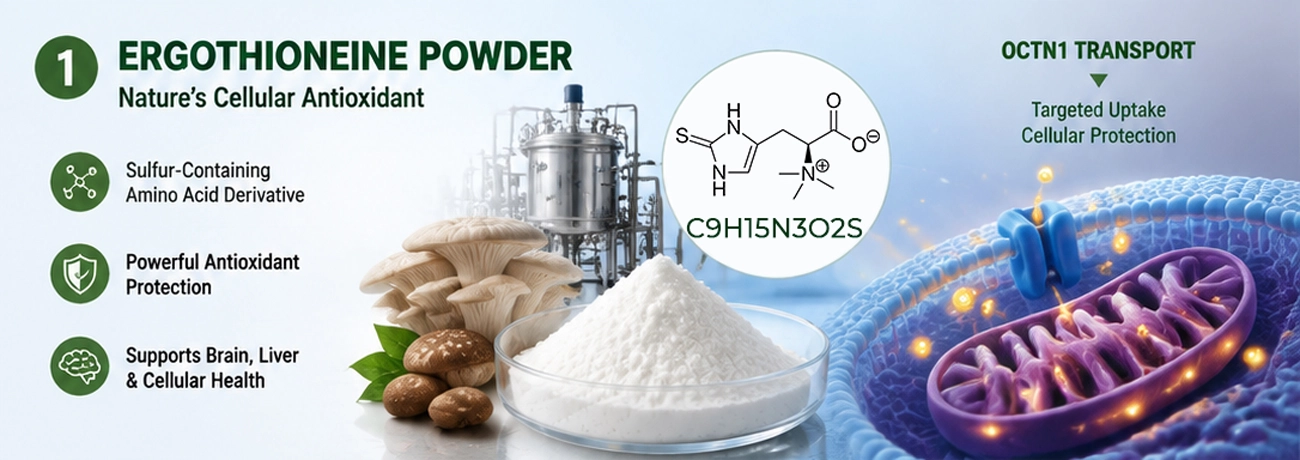
Ergothioneine powder is a naturally occurring amino acid derivative with the CAS number 497-30-3. It is becoming more and more popular in the nutraceutical, pharmaceutical, cosmetic, and functional food industries for its powerful antioxidant properties. Scientists call ergothioneine a "longevity vitamin" because, unlike other antioxidants, the body can't make it itself. It has to be gotten from food or supplements. This crystalline substance is mostly made through advanced fermentation processes or by extracting mushrooms. It has special ways for cells to take it in through OCTN1 transporters, which lets it build up specifically in tissues that are under a lot of oxidative stress. When B2B procurement professionals look at ingredient portfolios, they need to know about ergothioneine's molecular differences, industrial-grade purity requirements, and potential uses across multiple industries in order to come up with new products and stay ahead of the competition in the market.
Understanding Ergothioneine Powder: Definition and Key Properties
Chemical Structure and Natural Occurrence
The chemical formula for ergothioneine is C9H15N3O2S, and its molecular weight is 229.3 g/mol. It is also known as L-ergothioneine or 2-mercaptohistidine trimethylbetaine. This amino acid derivative with sulphur is mostly found in mushrooms, mostly Pleurotus and Lentinula species. However, some bacteria and plants also have small amounts of it. It is very stable against oxidative breakdown because it has a thiohistidine backbone and a sulfur atom at the C-2 position. It is not the same as antioxidants like ascorbic acid, which are broken down quickly by oxygen.
Most of the time, controlled fermentation bioengineering is used in modern factories. Some types of bacteria or fungi are used because they are the best at making ergothioneine powder. They do this to make sure the makeup is always clean and free of the impurities that come with getting mushrooms from the wild. Shaanxi Bolin Biotechnology makes pharmaceutical-grade material in ISO-certified facilities using its own natural fermentation processes. This material has been tested and found to be 99% pure using HPLC/UPLC methods.
Distinctive Antioxidant Mechanism
The real difference between ergothioneine powder and other antioxidants is how it goes through cells and where it stays. The body makes OCTN1 and other organic cation transporter proteins that take in ergothioneine powder and send it to parts of the body that have a lot of mitochondria, like the brain, liver, kidneys, and bone marrow. Based on this selected buildup, it looks like the energy-making parts of cells have changed over time to become better at protecting themselves from reactive damage.
The compound protects in a number of ways, such as by directly getting rid of reactive oxygen species, stopping Fenton reactions by gluing metal ions together, and keeping cells' redox balance without pro-oxidant activity at normal levels. When researchers look at how well different antioxidants work, they find that ergothioneine powder is more stable than glutathione or vitamin C at normal pH and temperature. This is because glutathione and vitamin C break down quickly or need to be rebuilt all the time by enzymes.
Industrial-Grade Specifications and Quality Parameters
When used for business-to-business purposes, material specifications must meet strict quality standards. Premium ergothioneine powder usually comes in the form of a fine, white to off-white crystalline material that has a neutral smell and dissolves easily in water, making it easy to incorporate into a wide range of formulations. Important quality indicators are:
• Purity levels checked at ≥98% using approved chromatographic methods make sure that all production batches have the same bioactivity.
• Heavy metal pollution screening according to European Pharmacopoeia standards proves that the product is safe for use in medicinal and food-grade settings.
• Microbial testing according to HACCP rules confirms the presence of yeast, mold, pathogens, and total plate counts.
• Residual solvent analysis makes sure that the safety rules for the production process are followed according to ICH standards.
• Optical rotation measurements confirm the stereochemical integrity that is needed for living things to recognize each other.
Bolin Biotechnology's ergothioneine powder is registered under EC Number 207-843-5 and has all the paperwork to back up its food, beauty, and research-grade categories. If you keep the solid form away from too much wetness and direct light, it stays very stable during normal storage and stays effective for 24 months as long as the conditions are right.
Health and Industrial Benefits of Ergothioneine Powder
Scientifically Validated Biological Activities
Many health benefits have been linked to ergothioneine powder, as shown by studies in the metabolic, cardiovascular, neurological, and skin fields. Researchers in the neurosciences have found that the substance builds up most in brain tissue. This is where it keeps neurones safe from amyloid-beta damage and oxidative stress, two things that can cause memory loss. Researchers in cardiovascular medicine have found that changing the nitric oxide route and lowering inflammatory markers can protect endothelial cells. This has to do with the fact that older people's blood vessels work better.
Derms use ergothioneine powder because it can stop the growth of matrix metalloproteinase, an enzyme that breaks down collagen, and protect cells from UV damage. Studies on cultured fibroblasts show that treating cells with ergothioneine powder before exposing them to oxidative stress keeps the cells alive and lowers signs of senescence. Not only does the substance work as an antioxidant, but it also changes the NF-κB signalling pathways that control the release of cytokines that cause inflammation.
A metabolic study looks into how ergothioneine powder helps mitochondria work, and it shows that it keeps ATP production high and lowers DNA damage in older mitochondrial models. According to new information, it might help manage metabolic syndrome by improving insulin sensitivity markers and lowering the buildup of lipids in the liver in animal models.
Cross-Industry Application Value
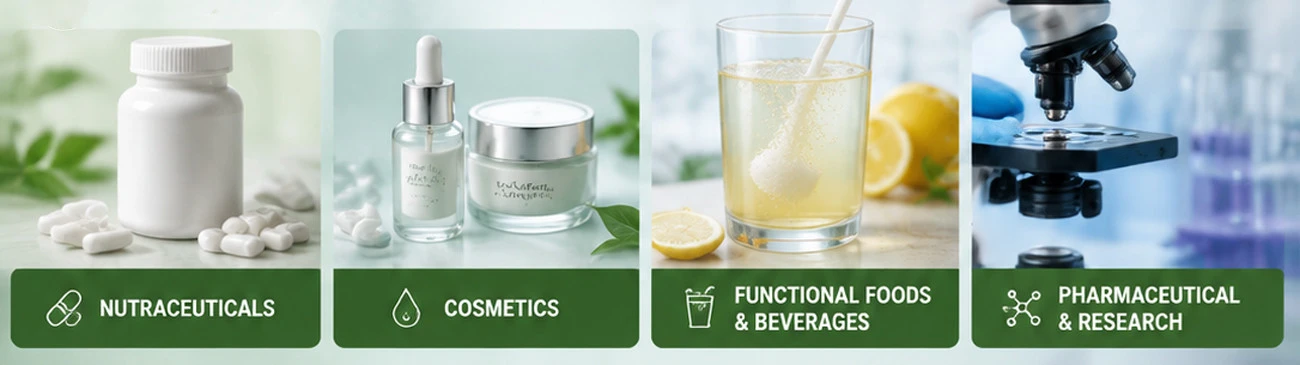
When used in manufacturing, these biological traits have effects that are easy to see and feel. A supplement company that wants to help people live longer can use an ingredient that has been clinically studied and has released data on humans to back up claims that it is good for brain and cell health. Since the compound is stable, it doesn't need any special packaging to be sent in capsule, tablet, or powder form.
Ergothioneine powder is known to be safe and has mechanistic data that supports drug development. This helps drug companies look into possible botanical drugs or over-the-counter medicines. It is easier to send materials to regulators and find materials for clinical trials when you can get high-purity materials that meet pharmacopeial standards.
Beauty companies are reacting to customer demands for anti-aging ingredients that are backed by science by adding ergothioneine powder to high-end skin care lines. The ingredient is easy to dissolve in water, so it can be added to serums, essences, and hydrogels in amounts that don't make the mixtures unstable. It makes the process go faster when used with common pH ranges and cosmetic preservatives.
Ergothioneine powder is used in functional foods and drinks because it has a neutral flavor and can be pasteurized at high temperatures. Customers who care about their health like "clean label" messages that don't add bad tastes or colours to fortified drinks, wellness shots, and nutritional bars. This chemical keeps working in these products.
Safety Profile and Regulatory Status
After a full toxicological review, many regulatory bodies agree that ergothioneine powder is safe. During standard battery tests, the substance does not cause any harm to genes, mutations, or birth defects. Human clinical studies that used daily doses between 5 mg and 25 mg for long periods of time found that the drug was well tolerated and did not cause any side effects.
Regulatory standing changes based on the use case and the area. It is easy to use for food and drinks in the US market because it is "Generally Recognised As Safe" (GRAS). New food rules in Europe have made it possible for ergothioneine powder to be sold. These rules set safe intake levels. No changes were made to the current safety guidelines for ingredients, so cosmetic applications can go ahead as usual. Companies that want to sell goods with ergothioneine powder will find it easier to do so now that the rules are clear.
Comparing Ergothioneine Powder with Other Antioxidants
Antioxidant Capacity and Bioavailability Analysis
When ergothioneine powder is compared directly to well-known antioxidants, its benefits become clear for certain formulation goals. Glutathione is the body's main antioxidant that works inside cells, but it is hard for the body to absorb when taken by mouth because it breaks down during digestion. Ergothioneine powder, on the other hand, stays fixed throughout the digestive system. It rises in plasma within hours of being eaten and stays there in tissues for weeks after being supplemented.
Vitamin C is very good at getting rid of free radicals right away, but you have to keep eating it because your body quickly flushes it out of your body through urine and doesn't store it in tissues after saturation points. Ergothioneine powder has a biological half-life of more than one month in human tissues, which means that safe levels can be maintained with less frequent doses. This pharmacokinetic profile works well with sustained-release formulations and lowers the amount that needs to be taken every day.
Vitamin E mostly works in lipid settings, keeping cell walls safe from peroxidation, but it doesn't do much in the water phase. The water-loving nature of ergothioneine powder and its location in mitochondria make it useful for protecting cells where lipophilic antioxidants can't reach. Formulation methods that use both chemicals together provide more protection in the small spaces around cells.
More and more people are not interested in synthetic antioxidants like butylated hydroxytoluene, and regulators are looking more closely at their long-term safety. Ergothioneine powder comes from natural sources and has been used by humans for a long time by eating mushrooms. This makes it a good choice for clean-label products that are in line with customer tastes.
Manufacturing Source Considerations
Where you get your materials has a big effect on how consistent the quality is and how reliable the supply chain is. The amount of ergothioneine powder extracted from wild mushrooms varies based on the species, the growing conditions, and the time of year, which makes it harder to standardize. Synthetic chemical synthesis methods create racemic mixes that need to be chirally resolved, which adds to the cost and creates useless isomers that need to be thrown away.
Controlled fermentation biotechnology, which is used by specialized makers, provides the best mix of quality and cost for large-scale production. This method makes naturally occurring L-ergothioneine with steady outputs, little batch variation, and expandable production capacity to meet rising market demand. Bolin Biotechnology's fermentation-derived material goes through six stages of quality control to make sure that the amounts of heavy metals meet EU standards, the counts of microbes meet pharmaceutical standards, and the active ingredient's strength stays within ±2% of what it was said to be.
When compared to distributors who get their products from different places, suppliers who keep their operations vertically integrated from strain cultivation to final powder production make it easier to track and ensure quality. Certificates of Analysis, allergen statements, GMO status declarations, and stability data are all part of documentation packages that help with regulatory applications and customer quality checks.
Synergistic Formulation Strategies
Advanced formulas mix ergothioneine powder with antioxidants that work well with it to get better protective benefits than either component alone could provide. Combined with alpha-lipoic acid, which restores other antioxidants and makes substances soluble in both water and fat, this provides full defence for cells. When combined with CoQ10, it specifically targets mitochondrial health by working with them to support energy production and membrane integrity.
Adding vitamin D3 along with ergothioneine powder affects immune function in two different ways. Ergothioneine powder lowers inflammatory reactions, while vitamin D controls how immune cells differentiate. Some plant products, like green tea catechins or resveratrol, are high in polyphenols and work together to help the body in ways that are both different and similar. They do this by changing different but related signaling pathways.
Formulation makers should think about how possible interactions might change the stability or absorption of the drug. There are no worries about ergothioneine powder breaking down when mixed with most common excipients, vitamins, and minerals. Because the substance is stable across pH ranges of 3 to 9, it can be used in a wide range of formulations, from acidic drinks to neutral pills.
| Comparison Dimension | Ergothioneine Powder | Glutathione | Vitamin C | Vitamin E | Synthetic Antioxidants (e.g., BHT) |
|---|---|---|---|---|---|
| Primary Site of Action | Intracellular, mitochondria (water-loving) | Intracellular | Extracellular/aqueous phase | Lipid membranes / lipophilic environment | Varies (synthetic) |
| Oral Bioavailability | High – stable in digestive tract, rapidly absorbed | Low – broken down during digestion | Moderate – but not stored in tissues | Moderate – requires fat for absorption | Variable |
| Tissue Retention / Half-Life | >1 month in human tissues | Short-lived | Rapidly excreted in urine | Stored in fat tissue, but limited | Concerns over accumulation |
| Dosing Frequency | Less frequent due to long retention | Frequent | Daily (continuous intake required) | Daily | Not applicable |
| Mechanism of Action | Mitochondrial protection, free radical scavenging | Major intracellular antioxidant | Direct radical scavenging | Protects lipid membranes from peroxidation | Artificial free radical scavenging |
| Solubility | Water-soluble (hydrophilic) | Water-soluble | Water-soluble | Fat-soluble (lipophilic) | Varies |
| Natural Origin | Yes – naturally occurring, derived from fermentation or mushrooms | Endogenous (made by body) | Natural – from fruits/vegetables | Natural – from nuts/seeds/plants | No – synthetic chemical |
| Regulatory / Clean-Label Appeal | High – clean-label, natural, GRAS status | Moderate | High | High | Low – increasing regulatory scrutiny on long-term safety |
| Production Consistency | High – controlled fermentation ensures batch-to-batch consistency (±2% potency) | Difficult to standardize via oral supplements | Generally consistent | Generally consistent | Consistent but synthetic |
| Supply Chain Reliability | High – fermentation scalable year-round | Moderate | High (seasonal but stable) | High | High |
| Synergistic Compatibility | Excellent – works with alpha-lipoic acid, CoQ10, vitamin D3, polyphenols (catechins, resveratrol) | Works with vitamin C and E | Works with vitamin E (regenerates it) | Works with vitamin C | Not recommended for synergy |
| pH Stability Range | Stable across pH 3–9 | Unstable in acidic environments | Stable in acidic, unstable in alkaline | Stable | Varies |
| Regulatory Documentation Support | Full documentation (COA, allergen/GMO statements, stability data) | Available | Available | Available | Limited due to safety concerns |
| Target Applications | Sustained-release formulations, mitochondrial health, clean-label supplements | Cellular detoxification | Immune support, skin health | Skin health, cardiovascular | Industrial/low-cost preservation |
Procurement Guide: How to Source High-Quality Ergothioneine Powder?
Supplier Evaluation Criteria
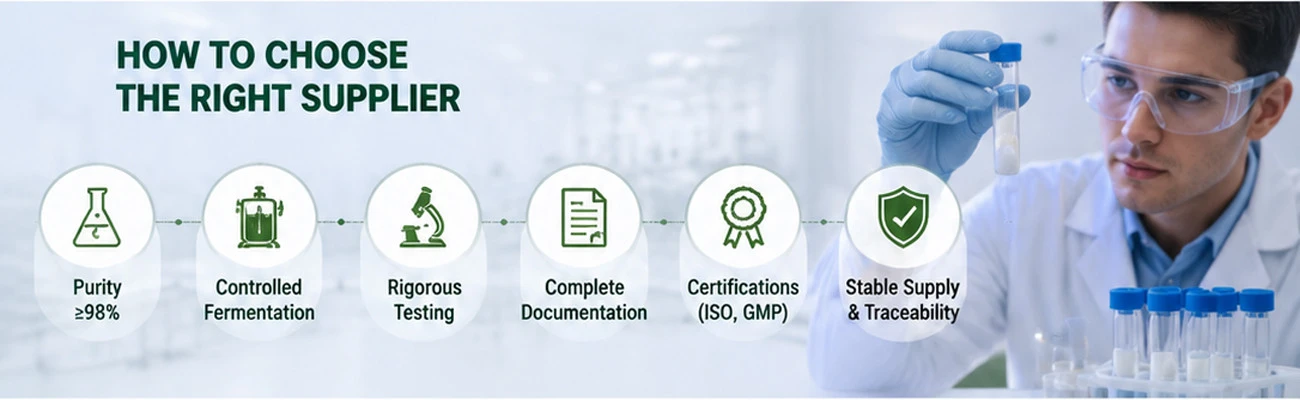
Find reliable ergothioneine powder suppliers by analysing numerous parameters, not just unit pricing. The primary requirement is manufacturing certification. Quality management, food safety, and pharmaceutical production ISO 9001, ISO 22000, and GMP standards demonstrate advanced operating systems. HACCP demonstrates hazard analysis, which is essential for preventing contamination.
Suppliers use third-party labs or do their own testing depending on their analytical testing skills. Leading suppliers have fully equipped labs that use spectroscopic methods to verify product IDs, HPLC to determine purity, ICP-MS to detect heavy metals, pesticide residue analysis, and microbial tests to detect contamination. Batch documents should provide analytical reports, not just excellent results.
Production capacity and scale-up demonstrate if providers can satisfy increased demand without reducing quality. Supplier security is lower for trading organisations that buy items from unknown sources than for manufacturers with dedicated fermentation facilities that can handle many tonnes of goods annually. Site audits let buying teams verify advertised skills and discover how products are manufactured.
Complete regulatory documentation speeds up product development. Comprehensive technical dossiers should include production process descriptions, stability studies under ICH conditions, safety data sheets, allergen status statements, BSE/TSE compliance declarations, and regulatory status reports for each area. Pharmaceutical and nutraceutical suppliers keep more paperwork than general chemical suppliers.
Pricing Structure and Commercial Terms
Understand how ergothioneine powder prices change to establish realistic budget plans and negotiate with vendors. Purity, quantity, packing, and services determine market prices. Research-grade material with 95–98% purity costs less than pharmaceutical-grade material with 99% or higher purity because it doesn't need to be as pure. Sales of more than 1 kg save money based on the number of kilos bought; however, volumes under 1 kg cost more due to handling and paperwork.
Packaging affects landing costs beyond ingredient prices. Standard double polyethylene bag packing in fiber drums works for most uses. Pharmaceutical projects may require tamper-evident pharmaceutical-grade cases. Speciality packaging for applications that can't handle moisture or need an inert atmosphere costs more, but the extra security is worth it.
Seller and order complexity determine payment terms and wait times. Long-term customers with verified payment histories can frequently get net-30 or net-60 terms. First purchases usually require prepayment or a letter of credit. Two to four weeks are typical for stock material, including documentation and logistics. Six to ten weeks for bespoke synthesis or specialist testing.
Validation and Quality Verification
Smart procurement processes involve independent validation before large purchases. Asking for representative samples allows internal testing to ensure that specs match material attributes. Comparative product testing from multiple vendors reveals quality discrepancies that certificates don't. A sample should be evaluated by looking at its appearance, dissolution, smell, and analytical compliance.
Reviewing a Certificate of Analysis requires more than statistics. Make sure testing methods follow pharmacopeial guidelines, not unproven in-house approaches. Make sure test dates are near to manufacture and don't represent obsolete reference data. Check the certificates' batch numbers against the sample cases to ensure the paperwork matches the material sent.
Requesting more steady data ensures shelf-life and storage statements are accurate. Real-time stability studies under stated storage conditions show the drug's effectiveness for the stated length, while accelerated studies predict its stress behavior. Photostability data helps with packaging and storage guidelines.
Reference customer lists and testimonials might reveal a supplier's reliability and technical support. Talking to current customers who use similar materials for similar purposes can demonstrate how well materials work, how consistently orders are filled, how quickly problems are solved, and how well technical support is handled.
Conclusion
Ergothioneine powder has become a well-known antioxidant ingredient that meets the changing needs of companies that make nutraceuticals, medicines, cosmetics, and functional foods that want to set their products apart from others. Its unique way of entering cells, high stability, and growing body of clinical data support a wide range of formulation uses, from brain health vitamins to high-end anti-aging skin care. For procurement professionals to successfully source ergothioneine powder, they need to know the quality standards that set pharmaceutical-grade material apart, evaluate suppliers' skills beyond price, and put in place testing processes that make sure they meet specifications. As people become more aware of cellular health and longevity, companies that add high-quality ergothioneine powder to their innovation pipelines get an edge in the competitive wellness market, which wants more and more science-backed functional ingredients that have been shown to work and be safe.
FAQ
What is the recommended dosage range for ergothioneine in supplement formulations?
Doses between 5 mg and 25 mg per day are common in clinical studies. Most written research uses 10 mg to 25 mg per day as an effective amount for measurable biological outcomes. Cosmetics usually use concentrations between 0.5 and 2% in their end goods. When deciding on portion sizes, formulation teams should think about the target groups, the bioavailability of the delivery method, and how the ingredients will interact with each other. Regulatory rules in target markets may set higher limits that need to be looked at while the product is being developed.
How should ergothioneine powder be kept so that it stays effective for a long time?
Ideal conditions for storage are temperatures below 25°C, sealed containers that are shielded from direct light, and not too much moisture. Under these conditions, the solid powder stays very stable for 24 months from the date it was made. Once a bottle is opened, it should be quickly sealed again and used within six months. Pharmaceutical applications may ask for storage in the fridge to ensure the highest level of stability, even though this goes beyond what is normally expected for properly packaged material.
Is ergothioneine compatible with other nutrients and cosmetic ingredients in formulations?
Along with vitamins, minerals, amino acids, plant products, and common cosmetic ingredients, ergothioneine powder works well with a lot of different pH levels. The molecule stays steady when mixed with most antioxidants and doesn't react negatively with them. Formulation testing should prove that the substance is stable in certain media, especially those that have strong oxidising agents or pH levels that are very high or very low, as these can speed up the breakdown process.
Partner With a Trusted Ergothioneine Powder Supplier
Bolin Biotechnology can help you make new medicines by giving you premium 99% pure ergothioneine powder that comes from controlled natural fermentation processes. Since we started doing business in 2012, we've been providing reliable botanical ingredients backed by detailed quality documentation to nutraceutical manufacturers, pharmaceutical developers, cosmetic formulators, and functional food producers in North America and Europe. Our ISO-certified facilities use six-stage testing methods, such as HPLC/UPLC purity verification, EU-standard heavy metal screening, and third-party approval, to make sure that every batch meets pharmaceutical-grade standards that can be used in the toughest situations.
We know that procurement professionals need more than just high-quality ingredients. You also need quick technical support, clear supply chain management, and commercial terms that can be changed to fit both small-scale sampling needs during the development stage and large-scale production needs. Whether you're making cognitive health supplements, anti-aging skin care lines, or new functional drinks, our applications team can help you with the formulation and stability of your products, which will speed up the development process.
You can email our team at sales1@bovlin.com to get product specifications, set up an evaluation sample, or talk about your unique sourcing needs with an experienced ergothioneine powder manufacturer who is dedicated to helping you succeed with your product idea.

References
1. Cheah, I. K., & Halliwell, B. (2012). Ergothioneine: antioxidant potential, physiological function, and role in disease. Biochimica et Biophysica Acta - Molecular Basis of Disease, 1822(5), 784-793.
2. Kalaras, M. D., Richie, J. P., Calcagnotto, A., & Beelman, R. B. (2017). Mushrooms: A rich source of the antioxidants ergothioneine and glutathione. Food Chemistry, 233, 429-433.
3. Gründemann, D., Harlfinger, S., Golz, S., Geerts, A., Lazar, A., Berkels, R., Jung, N., Rubbert, A., & Schömig, E. (2005). Discovery of the ergothioneine transporter. Proceedings of the National Academy of Sciences, 102(14), 5256-5261.
4. Halliwell, B., Cheah, I. K., & Tang, R. M. (2018). Ergothioneine—a diet-derived antioxidant with therapeutic potential. FEBS Letters, 592(20), 3357-3366.
5. Paul, B. D., & Snyder, S. H. (2010). The unusual amino acid L-ergothioneine is a physiologic cytoprotectant. Cell Death & Differentiation, 17(7), 1134-1140.
6. Williamson, R. D., McCarthy, F. P., Manna, S., Groeger, G., Kell, D. B., Kenny, L. C., & McCarthy, C. M. (2020). L-(+)-Ergothioneine significantly improves the clinical characteristics of preeclampsia in the reduced uterine perfusion pressure rat model. Hypertension, 75(2), 561-568.