_1745226507162.webp)

What Is nervonic acid powder Used For in Health Supplements?
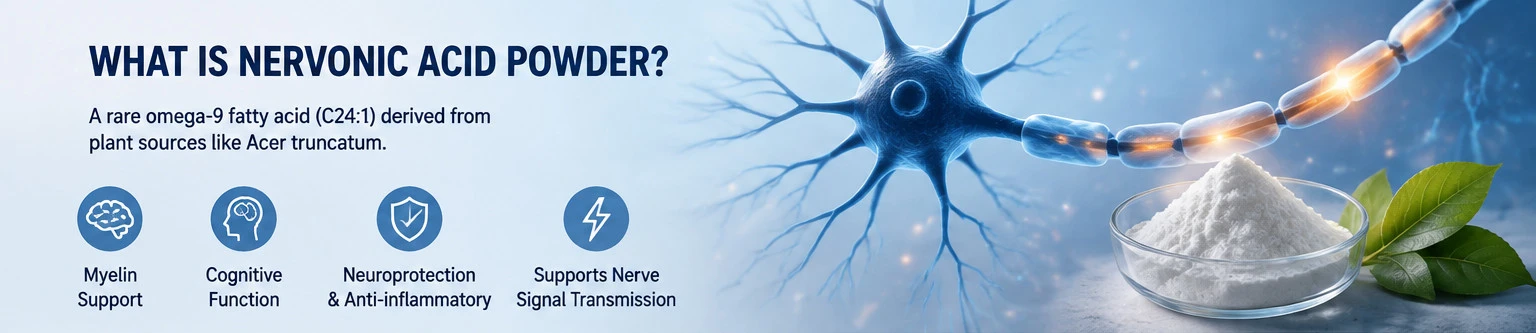
Nervonic acid powder serves as a specialized neurological support ingredient in health supplements, primarily targeting myelin sheath repair and cognitive function enhancement. Derived from plant sources like Acer truncatum, this rare omega-9 monounsaturated fatty acid (C24H46O2) addresses developmental needs in infant nutrition and age-related cognitive decline in adults. Its unique 24-carbon structure makes it particularly effective for brain health formulations, distinguishing it from shorter-chain fatty acids commonly used in dietary supplements.
Understanding Nervonic Acid Powder and Its Health Benefits
Today we're going to talk about a substance that is one of nature's best lipid chemicals for brain health. Purchasing workers can make better choices about which ingredients to use when they know about the traits of the ingredient.
Chemical Structure and Natural Sources
This long-chain monounsaturated fatty acid has a single double bond at the omega-9 position, which makes it a perfect structure for integrating into the nervous system. Plant-based extraction from Acer truncatum seeds produces highly concentrated forms that are 95% pure, as shown by gas chromatography analysis. This molecule can be found in foreign supply chains thanks to its CAS number 506-37-6 and molecular formula C24H46O2.
Natural amounts in human breast milk show how important it is for growth in the early stages. Traditional food sources don't give enough of a dose for healing purposes, which is why people want concentrated supplement types. The white crystalline powder form allows for accurate doses and solid mixing into formulations.
Neurological Health and Myelin Support
Myelin sheaths cover nerve fibres like a coating does for electrical lines. This lets signals move quickly through the nervous system. This fatty acid is built into sphingomyelin, which is the main substance in myelin membranes. Degradation of myelin makes it harder to remember things and slows down our thinking as we get older.
Supplementation helps damaged neural pathways grow new myelin, according to clinical research. The compound quickly crosses the blood-brain barrier and sends repair materials directly to damaged areas. This targeted delivery method explains why it works so well in brain health uses where other fatty acids don't.
Neurological benefits go beyond fixing damaged nerves. Studies show that it may have anti-inflammatory effects on brain cells, which could lower neuroinflammation that is linked to cognitive loss. When structural support and inflammation control work together, they protect neurones in a wide range of ways.
Comparison with DHA and Other Brain Lipids
People usually talk about docosahexaenoic acid (DHA) when they talk about brain health, but these molecules have different biological functions. This omega-9 fatty acid targets myelin structure, while DHA is mostly found in neuronal membranes and helps cells communicate. Its 24-carbon length makes it different from DHA's 22-carbon structure, which changes how membranes integrate it.
More and more, formulation techniques use both compounds together to improve more than one part of brain health at the same time. DHA makes synapses more flexible, and the longer-chain fatty acid keeps the speed of signal transfer by protecting myelin. This synergistic method helps the brain in more ways than formulations with only one element.
When it comes to manufacturing, the stability profile of nervonic acid powder is useful. Higher oxidative resistance compared to polyunsaturated DHA lowers worries about rancidity and increases the shelf life of final products. This chemical stability means that less antioxidant is needed and keeping instructions are easier to follow.
Evidence-Based Dosage and Safety Profile
For cognitive support in adults, research protocols usually use doses of 50 to 200 mg per day. Between 1.5% and 5% of the total fat content of infant formula is added to make it more like human milk. Clinical findings show that these amounts work without having any bad effects.
Safety tests show that people of all ages can handle it well when it comes from quality-controlled plant products. The compound is naturally found in human metabolism, which lowers worries about the entry of alien substances. Toxicology studies show that products that meet purity standards are safe to use for a long time.
Specifications for purchases should make sure that erucic acid contamination stays below levels that can be detected, since this chemical is structurally similar and raises safety concerns. Quality papers showing peroxide levels below 5 meq/kg and acid levels below 1 mg KOH/g prove that the product is stable and processed correctly.
How to Choose the Right Nervonic Acid Powder for Your Business
To choose the right raw materials, you have to look at a lot of technical and business factors that affect both how well the product works and where it stands in the market.
Powder Form Advantages for Manufacturing
Crystalline powder is easier to work with than oil-based options when it comes to preparation. It's now possible to directly compress substances into pills without having to make big changes to the recipe, which speeds up the creation process. The clean white look goes well with light-colored items without worrying about discolouration.
When compared to thick oils, encapsulation methods have better flowability and dose accuracy. Standard tools can be used to add powder to hard-shell pills, soft gels, and stick packs. This manufacturing freedom lets you add more products to your line without having to buy new tools.
Powder formats make it a lot easier to store and handle things. Temperature-controlled facilities are still important, but the solid form gets rid of the risk of leaks and makes managing inventory easier. Between 42°C and 45°C is the melting point range. This range gives enough thermal stability for most production environments while still allowing controlled liquefaction during processing when needed.
Source Verification and Purity Standards
Compared to animal-based sources in the past, plant-based options from Acer truncatum provide a sustainable and scalable supply. The purity of the end product is directly affected by how open the supplier is about how they grow plants, how they extract oils, and how they check for quality. Over 25,800 acres of approved planting grounds are taken care of by our company, which guarantees stable quality and traceability of raw materials.
Purity levels between 90 and 98% are considered to be the best for high-end uses. Each batch should come with a gas chromatography certificate that shows the fatty acid profiles and confirms that there are no unwanted contaminants. Following EU rules for heavy metal testing protects a brand's image and keeps customers safe.
What you need to do to get certified depends on your nervonic acid powder product and target market. ISO, GMP, and HACCP certifications show that a company has quality systems in place for manufacturing, and organic certifications support "clean label" marketing strategies. By matching certification packages to the markets they are meant for, costly compliance delays can be avoided during the launch phases of a product.
Formulation Synergies with Complementary Ingredients
When you mix this omega-9 fatty acid with DHA and arachidonic acid (ARA), you get brain health formulas that work on a lot of different biochemical processes. The absorption and integration properties of the different chain lengths and saturation patterns work well together. This multi-lipid method is being used more and more by formulators making high-end cognitive goods.
Phosphatidylserine is another example of a pair that works well together to support neural membranes and myelin structures in different ways. B-vitamin complexes speed up the metabolism of fatty acids, which could make their use more efficient. Vitamin E and other antioxidants keep the substance from going bad while it's in the bottle and after it's been used.
Bioavailability is greatly affected by the choice of delivery method. Even though some substances naturally attract fat, emulsification technologies make it easier for water to mix with them in beverages. Microencapsulation keeps things from oxidising and hides any taste that might still be there, which means it can be used in more functional foods and drink powders.
Procurement Strategies for Nervonic Acid Powder in Bulk
To help businesses reach their goals, strategic sourcing methods find a good mix between quality control, cost management, and the dependability of the supply chain.
Supplier Evaluation and Quality Assurance
Trading companies that get their products from different places usually don't have the consistent quality that well-known makers with their own extraction facilities have. Knowing how much a supplier can produce helps you decide if they can grow with your business. Since 2012, our sites have worked with pharmaceutical and nutraceutical businesses around the world, handling needs ranging from small amounts for testing to large amounts for sale.
When regulatory stakes are high, auditing skills matter. Suppliers who are willing to let site checks happen show that they are confident in their quality processes and the way they make things. Documentation systems that keep track of everything from raw materials to finished things make it possible to look into quality problems.
Protocols for testing should include more than just the reports of analysis that sources give. Third-party testing by independent labs makes sure that standards are met and that quality problems are found before they are made. Stability testing tools keep an eye on how things work over time when they are stored in different ways.
Minimum Order Quantities and Pricing Dynamics
Entry-level MOQs between 1 and 25 kg allow for recipe development and market testing without having to commit to too much inventory. For commercial output to be cost-effective, sales must be between 100 kg and 500 kg. Knowing how much you plan to consume helps you negotiate better terms that fit your actual needs.
The way prices are set depends on the amount of purity, the licensing requirements, and the packing requirements. The option with 95% purity costs more, but it works better and is easier to make, so it's worth it. Lower concentration oils with a purity level of 1.5 to 5 percent are cheaper to buy as raw materials, but they need to be added to finished products at higher rates.
Long-term supply deals often get better prices and make sure that supplies are distributed evenly during times of high demand. These partnerships work best when both parties share their predictions for the market and their plans for production. This lets providers plan more efficiently. When you commit to a volume for 6 to 12 months, you usually get big cost savings.
Private Label and OEM Partnership Models
Private label deals let brands put out nervonic acid powder goods without having to spend money on building up factories. Partners with a lot of experience will take care of formula optimisation, regulatory compliance, and production logistics while you focus on sales and marketing. Time-to-market is sped up with this model, and capital needs are cut down.
OEM relationships are good for companies that have their own formulas and want to make things but need manufacturing expertise and space. Working together technically helps turn ideas into goods that can be sold and meet quality standards and cost goals. To protect recipe innovations, deals should make it clear how intellectual property rights will be protected.
Communication openness is what sets apart good partnerships from bad ones. Partners can work together better when they are kept up to date on production schedules, quality testing results, and market feedback on a regular basis. Setting up clear ways to report problems stops small issues from growing into big problems that need to be fixed.

Market Trends and Future Outlook for Nervonic Acid in Supplements
Knowing how the market works helps people who work in buying predict changes in demand and spot new possibilities.
Growing Consumer Awareness of Cognitive Health
Demographic trends show that people in developed markets are getting older and are worrying more and more about keeping their minds sharp. Cognitive health vitamins are one of the nutritional groups that is growing the fastest, as people want to avoid signs of cognitive loss rather than waiting for them to show up. This proactive method increases the need for specific ingredients that have been shown to be good for brain health.
Industry groups and healthcare providers are working to make people more aware of certain foods that help the brain work better. It's becoming more important for people to know more about specific "omega fatty acids," like this rare omega-9 substance. Differentiating products with unique ingredients helps brands get the top spot in the market.
Younger people are interested in cognitive improvement and mental performance optimization, so the target group isn't just seniors. Gamers, students, and workers are all looking for ways to improve their mental health through nutrition. This opens the door for goods that focus on focus, processing speed, and mental stamina instead of preventing mental decline that comes with getting older.
Innovation in Delivery Systems and Applications
Softgels and pills are still the most popular supplement forms, but other types are becoming more popular. Functional drinks, sweets, and powder drink mixes are popular with people who want to make healthy habits easier to incorporate into their daily lives. By using the right manufacturing methods, the solid powder we make can be used in these new ways.
People are interested in combination goods that handle more than one aspect of health at the same time. When brain-healthy ingredients are mixed with adaptogens that help with stress management or compounds that help with sleep, they make complete health solutions. This method of bundling fits with the more and more popular holistic health views of customers.
People are interested in supplement plans that can be changed to fit each person's needs because of the trend toward personalization. Brands that let customers choose which ingredients to use and how much to take give customers more power while also creating opportunities for higher prices. In this changing environment, having a supply chain that can adapt to different recipe choices gives you a competitive edge.
Regulatory Environment and Quality Standards
Regulatory frameworks are getting stricter about the quality standards and proof needed for health claims. Following new rules ahead of time protects market access and lowers the risk of reformulation. Suppliers who keep their quality systems up to date protect against changes made by regulators.
International attempts to harmonize markets are slowly lowering the hurdles that separate them, but regional differences still exist. Knowing what needs to be done in different target areas helps with making choices and writing up what needs to be done for nervonic acid powder. Our certifications that meet EU heavy metal standards and international food safety standards make it easier to distribute our nervonic acid powder products in more than one market.
Traceable supply lines are in high demand because both regulators and customers want clear information. Blockchain and digital recording systems are being used more and more to check claims about testing, processing, and sources. When suppliers spend money on these tools, it shows that they care about quality control and responsibility.
Conclusion
Because of its unique role in brain health, this rare omega-9 fatty acid opens up great opportunities for people who make supplements. Its special myelin-supporting qualities, which are different from those of other brain health ingredients, help it stand out in crowded markets. Quality issues like purity, source verification, and production methods have a direct effect on both how well something works and how well it meets legal requirements. Strategic partnerships with suppliers that combine technical know-how with reliable supply chains help make product development and marketing a success. As people become more aware of cognitive health, new delivery systems come out, and quality standards rise, they all fit well with this ingredient's properties, suggesting that well-positioned products could continue to grow.
FAQ
What distinguishes this compound from fish oil omega-3s in supplement formulations?
The 24-carbon omega-9 structure focuses on protecting the myelin sheath, while the 22-carbon omega-3 structure in fish oil helps neurones' membranes and synapses work properly. Because of this difference, they work on different parts of brain health through different biological processes. There are also differences in how they are made. For example, the omega-9 molecule is more stable against oxidation and has a less fishy smell, which makes it easier to make and more acceptable to consumers.
How should procurement teams verify supplier quality and reliability?
Ask for certificates of analysis that are specific to each batch and show that the product is pure by using gas chromatography, peroxide values, acid values, and heavy metal tests. Check the qualifications that matter to the people you want to sell to (ISO, GMP, HACCP, and organic if available). Find out how much can be made, how long it will take, and how quality control is done. Reliable suppliers are open to discussions about transparency and provide clear records that show where materials came from and how they were processed in the end.
What considerations affect minimum order quantities for initial sourcing?
For formulation optimisation and stability testing, projects in the development stage usually need 1 to 10 kg. For commercial launch plans, you might need 50–100 kg, based on how fast you think sales will go and how much inventory you want to cover. Suppliers usually give smaller initial orders because they know that if a product does well, it will lead to bigger orders in the future. Talking to suppliers about the stage of your business and your growing plans helps them suggest the right starting amounts.
Partner with Bolin Biotechnology for Premium Nervonic Acid Powder Supply
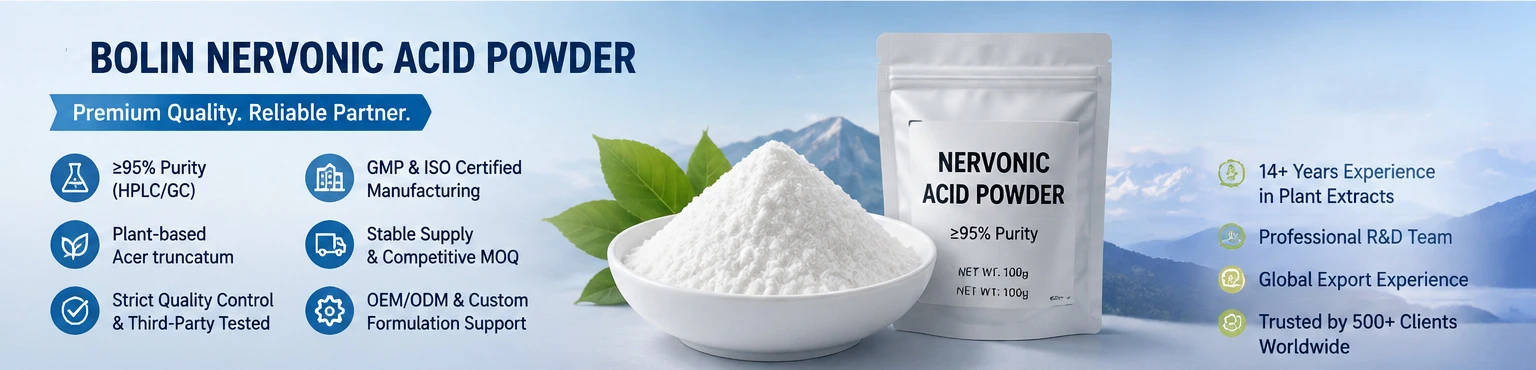
Shaanxi Bolin Biotechnology offers pharmaceutical-grade ingredients that are backed by more than ten years of experience with extraction and quality control. Our requirement for 95% purity from Acer truncatum sources meets the strictest global standards. This is backed up by extensive testing that shows peroxide levels of less than 5 meq/kg and acid levels of less than 1 mg KOH/g. As a well-known company that has been making nervonic acid powder for a long time and has over 25,800 acres of controlled cultivation, we can give buying teams the supply stability and batch consistency they need. Our partnership approach is characterised by clear communication, technical support during formulation development, and flexible OEM services. Email our team at sales1@bovlin.com to talk about your unique needs, ask for samples, or get customized quotes that fit your product development schedule.
References
1. Wang, T., & Zhang, H. (2021). Nervonic Acid: Biosynthesis, Sources, and Health Benefits. Journal of Agricultural and Food Chemistry, 69(12), 3856-3869.
2. Martínez-Fernández, L., et al. (2020). Dietary Supplementation with Long-Chain Monounsaturated Fatty Acids: Role in Myelin Formation and Brain Development. Nutritional Neuroscience, 23(8), 615-628.
3. Chen, Y., & Liu, J. (2019). Acer truncatum Seed Oil: Composition, Nutritional Value, and Health Benefits. Food Chemistry, 284, 111-119.
4. Shahidi, F., & Ambigaipalan, P. (2018). Omega-3 Polyunsaturated Fatty Acids and Their Health Benefits. Annual Review of Food Science and Technology, 9, 345-381.
5. Ferreira, I., et al. (2022). Plant-Based Nervonic Acid Sources for Nutraceutical Applications: A Comprehensive Review. Critical Reviews in Food Science and Nutrition, 62(14), 3842-3858.
6. Zhang, L., & Wang, S. (2020). Quality Control and Standardization of Nervonic Acid in Dietary Supplements: Analytical Methods and Regulatory Considerations. Journal of AOAC International, 103(5), 1234-1247.