_1745226507162.webp)

Top Coenzyme Q10 Powder Manufacturers to Trust in 2026?
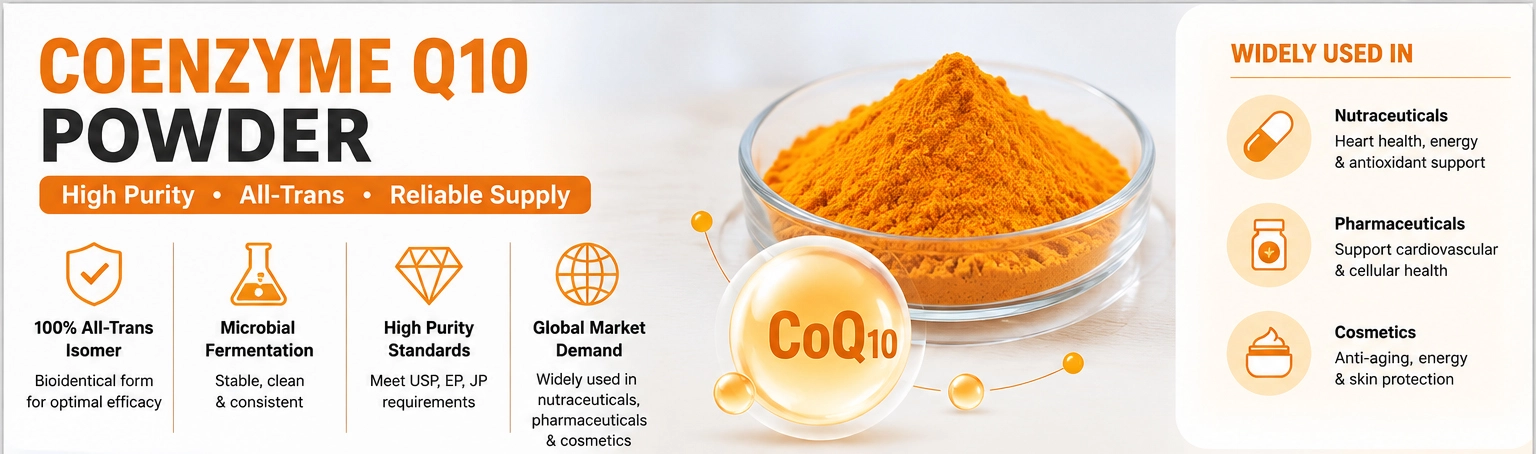
Choosing reliable Coenzyme Q10 Powder manufacturers in 2026 demands careful evaluation of certifications, production capacity, and proven track records. Leading suppliers excel in delivering high-purity ubiquinone-10 through microbial fermentation processes, ensuring 100% all-trans isomer configuration that mirrors the bioidentical form found naturally in human cells. These manufacturers address critical procurement concerns—including batch consistency, regulatory compliance across multiple markets, and transparent supply chain management—making them indispensable partners for nutraceutical formulators, pharmaceutical developers, and cosmetic innovators seeking ingredients that combine clinical efficacy with manufacturing reliability.
Understanding Coenzyme Q10 Powder and Its Market Demand
Premium ubiquinone is still in high demand around the world for a wide range of industry uses. This benzoquinone molecule dissolves in fat and is an important ingredient in the production of adenosine triphosphate (ATP). It also works very well as an antioxidant in the lipid phase. People who buy things today know that not all CoQ10 powders work the same.
Quality changes happen because of many things that happen during production. It has a crystalline look that runs from yellow to orange, and real fermented grades stay more stable than manufactured ones that are contaminated with cis-isomers. Standard mesh particles (40–80 mesh) are easy to work with, but micronized versions with D90 below 10 micrometers greatly improve dissolving rates, which is an important thing to think about when making beauty serums or food supplements.
Procurement professionals will put more emphasis on traceability documentation and pharmacopeial compliance as the market trends through 2026. In North America and the European Union, regulations are continuing to tighten requirements for purity, which forces producers to use more advanced quality assurance procedures. The move toward "clean label" products makes people even more careful about where they get their raw materials and how they are processed. Knowing these technical details helps buyers deal with supplier claims and find partners who can meet their production needs right away as well as the changing rules and regulations.
Criteria to Evaluate and Choose Top Coenzyme Q10 Powder Manufacturers
To choose manufacturing partners, you need a structured evaluation method that is tailored to your unique business needs. Nutraceutical brands that are running campaigns across the country need huge amounts of Coenzyme Q10 Powder, while small cosmetic lines may need flexible minimum order numbers (MOQ) for unique formulas. Making your annual consumption projections clear sets the tone for honest conversations with suppliers right away.
Verification of certification is the most important part of evaluating a manufacturer. Reliable providers keep their ISO 9001 quality management systems up to date, make sure their GMP (Good Manufacturing Practice) production is compliant for pharmaceutical-grade products, and follow HACCP rules to make sure food is safe during all stages of processing. Adherence to the USP, EP, and JP pharmacopeias makes sure that precise specs meet standards around the world. Instead of taking copies at face value, ask for full portfolios of certificates and check their validity with the organizations that issued them.
Infrastructure for manufacturing has a direct effect on the stability of supplies. Check the size of the production by looking at the annual output, the fermentation technology used, and the ability to do further processing. When manufacturers use Agrobacterium tumefaciens or Rhodobacter sphaeroides fermentation along with their own strain optimization, the isomers they make are usually more pure. Temperature-controlled milling equipment keeps the heat-sensitive quinone ring from breaking down, and microencapsulation technologies keep the ring from oxidizing during storage due to UV light.
Traceability of raw materials goes beyond analysis certificates. Leading producers keep track of where fermentation substrates come from, test them batch-to-batch, and keep a lot of information about their stability under different storage situations. This paperwork is very helpful when going through regulatory inspections or looking into differences in how finished products work. An review of the stability of the supply chain should look at things like the ability to plan for the unexpected, the way that inventory is managed, and the logistics partnerships that make sure regular delivery windows—this is especially important given how global freight is moving right now.
Top 5 Coenzyme Q10 Powder Manufacturers to Trust in 2026
There are a lot of manufacturers in the market, and each one is different because it has unique skills that meet the needs of different buyers. We've found five providers that have done exceptionally well across all important evaluation criteria. They each have different strengths that make them perfect for a range of procurement situations.
Bolin Biotechnology: Comprehensive Solution Provider
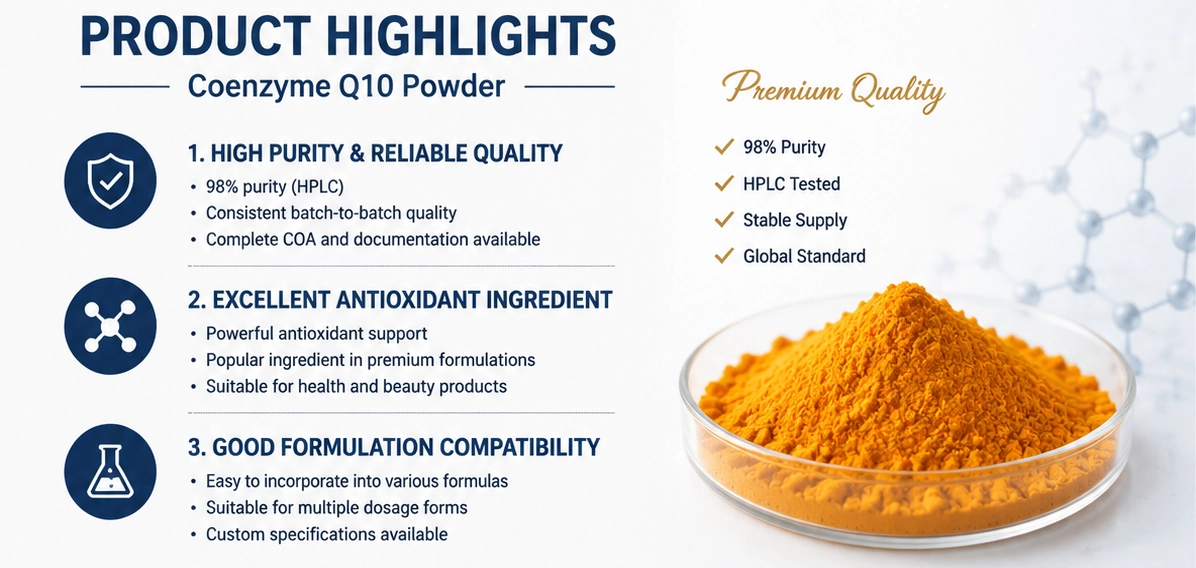
Since 2012, Shaanxi Bolin Biotechnology Co., Ltd. has become a reliable partner by focusing on high-quality plant ingredients that have been proven scientifically. International standards are met by our Coenzyme Q10 Powder, which is made using fermentation to make sure that it has a 100% all-trans configuration. The factory has ISO, GMP, and HACCP certifications, which means that our products can be easily added to nutraceutical formulations, pharmaceutical applications, and new cosmetics.
Optimized bulk density (0.4–0.6 g/ml) allows for regular flowability in high-speed encapsulation machinery, which is a useful benefit that helps supplement makers cut down on production downtime. Microencapsulation technology protects against degradation caused by light, making shelf stability much longer than with standard crystalline forms. Our R&D department can help with making unique formulations, which is especially helpful for OEM/ODM partners who need specific concentration requirements or transport methods.
Traceability documentation includes the whole production process, from choosing the substrate to the final packaging. It also includes a lot of information about how stable the product is even when it's aged quickly. MOQ structures that are flexible can work for both well-known brands that need large amounts of product and new companies that are testing out new market formulations. The technical support team helps clients improve bioavailability in their individual product matrices by giving formulating advice that takes into account ubiquinone's hydrophobic nature and problems with solubility.
Kaneka Corporation: Innovation Leadership
This Japanese company was one of the first to use natural fermentation methods many years ago, and they have a lot of scientific data to back up their claims about heart health. Their unique particle engineering helps their water-dispersible CoQ10 formulas deal with problems related to absorption. Pharmaceutical companies really like it when their products are backed by a lot of pharmacokinetic studies, which make the regulatory submission process easier.
Kingdomway Group: Production Scale Excellence
Kingdomway runs the biggest ubiquinone factories in China and offers competitive prices without lowering the quality standards. Automation in fermentation systems makes sure that batch-to-batch consistency is maintained over a million kilograms of output per year. Their ability to control the whole process, from making the substrate to finishing the milling, makes their supply chain more reliable, which is appealing to global supplement brands that have to manage complicated distribution networks.
ZMC-USA: Organic Certification Specialist
ZMC's certified organic coQ10 powder meets strict USDA and EU organic rules, giving it a premium position in natural products channels. Their clear supply chain paperwork is appealing to clean-label brands that need to be able to tell stories about their ingredients. Smaller production runs can meet the needs of niche markets without committing too much inventory.
Gnosis by Lesaffre: Advanced Bioavailability Technology
Their patented ubiquinol form (the reduced state of CoQ10) is better at getting into cells than regular ubiquinone. Clinical data shows that therapeutic-focused formulas should have higher prices because they have better plasma concentration curves. The pharmaceutical-grade manufacturing environment allows the production of APIs that are used in prescription drugs.
Because suppliers have so many different strengths, procurement teams can match the skills of suppliers with the product strategies that are most important to them, whether that's saving costs, providing more detailed regulatory paperwork, or using cutting-edge delivery technologies.
Common Challenges in Sourcing Coenzyme Q10 Powder and How Trusted Manufacturers Address Them
There are quality problems in the ubiquinone supply chain that happen because of bad fermentation control or bad conditions after processing. Manufacturers with a good reputation use multiple testing methods, such as HPLC (High-Performance Liquid Chromatography) to check the quality of the isomer, melting point uniformity within the 48–52°C range, and particle size distribution validation. For batch release procedures to work, strict microbiological screening and heavy metal testing must be passed before the shipment can be authorized.
As market prices change, the chance of adulteration goes up. Synthetic CoQ10 that has cis-isomers mixed in looks chemically similar but doesn't work biologically. Nuclear Magnetic Resonance (NMR) spectroscopy can find problems with the structure, and enzymatic assays can confirm the biofunctional capacity. Independent labs that work with reliable sources do third-party checks to make sure the quality of their products. This keeps quality proof free of conflicts of interest.
Since 2020, problems in the supply chain have gotten worse, showing where single-source systems are weak. Leading makers keep smart inventory gaps that are based on how much their customers buy and source their raw materials from a variety of places around the world. Logistics partnerships with temperature-controlled freight providers keep goods from going bad during transport, which is especially important for CoQ10, which breaks down quickly when exposed to temperatures above 25°C for long periods of time.
Different markets have very different rules about how to follow them. For example, the FDA's rules on dietary supplements are very different from Australia's rules on how to handle therapeutic goods or Health Canada's rules on natural products. Suppliers with a lot of experience keep regulatory affairs teams that keep up with changing standards and re-formatting paperwork packages so they work in all jurisdictions. This knowledge is very helpful when a company wants to sell its products in other countries. It cuts down on the time and work needed to enter new markets, which could have taken months of internal research.

Insights on Coenzyme Q10 Powder: Benefits, Usage, and Dosage for B2B Clients
Understanding why people need to take extra CoQ10 makes its uses in industry clearer. As people get older, their natural biosynthesis slows down, and some medicines, especially statins, can mess up their body's natural production pathways. Diet rarely offers therapeutic amounts; for people to reach clinically meaningful doses, they would have to eat huge amounts of organ meats or oily fish. Because of this biological fact, there is a steady demand for Coenzyme Q10 Powder in all types of supplements.
Health Benefits Driving Product Formulations
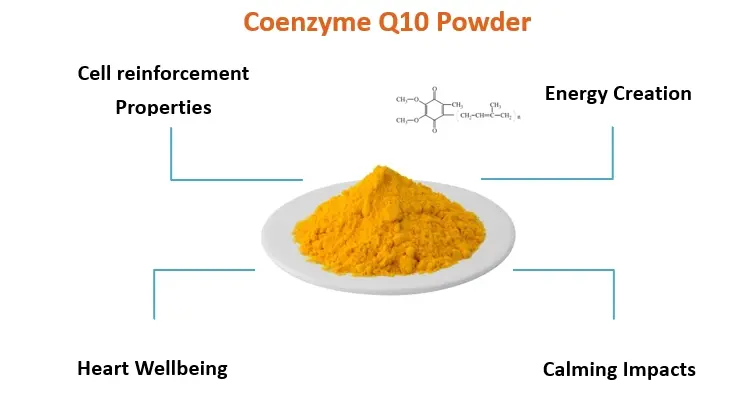
The main mode of action is mitochondrial energy production. During cellular respiration, CoQ10 takes in electrons, which helps make ATP, which drives all biological processes. Cardiovascular applications make up most of clinical research. Studies have shown that these applications improve ejection fraction in heart failure patients and lower oxidative damage in vascular endothelium. These results back up what the labels say about heart health supplements for older people.
Antioxidants have benefits beyond protecting the heart. The ubiquinone molecule stops lipid peroxyl radicals from starting oxidative chain reactions. This keeps cell membranes safe all over the body. This process is used in cosmetics to make anti-aging products. For example, scientific studies of CoQ10-enriched creams on the skin showed that they reduced the depth of wrinkles and improved its elasticity.
Dosage Guidelines Across Industries
Nutraceutical formulations usually run from 100 to 300 mg per day for general health goods and from 400 to 600 mg per day for therapeutic cardiovascular support. When treating known deficiencies, pharmaceutical applications may call for higher concentrations. Cosmetic formulators use concentrations between 0.01% and 0.1% in finished creams and serums, balancing how well they work with how much they cost when setting prices for consumers.
Form Factor Advantages
The powder format gives manufacturers more options than pre-encapsulated options. With the right choice of excipients, it is possible to make direct compression tablets, two-piece capsules, and suspensions. To solve problems with solubility in water-based systems, formulators need to use co-solvents or emulsification technologies. However, powder starting materials let them find the best settings for their production equipment and the way they want the product to be delivered. Buying powder can also save you money because you can make more than one SKU from a single inventory of raw materials. This is because you don't have to keep different inventories of finished dosage forms.
Conclusion
In 2026, finding your way around the Coenzyme Q10 Powder market means combining scientific requirements, following the rules, and making sure the supply chain works well. The manufacturers we looked at have shown they can do well in all of these areas, and their strengths are tailored to different procurement goals. For example, they offer pharmaceutical-grade purity to support API production, as well as flexible MOQ structures to accommodate new names. Partnerships that work well include more than just buying things. They also include technical help for improving formulations and proactive regulatory guidance as standards change. Procurement professionals can easily choose providers who can meet both short-term production needs and long-term strategy growth by using the evaluation method described in this analysis.
FAQ
1. What certifications should CoQ10 manufacturers maintain?
Suppliers that are trustworthy have both ISO 9001 quality management certification and GMP compliance for the type of product they make, such as pharmaceutical, food, or cosmetic. Food safety rules are shown by HACCP certification. Pharmacopeia compliance (USP, EP, or JP) checks that the scientific details match accepted guidelines. When going after natural product channels, organic certifications from the USDA and the EU are needed. Ask for up-to-date certificates and check their validity with the officials that issued them.
2. How can buyers verify powder purity before purchase?
Ask for Certificates of Analysis that show the HPLC isomer purity (it should show >98% all-trans configuration), melting point confirmation within the 48–52°C range, and particle size distribution that meets your needs for processing. Testing by a third-party lab at a separate facility gets rid of any conflicts of interest. Before agreeing to large sales, testing samples according to your quality control procedures finds any possible compatibility problems with current formulation platforms.
3. What typical lead times and minimum orders apply?
Taking into account fermentation cycles and quality testing protocols, standard production runs usually take between 4 and 6 weeks from the time of the purchase order to the time of delivery. Different makers have very different minimum order amounts. Some can handle 25–100 kg minimums and have dedicated production lines, while others need pledges of 500 kg or more. Lead times and MOQ levels are often longer when there are custom specifications or organic certifications. Talk about inventory management programs for regular buyers who need steady monthly shipments without having to deal with a lot of storage issues.
Partner with Bolin Biotechnology for Your Coenzyme Q10 Powder Supply
Problems with quality shouldn't slow down the development of your products or hurt your reputation in the market. Since 2012, we've been making Coenzyme Q10 Powder. The ubiquinone we make through fermentation meets international quality standards thanks to our extensive certification portfolios and strict testing protocols. Our technical team helps with formulations by improving stability, making them more soluble, and making sure that the legal paperwork is right for the places you want to reach. Our flexible MOQ structures and reliable supply chain can work with a wide range of business models, whether you're expanding your nutraceutical production, creating pharmaceutical-grade uses, or coming up with new beauty formulations. Email our experts at sales1@bovlin.com to talk about your unique needs and get full technical specifications that show how our Coenzyme Q10 Powder can help your product line. Go to bolinbiotech.com to see all of the botanical ingredients we can provide.

References
1. Garrido-Maraver, J., et al. (2014). "Coenzyme Q10 Therapy in Mitochondrial Diseases." Pharmacological Research, Vol. 88, pp. 89-103.
2. Sharma, A., et al. (2021). "Coenzyme Q10: Clinical Applications in Cardiovascular Diseases." Current Pharmaceutical Design, Vol. 27, No. 14, pp. 1739-1748.
3. López-Lluch, G., et al. (2019). "Bioavailability of Coenzyme Q10 Supplements Depends on Carrier Lipids and Solubilization." Nutrition, Vol. 57, pp. 133-140.
4. Hernández-Camacho, J.D., et al. (2018). "Coenzyme Q10 Supplementation in Aging and Disease." Frontiers in Physiology, Vol. 9, Article 44.
5. Crane, F.L. (2022). "Biochemical Functions of Coenzyme Q10 in Cellular Energy Production." Journal of Nutritional Biochemistry, Vol. 98, pp. 108-117.
6. Zhang, Y., et al. (2023). "Quality Assessment and Authentication Methods for Commercial Coenzyme Q10 Products." Journal of Pharmaceutical and Biomedical Analysis, Vol. 215, pp. 114-125.