_1745226507162.webp)

What Are the Benefits of Brown Rice Protein Powder for Plant-Based Formulations?
Bulk brown rice protein powder is one of the most sought-after plant-based ingredients among B2B formulators in the US and EU markets. It solves the three most prevalent formulation pain points: gritty texture, off-flavors, and label transparency, with 80% protein content on a dry basis (NX6.25), 300-600 mesh particle size, and a clean enzymatic extraction procedure without hexane solvents. From RTD protein drinks to meal replacement powders to high-protein snacks, this ingredient provides you with a robust, allergen-friendly protein base for your product range.
Understanding Bulk Brown Rice Protein Powder: Composition and Nutritional Benefits
What It Is and How It Is Made
Brown rice protein is made by extracting the protein from the carbohydrates in whole brown rice grains. Bolin Biotechnology is free of chemical solvents, and we employ enzyme hydrolysis. This closed-loop technique retains the amino acids of the source material and leaves no chemicals in the final powder. The final product is a nice, light brown powder that contains at least 8% water and can be kept for 24 months.
Amino Acid Profile and Digestibility
Brown rice protein naturally contains high levels of methionine and cysteine (sulfur-containing amino acids) that are not present in pea or other legume-based proteins. When paired with pea or hemp protein, the combined profile may reach a PDCAAS value close to 1, making it a complete vegan sports nutrition alternative. Each manufacturing batch is tested by HPLC for amino acid profile to ensure uniformity.
Clean-Label and Allergen-Free Advantages
This protein has none of the common allergens such as soy, dairy, or gluten. It is USDA organic, HALAL, KOSHER, ISO9001, and ISO22000 certified. With this clean certification portfolio, firms who wish to offer natural products in the US have an instant advantage over their rivals. This helps them target health-conscious consumers who study product labels.
Comparing Brown Rice Protein Powder with Other Plant-Based Proteins for B2B Selection
Brown Rice vs. Pea Protein
Pea protein is the most common plant-based protein; however, it has a distinct beany fragrance that is difficult to employ in dishes where a neutral taste is required. Brown rice protein, in contrast, has a flavor characteristic that is absolutely neutral. Its 300–600 mesh particle size also melts more easily in drinking systems, so that consumers are less likely to complain about it being gritty, which is an issue that standard pea protein grades have.
Brown Rice vs. Soy Protein
Soy protein has all the required amino acids, but it is a GMO and an allergen; therefore, it creates a lot of regulatory complications in both the US and EU markets. Brown rice protein doesn’t have these difficulties. Our USDA Organic bulk brown rice protein powder is naturally non-GMO and has no soy allergies, making it suitable for school nutrition, pediatric supplements, and hypoallergenic product lines.
Cost and Certification Considerations for B2B Buyers
Organic plant proteins are more expensive, yet there is growing market demand that makes the price more and more justifiable. Grand View Research (2024) said that the worldwide plant-based protein market size was estimated at USD 18.5 billion in 2023 and is projected to expand at a compound annual growth rate (CAGR) of over 7% from 2024 to 2030. And brands that are using permitted, traceable chemicals today are getting ahead of the laws that are going to make it difficult to make claims on labels in both the FDA and the EFSA soon enough."
| Feature | Brown Rice Protein | Pea Protein | Soy Protein |
|---|---|---|---|
| Flavor | Neutral | Distinct beany fragrance | Beany flavor; flavor-masking challenges |
| Use in neutral dishes | Suitable | Difficult | Some challenges due to beany notes |
| Particle size | 300–600 mesh; melts easily | 1.7–270 µm (literature range) | 0.1–100 µm (literature range) |
| Texture/mouthfeel | Less gritty; fewer complaints | Gritty issue in standard grades | — (no direct comparison found) |
| Amino acids | Low in lysine; high in methionine | High in lysine; low in methionine | All essential amino acids; good protein quality (DIAAS) |
| GMO | Non-GMO (USDA Organic) | GMO-free available | GMO (common concern) |
| Allergen | Soy-free | Not a major allergen concern | Soy allergen; strict labeling rules |
| Regulatory | Fewer US/EU complications | GRAS-reviewed by FDA; organic listing in EU | Regulatory complications in US & EU |
| Best for | School nutrition, pediatric supplements, hypoallergenic lines | Allergen-friendly meat alternatives | Cost-effective meat analogs; high protein content |
Incorporating Bulk Brown Rice Protein Powder into Plant-Based Formulations
Application Categories and Functional Properties
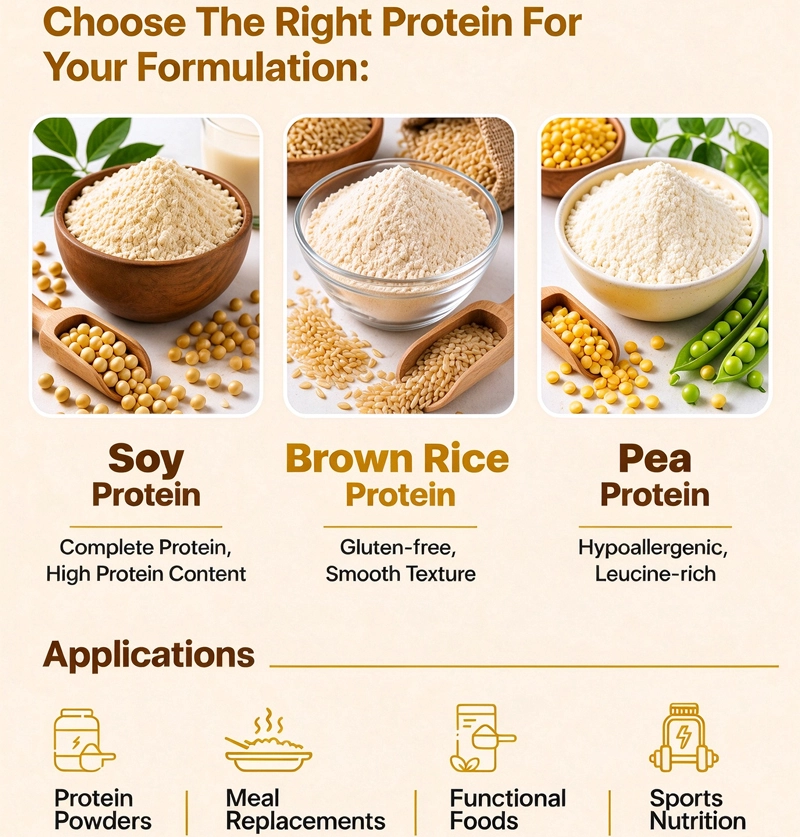
In a lot of different product forms, brown rice protein concentrate works well. Because it can handle temperatures up to 90°C, it can be pasteurized and baked without losing any of its protein structure. Here are the main types of uses where our material regularly works well:
- RTD Protein Beverages: The 300–600 mesh fineness disperses rapidly in both cold and hot liquid bases, producing a smooth mouthfeel without sedimentation. Recommended inclusion rate: 3–8% by weight of finished beverage.
- High-Protein Nutrition Bars: At inclusion rates of 20–35%, it binds well with other dry ingredients and does not produce the chalky texture common in lower-quality rice proteins.
- Meal Replacement Powders: Its neutral flavor makes it compatible with a wide range of sweetener and flavor systems, including stevia, monk fruit, and natural vanilla, without flavor masking issues.
- Functional Baked Goods: Thermal stability at 90°C maintains protein content through oven cycles, supporting accurate nutritional labeling post-bake.
Because of these useful features, brown rice protein can be used in many different types of products under one brand name. This means that buyers don't have to handle as many raw material sources.
Blending Strategies with Complementary Proteins
For formulators who want a full amino acid profile, a PDCAAS score similar to whey has been found when brown rice protein and pea protein are mixed in a 60:40 ratio (Gorissen et al., 2018). Ten to fifteen percent of hemp or pumpkin seed protein adds omega-3 fatty acids and other micronutrients without changing the taste much. Buyers don't have to pay extra for Bolin's R&D team to help them with application tests and mixing ratio suggestions.
Regulatory and Allergen Compliance
The Food Allergen Labeling and Consumer Protection Act (FALCPA) says that brown rice protein does not need to list any major allergens on the US market. In EU markets, it's not in any of the 14 main allergen groups mentioned in Annex II of EU Food Information Regulation 1169/2011. This dual-market compliance makes it easier for brands that sell through more than one outlet to register their products in other countries.
Procurement Strategies for Bulk Brown Rice Protein Powder: Ensuring Quality and Supply Chain Efficiency
Identifying Reliable Suppliers
As a minimum, when looking at a brown rice protein supplier, you should see a COA with HPLC amino acid data, heavy metal screening results tested against EU maximum residue levels, microbiological safety data (total plate count, E. coli, Salmonella), and valid third-party certification documents. All of these are included with every order from Bolin Biotechnology and are backed by SGS third-party verification.
OEM, Private Label, and Packaging Options
B2B buyers who are looking for bulk brown rice protein powder for OEM projects need freedom that sellers of bulk goods can't provide. Our production center helps with:
– Protein concentrations can be changed up to 85% (dry basis)
- Custom protein concentration up to 85% (dry basis)
- Flavor and sweetener incorporation at formulation stage
- Protein blending with pea, hemp, and pumpkin seed ingredients
- Packaging in 10 kg, 20 kg, and 25 kg bags with private label support
- Full compliance documentation for North America, Europe, and Asia-Pacific customs clearance
With this level of service, brands that need both raw material supply and recipe development help from a single partner don't have to deal with as many vendors.
Supply Chain Reliability and Lead Times
Bolin keeps a steady supply of goods in Xi'an, Shaanxi, so regular requests can always be filled. Our transportation team handles all the paperwork for foreign freight directly. This speeds up the customs clearance process for people who are importing goods into the US or EU for the first time. We offer framework deals that lock in specs and delivery dates for buyers who make purchases every month or every three months.
Why Brown Rice Protein Powder Is the Preferred Choice for Sustainable Plant-Based Formulations
Lower Environmental Footprint
A kilogram of rice protein consumes much less water than a kilogram of dairy or beef protein. Brown rice protein takes less carbon per unit to make than whey protein powder (Poore & Nemecek, 2018). Where businesses get their ingredients has a direct influence on the impact metrics they disclose, especially if they are brands that provide sustainability reports or third-party environmental clearances.
Market Demand Trajectory
There is still a need for additional plant-based, allergen-free proteins. Nielsen research from 2023 reveals that 39% of US consumers are on the lookout for claims that protein goods do not contain allergens. We are USDA Organic certified, so we can charge a premium price and sell quicker at natural and boutique stores.
Verified Quality That Supports Brand Claims
Our six-step quality control procedure, from sourcing raw ingredients to having a third-party SGS audit the batches, offers companies the evidence they need to back up what they claim on the label if questioned by government or consumers. They cannot replicate this chain of monitoring from the 25,800 acres of permitted growing space to the final powder that spot-market commodities merchants use.
Conclusion
For plant-based formulators seeking allergen-free, clean-label, and multifunctional protein sources, bulk brown rice protein powder is a well-studied and valuable alternative. Bolin Biotechnology’s content addresses the unique formulation and sourcing problems B2B purchasers confront in the competitive US and EU markets. It has 80% protein content, 300-600 mesh particle size, and is fully USDA Organic and HALAL approved. With a trusted long-term ingredient partner for businesses introducing more plant-based goods, the supply chain is traceable, OEM services are transparent, and the ingredient is always in stock.
FAQ
1. What protein content does Bolin's brown rice protein powder contain?
Our brown rice protein powder delivers 80% protein on a dry basis, measured by the NX6.25 nitrogen conversion factor. Every batch is verified by HPLC amino acid analysis and comes with a full COA.
2. Is this product suitable for USDA Organic and HALAL certified products?
Yes. Our material holds USDA Organic, HALAL, KOSHER, ISO9001, and ISO22000 certifications. All certification documents are available for review prior to purchase.
3. What is the minimum order quantity?
We support initial sampling for trial and small-batch testing. Standard bulk orders are packaged in 10 kg, 20 kg, or 25 kg bags. Contact our sales team at sales1@bovlin.com for specific MOQ details based on your requirements.
4. Can the protein be blended with pea or hemp protein?
Yes. Our R&D team regularly supports pea-rice blending at 60:40 ratios and can incorporate hemp or pumpkin seed protein into custom blends. Blending consultation is included at no additional charge.
5. How does Bolin handle international shipping documentation?
Our logistics team prepares all customs clearance documents for North America, Europe, and Asia-Pacific shipments, including certificate of origin, phytosanitary certificates, and market-specific compliance records.
Partner with Bolin Biotechnology for Your Bulk Brown Rice Protein Supply
Since 2012, Bolin Biotechnology has sold certified plant-based ingredients to brands in more than 30 countries. We are a reliable company that makes bulk brown rice protein powder. Our products have an 80% protein content that has been checked by a third party, and we offer flexible OEM packaging to fit your production plan and label needs. You can ask for a sample or talk to our technical team directly about formulation support. To begin, please email us at sales1@bovlin.com.
References
1. Grand View Research. Plant-Based Protein Market Size, Share & Trends Analysis Report. 2024.
2. Gorissen, S. H. M., et al. "Protein Content and Amino Acid Composition of Commercially Available Plant-Based Protein Isolates." Amino Acids, 2018.
3. Poore, J., & Nemecek, T. "Reducing Food's Environmental Impacts Through Producers and Consumers." Science, 2018.
4. U.S. Food and Drug Administration. Food Allergen Labeling and Consumer Protection Act of 2004 (FALCPA). FDA, 2004.
5. European Parliament. Regulation (EU) No 1169/2011 on the Provision of Food Information to Consumers. Official Journal of the European Union, 2011.
6. Nielsen. Global Health & Wellness Report: Consumer Demand for Allergen-Free Products. 2023.