_1745226507162.webp)

What is the difference between spermidine and spermidine hydrochloride?
Introduction
The life and cellular health industries are rapidly evolving, and polyamines are at the core of novel concepts. Spermidine and its salt derivative have been of great interest to researchers in the pharmaceutical area, functional food producers, and nutraceutical manufacturers. Shaanxi Bolin Biotechnology’s procurement personnel have some crucial selections to make when sourcing the raw ingredients for their formulations. There is a distinction between spermidine and spermidine hydrochloride beyond the nomenclature of the chemicals. The difference influences stability, dosage precision, manufacturing efficiency, and ultimately product effectiveness. In this book, we go deep into these distinctions to provide B2B buyers with the knowledge they need to make scientifically sound purchase decisions that are good for business. If you make anti-aging pills, research-grade reagents, or cosmetic formulae, knowing the minor variations between these molecules is vital. This will assist you in ensuring that your buying plan fulfills quality standards, regulatory requirements, and market demands.
Quick Answer: What is the Difference Between Spermidine and Spermidine Hydrochloride
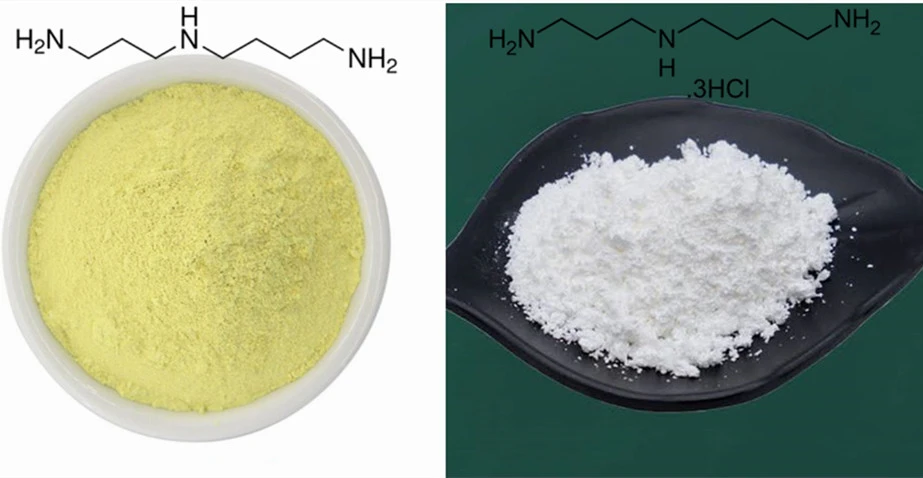
Spermidine is a free-base polyamine found naturally in wheat germ and other organic sources. Spermidine hydrochloride is a salt version of this polyamine. The hydrochloride form is chemically more stable, more easily soluble in water (more than 50 mg/mL), and has a stable crystalline structure that lends itself well to accurate synthesis. This salt form does not possess the difficulties of oxidative degradation and hygroscopicity as the free base. This makes it the greatest option for creating supplements for sale, medicinal applications, and lab research that requires 98% or greater purity levels.
Understanding Spermidine and Spermidine Hydrochloride
The Nature of Spermidine as a Polyamine
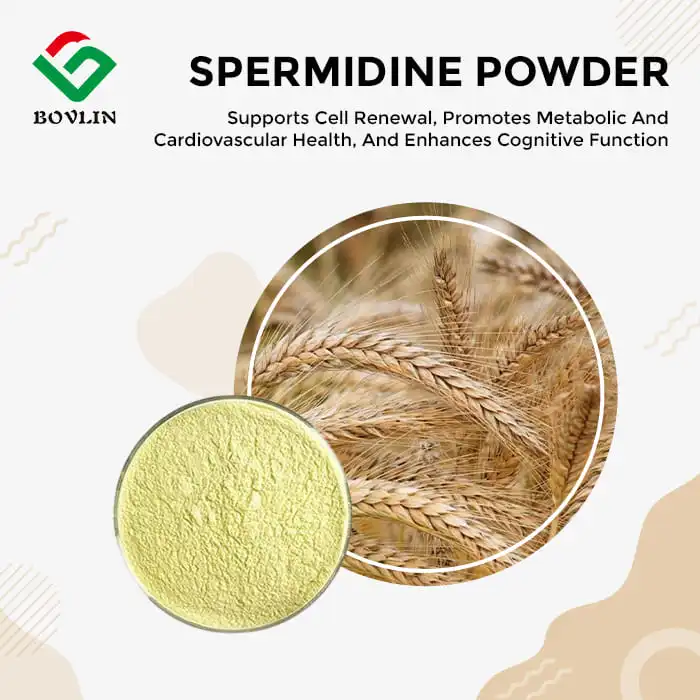
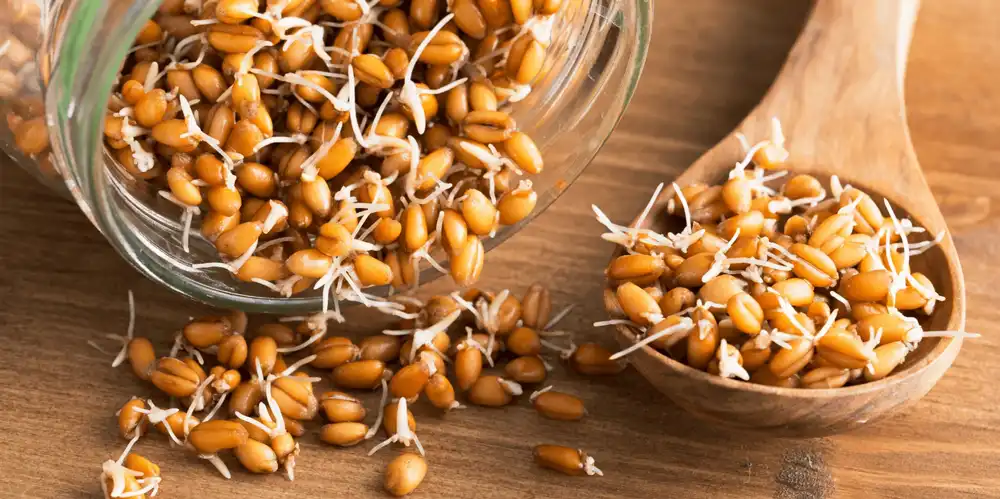
Spermidine is a naturally occurring triamine molecule that is essential for the functioning of cells in all living organisms. The chemical helps to stabilize DNA, regulate the synthesis of proteins, and kick-start autophagy, the recycling process in cells that gets rid of damaged bits and misfolded proteins. Research in journals of gerontology has shown that spermidine levels fall with age, and this reduction correlates with a decline in the ability for autophagy and an increase in cellular senescence. The freebase form is a viscous, oily liquid that has an amine-like odor at room temperature. Its chemical instability makes it difficult to remove, clean, and store for a long period in industrial settings. Natural sources of raw spermidine are inherently unstable and must be treated or converted immediately to more stable forms.
Spermidine Hydrochloride: Enhanced Stability Through Salt Formation
Spermidine hydrochloride (CAS No. 334-50-9) is prepared by reacting spermidine free base with hydrochloric acid. This yields a trihydrochloride salt with the formula C₇H₁₉N₃·3HCl. This transformation solves the primary issues with the free base and results in a highly stable white to off-white crystalline powder. The salt form has a substantially higher freezing point (about 257-259°C) than the free base. This means the molecules are tightly bound and that the salt form is not readily broken down by heat. The alteration to the hydrochloride removes the propensity to absorb water and the sensitivity to oxidation that complicate production procedures. For purchasing, it implies longer shelf lives, simpler storage, and reduced possibility of batch-to-batch variances, all of which count when scaling up manufacturing or managing overseas supply lines. The conventional crystalline structure enables accurate measuring and mixing of multi-component combinations, particularly for controlled-release systems where consistency dictates bioavailability profiles.
Biological Activity and Mechanism Comparison
The two classes are structurally distinct yet have the same impact on the cells when absorbed. The hydrochloride salt breaks down as it travels through the digestive system and releases the active spermidine molecule into the circulation. Then polyamine induces autophagy by inhibiting acetyltransferase EP300. This results in enhanced SIRT1 expression and improved cell cleansing. Clinical investigations have shown that supplementation with spermidine may enhance cardiovascular indicators, cognitive function, and the health of hair follicles. The big difference is not how they operate, but how bioavailable they are, continuously. Because of the increased solubility of the hydrochloride form, the dissolution rates can be anticipated. Pharmacokinetic profiles are more accurate. This homogeneity is highly significant for clinical studies when findings need to be repeatable. Such predictability is beneficial for formulators working with anti-aging vitamins or cosmetics, as it allows them to provide evidence-based recommendations for dosage and to retain regulatory records.
Key Differences Between Spermidine and Spermidine Hydrochloride
Chemical and Physical Property Distinctions
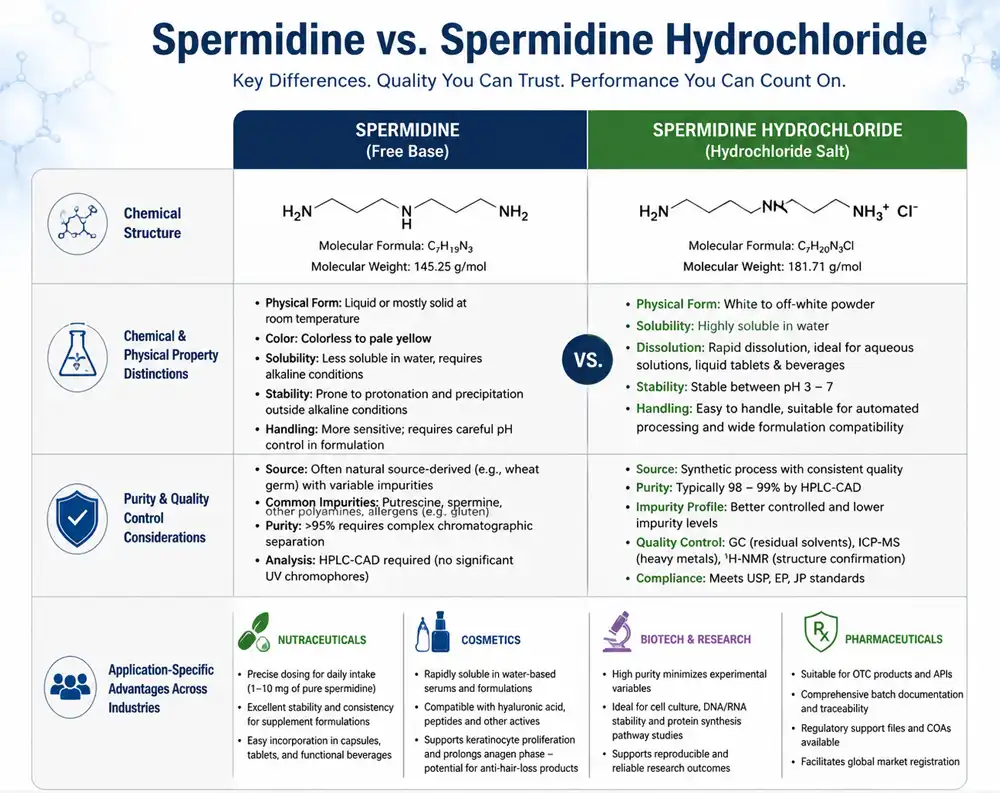
The handling is radically different from a free base to a hydrochloride salt. Freebase spermidine is either liquid or mostly solid at normal temperature. The spermidine hydrochloride salt, however, transforms it into a powder that may be readily administered by machines. These differences in physical qualities impact all elements of the supply chain, from the manufacturing and packaging of the products to their delivery and the preparation for use. The salt form dissolves in water far more quickly than the free base; therefore, it may be used in water solutions, liquid tablets, and beverages without having to go through a laborious emulsification procedure. Spermidine hydrochloride is stable between pH 3 and 7, while the free base is subject to protonation and precipitation in the absence of alkaline circumstances. These properties directly impact the flexibility of the formulation and the design of the manufacturing process.
Purity and Quality Control Considerations
Getting each form to a pharmaceutical-grade level of purity isn’t the same. Natural source-derived spermidine free base, such as wheat seed, often contains variable levels of putrescine, spermine, other polyamines, and allergens such as gluten proteins. If you want a purity higher than 95%, you have to employ complicated chromatographic separation processes. However, the synthetic process of spermidine hydrochloride provides better control of the impurity profiles and usually produces a 98-99% purity by HPLC-CAD (Charged Aerosol Detection) techniques. Such analysis is required since spermidine does not contain significant UV chromophores and standard HPLC-UV detection is not very effective. Quality control techniques for the hydrochloride salt include gas chromatography to determine residual solvents, ICP-MS to detect heavy metals, and ¹H-NMR to confirm structure. These rigorous testing techniques ensure that the product fulfills the criteria of the USP, EP and JP pharmacopoeias required for various medical and nutritional applications.
Application-Specific Advantages Across Industries
When selecting amongst these chemicals, various industries rank different features as important. Because it can be dosed accurately, spermidine hydrochloride is popular among nutraceutical firms. Most therapeutic studies suggest daily dosages of 1–10 mg of pure spermidine, which may be reached by the continual composition of this salt form. Cosmetics developers enjoy that it dissolves quickly in water-loving serum bases and plays well with other active ingredients like hyaluronic acid and peptide complexes. This substance may increase the number of keratinocytes and prolong the anagen phase of hair follicles, and is thus of interest for anti-hair-loss compositions. The hydrochloride is beneficial in that it may be used in topical and oral administration methods. When biotech laboratories look at cells, they want the cleanest they can get so there are no factors that might confound studies looking at the stability of DNA-RNA or routes to protein production. Batch documentation and traceability are major focuses for pharmaceutical businesses manufacturing over-the-counter medications or APIs. Detailed Certificates of Analysis and regulatory support files are available from well-known vendors of spermidine hydrochloride.
Evaluating Spermidine Hydrochloride as a B2B Procurement Option
Supplier Landscape and Certification Standards
High-purity spermidine hydrochloride is supplied via a worldwide supply chain, including specialized enterprises in plant extract and chemical synthesis. The buying groups should attach greater importance to the sellers that have the ISO 9001, ISO 22000, or GMP certifications. These are signs that they have stringent procedures in place for quality control and food safety. For enterprises working with functional foods, an HACCP license is particularly crucial since it guarantees that there is no contamination via hazard analysis and key control point data. Suppliers that can provide DMF (Drug Master File) or CoS (Certificate of Suitability) to European Pharmacopoeia standards demonstrate that they are able to assist with pharmaceutical applications. Traceability records, batch genealogy, and chain-of-custody data enable procurement managers to satisfy due diligence requirements in regulated markets. Normal established suppliers have a number of manufacturing sites to ensure a continuous supply. They can also do stability tests to indicate how long a product will survive under varied store settings, which is vital information to know for the total cost of ownership beyond the original purchase.
Pricing Dynamics and Volume Considerations
The market price for spermidine hydrochloride depends on the purity grade, order quantities, and level of certification. Research-grade material is 98% pure and will cost more than technical-grade material, but the investment is worthwhile for better accuracy of formulations and regulatory compliance. Unlocking tiered pricing structures with volume commitment. That makes a 1-year supply contract attractive for established products with stable demand. Lead times influence how you purchase products. Lead time depends on the complexity of the process and the time that quality control tests require. Custom orders typically have a lead time of two to six weeks. The hydrochloride form is more stable than other, less stable forms. It has a longer shelf life (24 to 36 months vs. 12 to 18 months) and reduces the cost of maintaining supplies. With this prolonged usable life, you may purchase strategically when the market is favorable, without concern about the material breaking down.
Product Formats and Logistical Considerations
Spermidine hydrochloride powder is often sent in light-resistant multi-layer boxes pumped with nitrogen to avoid oxidation during transportation. Large quantities are sent in fiber drums coated with polyethylene. Small quantities for research are packaged in amber-colored glass bottles with moisture-barrier caps. International freight across tropical regions requires temperature-controlled shipping; however, the compound can withstand normal temperatures for short periods of time. Customs documentation requirements vary by market. Suppliers with expertise in international commerce provide harmonized system codes, phytosanitary certifications for sourcing botanicals, and non-GMO declarations that customers in Europe and North America are increasingly requesting. Some firms provide pre-encapsulated forms or custom-blend services that might minimize the requirement for any additional processing. This helps smaller OEM firms who don’t have the proper equipment for mixing.
Making the Right Choice: Spermidine vs Spermidine Hydrochloride for Your Business
Effectiveness and Return on Investment Analysis
Due to its high accuracy, spermidine hydrochloride is often employed in controlled experiments in scientific articles. Therefore, this kind is the most predicted clinical outcome. Peer-reviewed research gives credibility to a product, and people are more inclined to trust in it. The strategic advantage is therefore to choose chemicals that are in accordance with published research. The difference in cost of the free base and hydrochloride forms is minimized, taking into account the loss of yield when employing less stable ingredients for the manufacture. Hydrochloride-based formulations provide lower levels of batch rejections for test failures. This makes the whole manufacturing cost lower. They need more money to acquire raw materials. There are also many methods to get things to market. Claims like “pharmaceutical-grade” or “clinically studied form” attract informed clients who are prepared to spend more, which is excellent for firms trying to distinguish themselves by quality.
Best Practices for Supplier Selection and Risk Mitigation
"Due diligence isn’t just about comparing prices but also technical support and the potential for a long-term partnership." Top vendors provide formulation guidance to assist purchasing teams in determining optimal inclusion rates for products, how to combine ingredients that complement each other, and how to maintain the stability of the blend in certain patterns. Third-party testing verified by an independent laboratory increases credibility. Reliable merchants appreciate these kinds of arrangements and continue to engage with recognized testing labs. To improve the durability of your supply chain, you need to examine how suppliers get their raw materials, the flexibility of their manufacturing capacity, and how they respond to crises. Regulatory Landscape Monitoring Another differentiator among smart vendors. These vendors inform their customers in advance about changes in standards in target markets. Developing dual-source methods for critical ingredients achieves a compromise between assurance of supply and leverage on competitive price. But the qualifying procedures for secondary suppliers must be equally as rigorous as those for major suppliers.
Future Trends and Innovations in Spermidine Product Development
Emerging Research and Expanding Applications
New applications for polyamine supplements continue to be found in recent papers in gerontology and dermatological journals. Studies on the role of spermidine in mitochondrial activity and NAD+ metabolism suggest it may have good synergistic effects with other longevity compounds such as nicotinamide riboside and pterostilbene. The cosmeceutical business is looking at innovative delivery techniques such as nanoencapsulation technologies that allow anti-aging skin care products to penetrate deeper into skin. For those interested in improving general cellular health, combination products with spermidine hydrochloride plus resveratrol, quercetin, or fisetin are under development. The pet supplement sector is still somewhat young, but some early research shows they may provide comparable advantages to animals.
Technological Advances in Formulation and Delivery
Microencapsulation into alginate or chitosan matrices protects spermidine from degradation in the stomach and allows targeted release in the intestine. Liposomal delivery techniques improve the bioavailability of substances by facilitating the permeability of membranes. The chemicals are hydrophilic, which may inhibit passive absorption. The use of hydroxypropyl methylcellulose matrices in sustained-release tablet technologies leads to longer blood concentration curves, which might make them more effective than immediate-release forms. For these new technologies to operate, the raw ingredients need to be of extremely high purity and consistency, which high-grade spermidine hydrochloride always is. Suppliers are able to provide formulators working with these sophisticated delivery systems with tailored testing data, such as particle size distribution analysis and polymorphic form characterization, which impact the rate at which the drug dissolves and its stability over time.
Market Forecasts and Strategic Procurement Insights
Analysts believe the longevity supplement sector will increase in double digits over the next 10 years. This is because individuals in developed economies are living longer and more people throughout the globe are becoming more health-conscious. This road signals a strategic advantage for early-mover businesses with scientifically validated formulas that create positive reputations. Regulators are anticipated to scrutinize the work of procurement teams more rigorously as it pertains to validating health claims and tracking substances. Brands that work with providers who provide complete regulatory support services are well-positioned to react rapidly to changing compliance issues. Sustainability is becoming a bigger element in supplier selection. Customers ask manufacturers how they eliminate garbage, utilize water, and evaluate their carbon impact. Suppliers who can demonstrate that they care about the environment via ISO 14001 certifications or participation in industry sustainability initiatives are aligned with customers’ concerns about corporate social responsibility.
Conclusion
The difference between spermidine and spermidine hydrochloride has a great impact on production, sales, and the growth rate of the life market. Both forms offer the same biological advantages, but the hydrochloride salt is more stable, dissolves better, and can be dosed more correctly, making it the superior option for professional formulation creation. Procurement professionals are required to evaluate suppliers on a broad set of criteria, including purity, availability of certificates, ability to provide expert assistance, and supply chain resilience. When you buy pharmaceutical-grade spermidine hydrochloride, you get a lot of bang for your buck. You’ll produce less waste, you’ll be in greater compliance with laws, and you’ll build consumer confidence in substances that have been scientifically proved to function. As more research is completed to discover how polyamines might be utilized as medications, businesses that are ahead of the curve will be leading the cellular health revolution due to their early collaborations with quality-oriented suppliers.

FAQ
1. Why choose spermidine hydrochloride over wheat germ extract?
Wheat germ extract has only 0.1 to 1% spermidine and may contain allergens like gluten, which makes it hard to standardize doses. Spermidine hydrochloride is more than 98% pure, which lets you give exact milligram-level doses that are used in clinical studies and that customers expect from high-quality products.
2. Does the hydrochloride form affect biological activity?
When you eat the salt, it breaks apart into identical spermidine molecules that your body uses through the same autophagic pathways. The clinical effectiveness stays the same, and the hydrochloride form is better for manufacturing without affecting biological performance.
3. What storage conditions maximize shelf life?
For business purposes, keeping the powder in covered, light-resistant packages at room temperature is enough. Long-term keeping at 2–8°C makes it stable for longer than 36 months, but this isn't needed in production settings where material is regularly changed.
4. How should procurement teams verify quality?
Ask for Certificates of Analysis that list the HPLC purity, heavy metal screening results, microbial counts, and testing for residual solvents. Verification by an independent third party through accredited labs boosts trust, especially when dealing with new suppliers or for important uses that need pharmaceutical-grade materials.
Partner with a Trusted Spermidine Hydrochloride Manufacturer
Shaanxi Bolin Biotechnology stands as a dedicated spermidine hydrochloride supplier committed to advancing cellular health through superior botanical extract science. Since our start in 2012, we've provided plant-based solutions that meet the highest international standards to nutraceutical innovators, pharmaceutical developers, and cosmeceutical brands all over the world. Our spermidine hydrochloride is 98–99% pure thanks to strict quality control measures and ISO 9001, GMP, and HACCP certifications that make sure every batch is the same. We give you detailed technical information, like stable studies, regulatory support files, and formulation advice that is made to fit the needs of your particular application. Our production skills allow for flexible MOQ setups while still providing the supply stability that large-scale businesses need. If you need to buy something from a company that combines science knowledge with helpful customer service, we invite you to experience the Bolin difference. Contact our team at sales1@bovlin.com to talk about your spermidine hydrochloride needs and find out how our dedication to quality and new ideas can help your product line.
Founded in 2015 and headquartered in Xi’an, Shaanxi Bolin Biotechnology Co., Ltd is a national high-tech enterprise specializing in R&D, production and global export of plant extract raw materials and functional nutraceutical ingredients. Leveraging the Qinling Mountains' unparalleled botanical resources and Xi’an’s Belt and Road logistics hub position, it operates a 50+ acre modern manufacturing facility in Xianyang with 6 cGMP-compliant production lines and 3,000+ tons annual capacity. Its product portfolio includes creatine monohydrate, L-carnitine, coenzyme Q10 and plant extracts, all certified to ISO, HALAL and KOSHER standards. With 50+ patents and end-to-end quality control, Bolin delivers tailored B2B solutions globally.
References
1. Madeo, F., Eisenberg, T., Pietrocola, F., & Kroemer, G. (2018). Spermidine in health and disease. Science, 359(6374), eaan2788.
2. Schwarz, C., Stekovic, S., Wirth, M., Benson, G., Royer, P., Sigrist, S. J., ... & Madeo, F. (2018). Safety and tolerability of spermidine supplementation in mice and older adults with subjective cognitive decline. Aging, 10(1), 19-33.
3. Eisenberg, T., Abdellatif, M., Schroeder, S., Primessnig, U., Stekovic, S., Pendl, T., ... & Madeo, F. (2016). Cardioprotection and lifespan extension by the natural polyamine spermidine. Nature Medicine, 22(12), 1428-1438.
4. Soda, K., Kano, Y., Chiba, F., Koizumi, K., & Miyaki, Y. (2013). Increased polyamine intake inhibits age-associated alteration in global DNA methylation and 1,2-dimethylhydrazine-induced tumorigenesis. PLoS One, 8(5), e64357.
5. Pekar, T., Bruckner, K., Pausch, J., Kölker, S., Scherer, P., & Neugebauer, H. (2020). The positive effect of spermidine in older adults suffering from dementia. Wiener Klinische Wochenschrift, 132(9-10), 213-222.
6. Ramot, Y., Tiede, S., Bíró, T., Abu Bakar, M. H., Sugawara, K., Philpott, M. P., ... & Paus, R. (2011). Spermidine promotes human hair growth and is a novel modulator of human epithelial stem cell functions. PLoS One, 6(7), e22564.