_1745226507162.webp)

Where to Buy High-Purity Kojic Acid Dipalmitate Powder in Bulk?
Sourcing high-purity Kojic Acid Dipalmitate Powder in bulk requires identifying suppliers who maintain rigorous quality standards, hold internationally recognized certifications, and demonstrate reliable supply chain capabilities. Reputable manufacturers specializing in cosmetic-grade botanical actives typically offer this ingredient with assay purity exceeding 98% (HPLC), supported by ISO, GMP, and HACCP certifications. B2B procurement teams should prioritize suppliers who provide transparent Certificates of Analysis (CoA), batch traceability, and responsive technical support to ensure formulation compatibility and regulatory compliance across global markets.
Understanding Kojic Acid Dipalmitate Powder: Key Insights for Procurement
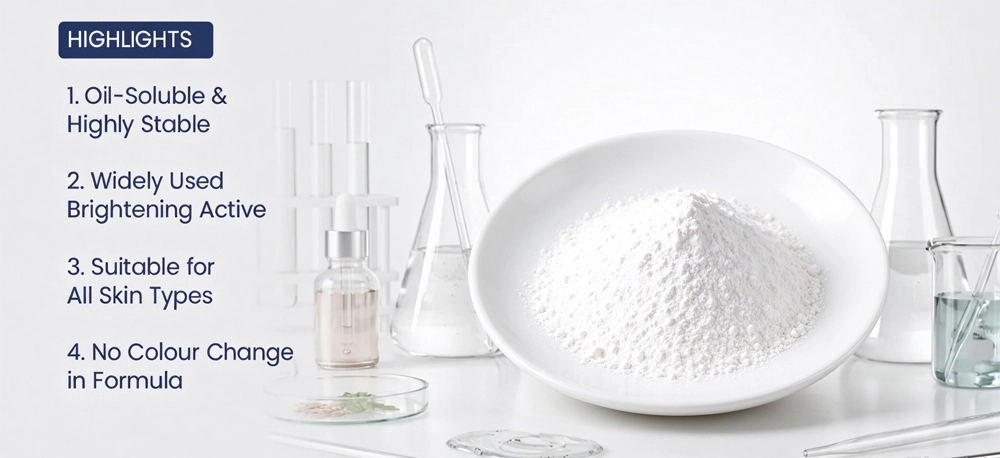
Kojic Acid Dipalmitate Powder is a scientifically improved lipophilic form of kojic acid that was created to solve the instability and oxidation problems that come with its parent compound. This changed form has two palmitic acid ester groups connected to the kojic acid molecule. This makes it much easier for oils to dissolve and for emulsion-based skin care systems to work with.
Chemical Profile and Stability Characteristics
The unique structure of this substance is described by the molecular formula C38H66O8. Its molecular weight is about 650 g/mol. When pure kojic acid is exposed to light, heat, or alkaline pH conditions, it quickly oxidizes. But this dipalmitate ester stays structurally stable over a wider range of temperatures and pH levels that are common in makeup making. The esterification process changes the water-loving hydroxyl groups into fat-loving palmitate chains. This lets the active ingredients get deeper into the stratum corneum and stay there for a longer time.
Functional Mechanisms in Skin-Brightening Formulations
This ingredient works by selectively blocking tyrosinase, which is the enzyme that slows down the process of making melanin. Studies in humans show that amounts between 1% and 5% can successfully stop melanogenesis without causing cell death or inflammation that happens with strong bleaching agents. The dipalmitate structure lets enzymes slowly break down skin cells, releasing active kojic acid molecules in a controlled way that makes the product work longer while causing less itching on the skin's surface. This controlled-release system is helpful for cosmetic formulators because it lowers the number of times that the product needs to be used to keep its glowing effects.
When purchasing managers look at this material, they should know that high-purity standards have a direct effect on how well the product works. Impurities or leftover solvents from bad extraction methods can make the product less stable, change the color profiles while it's being stored, and give it bad smells that people don't like. To make sure the quality of the material meets the standards for cosmetic safety in the US and EU markets, we suggest asking for detailed analytical reports that show the amount of heavy metals (usually less than 10 parts per million), residual solvents (ideally less than 50 parts per million), and microbes (total plate count less than 1,000 CFU/g).
Factors to Consider When Buying Kojic Acid Dipalmitate Powder in Bulk
When buying this specialized cosmetic ingredient in bulk, you have to carefully consider a number of technical and organizational factors that have an impact on the quality of the product, compliance with regulations, and the speed of the supply chain.
Purity Specifications and Quality Certifications
Assay purity is the best way to tell how good a material is, and pharmaceutical-grade sources usually get it to ≥98% purity using advanced recrystallization and chromatographic processing techniques. Buyers should make sure that providers use High-Performance Liquid Chromatography (HPLC) testing instead of less accurate titration methods, which can give incorrect results about the active ingredient's concentration by finding related chemicals or breakdown products. Quality certifications, such as ISO 9001 for quality management systems and ISO 22716 for Good Manufacturing Practice in cosmetics, make sure that factories follow the right steps to keep processes clean, stop contamination, and keep records that can be used for tracking.
Supplier Reliability and Quality Assurance Transparency
Established providers show they can be trusted by sending full technical documentation packages with every order. Most of the time, these kits come with Certificates of Analysis that show all the factors that were tested, allergen labels that follow EU Regulation 1223/2009, and safety data sheets that follow OSHA Hazard Communication Standards. Third-party inspection records from companies like SGS, Intertek, or Bureau Veritas confirm that a company can make things and has good quality processes. We've seen that providers who are willing to give us production batch records and keep sample files for longer periods of time are more dedicated to quality control and customer service—a level of diligence we specifically require for critical cosmetic actives such as Kojic Acid Dipalmitate Powder.
Minimum Order Quantities and Pricing Considerations
Different providers have very different ways of handling bulk purchases. For example, for specialized OEM projects, the minimum order quantity can be as low as 25 kg, or it can be as high as several tonnes for big production lines. When cosmetic brands release new lines of products, flexible MOQ setups often help because they let recipe optimization happen without too much inventory risk. Pricing systems are based on a number of factors, such as the cost of obtaining raw materials, the difficulty of purification, the cost of maintaining licensing, and the requirements for packing. To get accurate total landed cost estimates, buyers should ask for specific quotes that break down the prices of the base materials into different items, such as shipping, insurance, customs clearance, and regulatory paperwork fees.
Logistics and Regulatory Documentation
When sending things across international borders, you need to pay close attention to customs classification codes (HS Code 2914.70 for cosmetic-grade organic compounds), country-of-origin certificates, and phytosanitary paperwork for substances that come from plants. Experienced sellers have long-term ties with freight forwarders who specialize in shipping chemicals that need to be kept at a certain temperature. This makes sure that the chemicals are handled properly throughout the cold chain when they need to be stored below 25°C. We suggest making sure that providers provide the right packaging in pharmaceutical-grade polyethylene bags inside fiber drums, with nitrogen flushing or vacuum closing to keep the goods from going bad during long transport times.
Comparing Kojic Acid Dipalmitate Powder with Alternative Ingredients
When buying teams know what other skin-brightening actives are on the market, they can make choices that balance effectiveness, safety, regulatory acceptance, and compatibility with formulations.
Stability Advantages Over Pure Kojic Acid
However, pure kojic acid is not very stable, which makes it hard to use in industrial products even though it is good at stopping tyrosinase activity. If something is exposed to temperatures above 35°C or pH levels above 6.5, it starts oxidation processes that turn it brown and lower its active content by up to 30% within six months of being stored. The dipalmitate product solves these problems by being more resistant to oxidative decay. It keeps test levels above 95% after 24 months of storage under the right conditions. This stability directly means that the product will last longer on the shelf and will need fewer changes to the recipe during the scale-up steps.
Safety and Efficacy Relative to Hydroquinone
Hydroquinone is still the strongest melanin synthesis inhibitor on the market, but regulations in European markets and rising customer demand for better alternatives have pushed formulation trends toward choices derived from plants. Kojic Acid Dipalmitate Powder, a stable lipid-soluble derivative of kojic acid, has emerged as one of the most promising candidates in this shift. The dipalmitate ester brightens just as well at amounts of 2% to 5%, but it doesn't have the harmful effects on cells or the risks of external ochronosis that come with long-term hydroquinone exposure. Dermatological patch testing studies show much lower discomfort levels, so this ingredient can be used in products for sensitive skin and in long-term upkeep routines that need to be used every day for several months.
Comparative Analysis with Vitamin C and Arbutin
Some forms of ascorbic acid, like magnesium ascorbyl phosphate and sodium ascorbyl phosphate, can brighten your skin and act as an antioxidant, but you usually need to use more than 10% of these chemicals to see results. Arbutin is a glucoside of hydroquinone that is found naturally in bearberry products. It is very safe, but it takes longer for it to work than the dipalmitate ester. Formulation scientists often mix these actives in ways that work well together. For example, they might use the tyrosinase-inhibiting effect of dipalmitate with vitamin C's antioxidant protection and arbutin's gentle, long-lasting activity to make complete lighting systems that work in more than one way.
| Feature | Kojic Acid Dipalmitate | Kojic Acid | Hydroquinone | Vitamin C | Arbutin |
|---|---|---|---|---|---|
| Stability | High; >95% after 24 months | Poor; oxidizes >35°C or pH>6.5; up to 30% loss in 6 months | — | — | — |
| Industrial use | Easy; long shelf life, fewer formula changes | Difficult; unstable | — | — | — |
| Efficacy | 2–5% matches hydroquinone | Good tyrosinase inhibition | Strongest melanin inhibitor | Needs >10% | Safe but slower |
| Safety | Low cytotoxicity; no ochronosis; low irritation; sensitive-skin friendly | — | Cytotoxicity; ochronosis risk | — | Very safe |
| Regulatory/market | Aligns with plant-based trend | — | EU restrictions | — | — |
| Mechanism | Tyrosinase inhibition | Tyrosinase inhibition | Melanin synthesis inhibition | Brightening + antioxidant | Gentle, long-acting |
| Pairing | With Vitamin C + Arbutin | — | — | With dipalmitate/arbutin | With dipalmitate/Vitamin C |
| Key advantage | Stable, lipid-soluble, safe, hydroquinone-comparable | Good tyrosinase inhibition | Strongest inhibition | Brightening + antioxidant | Very safe, gentle |
| Key limit | — | Unstable; rapid browning | Safety risks; regulatory limits | High dose needed | Slower onset |
Top Suppliers and Brands of Kojic Acid Dipalmitate Powder for B2B Buyers
One of the most important choices in finding reliable sources for this specialized cosmetic active is choosing a strategic seller. Manufacturers that are fully integrated, trading companies with large sourcing networks, and contract manufacturing companies that offer special formulation services are all part of the global supply network.
Evaluating Supplier Credibility Through Certifications
Manufacturers you can trust keep their certifications up-to-date from widely recognized standards bodies. This shows that they are continuing to meet changing government rules. The ISO 9001:2015 certification checks that quality management systems are being used correctly and that there are written processes for corrective actions, internal reports, and efforts to keep improving. ISO 22716 talks about the specifics of how cosmetics are made. It covers things like training for workers, building layout, equipment testing, and cleanliness rules that are needed to keep things from getting contaminated. Additional certificates, like HACCP and Kosher/Halal labels, make it easier for goods aimed at certain groups of customers or areas with different rules to reach the market.
Characteristics of Reliable Manufacturing Partners
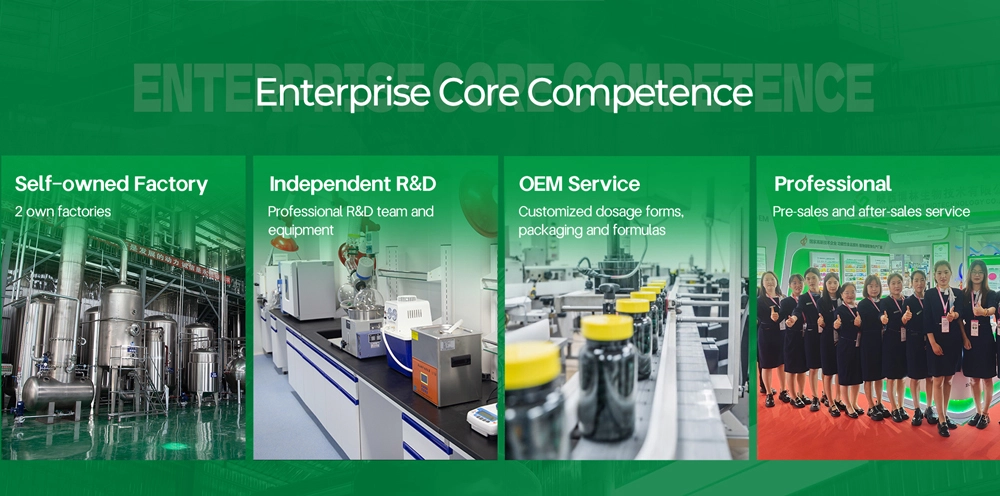
Leading companies set themselves apart by investing in scientific tools like HPLC systems with UV-Vis detectors for checking purity, gas chromatography for checking leftover solvents, and inductively coupled plasma mass spectrometry for checking for heavy metals. Trained scientists work in on-site quality control labs to make sure that every production batch goes through a lot of tests before it is released. Cross-contamination risks that can lower the quality of materials are kept to a minimum in manufacturing facilities with separate work areas, climate-controlled storage areas, and proven cleaning methods. We've formed partnerships with providers who can do these things, so our clients can be sure of the quality of the materials and that they're following the rules. All of these stringent measures guarantee that our Kojic Acid Dipalmitate Powder meets the highest pharmaceutical and cosmetic-grade standards.
Since its beginning in 2012, Shaanxi Bolin Biotechnology Co., Ltd. has become an expert in processing plant extracts by adhering to strict quality standards throughout all of its production processes. Our building has ISO 9001, ISO 22716, and HACCP certifications, and we have advanced testing instruments and skilled expert staff to back them up. We provide consistent material quality, variable order amounts, and quick technical help to cosmetic makers all over the world throughout the product creation process.
OEM Customization Capabilities
Original Equipment Manufacturer partnerships let brands make their own special mixtures with active ingredients in different amounts, particle sizes spread out in different ways, and packing types that fit the needs of each application. Suppliers that can work with original equipment manufacturers (OEMs) usually have their own research and development departments that are trained in how to test for stability, make sure that the product is compatible with common ingredients in formulations, and prepare regulatory paperwork for new product registrations. These agreements shorten the time it takes for new goods to hit the market and lower the amount of money that needs to be spent to set up in-house testing and formulation capabilities.
Best Practices for Using Kojic Acid Dipalmitate Powder in Your Products
To make a formulation that works with this active ingredient, you need to pay attention to things like the best concentration, how well the ingredients work together, the processing factors, and legal compliance issues that are unique to the target market.
Recommended Concentration Ranges
Clinical studies show that the best brightening benefits happen at amounts of 1% to 5% in leave-on products like lotions, serums, and creams. Higher concentrations, around 5%, are found in intensive treatment products meant to be used only for a short time. Lower concentrations, around 0.5 to 1%, are found in upkeep products that are meant to be used every day after the initial brightness goals are met. Formulation scientists should test the stability of the mixture over the full concentration range that was intended, since too high of a concentration can cause crystallization during storage or make emulsion systems have strange textures.
Synergistic Ingredient Combinations
When you mix this dipalmitate ester with active ingredients that work well together, you get formulations that work better in more ways. Niacinamide, in amounts between 3 and 5 percent, helps fix barriers and reduce inflammation, which works with the brightness effects. Alpha-arbutin at a concentration of 1% to 2% blocks tyrosinase even more through a different molecular route. This creates extra effects without making the possibility for irritation higher. Antioxidants, like tocopherol (vitamin E) or ferulic acid, protect against oxidative stress, which can cause reactive melanogenesis. This keeps the coloring effects of tyrosinase prevention.
Processing Considerations and Formulation Stability
Kojic Acid Dipalmitate Powder, a lipophilic ingredient, works best in the oil phase of emulsion systems. It needs to dissolve completely at temperatures between 60°C and 70°C before it can be mixed with the water phases. The homogenization settings should ensure that the particle sizes are distributed evenly to prevent settling or separation during storage. Additionally, choosing the right packaging has a significant effect on long-term stability; for example, airless pump dispensers or opaque tubes offer better protection against oxygen exposure and photodegradation than jars that are opened repeatedly. Finally, adjusting the pH to a range between 5.0 and 6.5 further enhances product stability while maintaining compatibility with the skin's natural acid mantle.
Regulatory Compliance for International Markets
This chemical is legal in the US because it follows the rules for cosmetic colorants and skin-conditioning agents in the Food, Drug, and Cosmetic Act. It is up to the makers to ensure the safety of their products by testing them properly. European Union rules say that Regulation (EC) No. 1223/2009 must be followed. This includes having trained toxicologists check for safety and letting the Cosmetic Products Notification Portal (CPNP) know about the product. Product Information Files must include information about the ingredients, how the product was made, safety tests, and data that proves the product works. We suggest hiring regulatory consultants who know the rules of a certain market to make sure that all the rules are followed and that product registration goes smoothly.
Conclusion
To find trustworthy sources of high-purity Kojic Acid Dipalmitate Powder, you need to look closely at the skills, quality certifications, technical support services, and transportation systems of potential suppliers. Good procurement strategies combine the quality of the materials with business concerns like pricing, the ability to change the minimum order size, and customization choices that help new products come out. Cosmetic companies can make whitening products that meet safety standards and customer expectations around the world by learning about the ingredients' technical properties, the best ways to mix them, and the rules that must be followed.
FAQ
1. What are typical lead times for bulk orders?
Depending on the size of the order and the level of customization needed, standard production batches usually take 15 to 25 business days to ship after the purchase order is confirmed. Established sellers keep smart amounts of high-demand items in stock, which could cut wait times for stock items to 7–10 days. International shipping can take an extra 10 to 30 days, based on where it's going, how quickly it clears customs, and the goods method chosen. We suggest that you place your orders well ahead of plan so that you have time for any delays.
2. Can suppliers provide customized formulations or specifications?
Reliable makers offer customization services that include changing particle sizes for specific use methods, custom package layouts for private labelling, and changing purity grades that balance performance needs with cost concerns. OEM partnerships allow for full formulation development services, which include this active ingredient along with other ingredients that work well together, preservative systems, and taste enhancers to make complete solutions for brands that don't have their own formulation departments.
3. How should the material be stored to maintain stability?
The best way to store things is below 25°C in cases that are tightly covered and keep out direct light and moisture. High-barrier packing materials, like pharmaceutical-grade polyethylene bags inside fiber drums, keep goods safe for up to 24 months of keeping. We suggest that once containers are opened, the opening should be purged with nitrogen and the containers should be resealed right away to prevent oxidative breakdown from oxygen in the air. Relative humidity should stay below 60% in storage areas so that moisture doesn't get absorbed, which can start hydrolysis processes that lower purity levels.
Partner with Bolin Biotechnology for Premium Kojic Acid Dipalmitate Powder
Shaanxi Bolin Biotechnology Co., Ltd. stands ready to support your formulation development initiatives with high-purity cosmetic actives backed by rigorous quality assurance and comprehensive technical service. As an established Kojic Acid Dipalmitate Powder supplier, we maintain strict manufacturing controls verified through ISO, GMP, and HACCP certifications, ensuring material consistency that meets the demanding specifications of international cosmetic brands. Our team provides detailed analytical documentation, stability data, and formulation guidance to accelerate your product development timelines. Contact our technical sales team at sales1@bovlin.com to discuss your specific requirements, request samples, or obtain customized quotations for bulk quantities. We invite you to experience the quality and reliability that have made us a trusted partner for cosmetic manufacturers worldwide.
References
1. Chen, J., & Liu, Y. (2021). Stability and Efficacy of Kojic Acid Derivatives in Cosmetic Formulations. Journal of Cosmetic Science, 72(4), 385-397.
2. International Organization for Standardization. (2017). ISO 22716:2007 Cosmetics – Good Manufacturing Practices (GMP) – Guidelines on Good Manufacturing Practices. Geneva: ISO.
3. Maeda, K., & Fukuda, M. (2020). Mechanisms of Melanogenesis Inhibition by Kojic Acid and Its Derivatives. Pigment Cell & Melanoma Research, 33(2), 226-239.
4. Regulation (EC) No. 1223/2009 of the European Parliament and of the Council on Cosmetic Products. (2009). Official Journal of the European Union, L342/59-209.
5. Shimogaki, H., Tanaka, Y., Tamai, H., & Masuda, M. (2019). Comparative Study of Tyrosinase Inhibitors in Skin-Brightening Applications. International Journal of Cosmetic Science, 41(3), 215-224.
6. United States Food and Drug Administration. (2022). Cosmetics Safety: Prohibited & Restricted Ingredients. Washington, DC: FDA Center for Food Safety and Applied Nutrition.